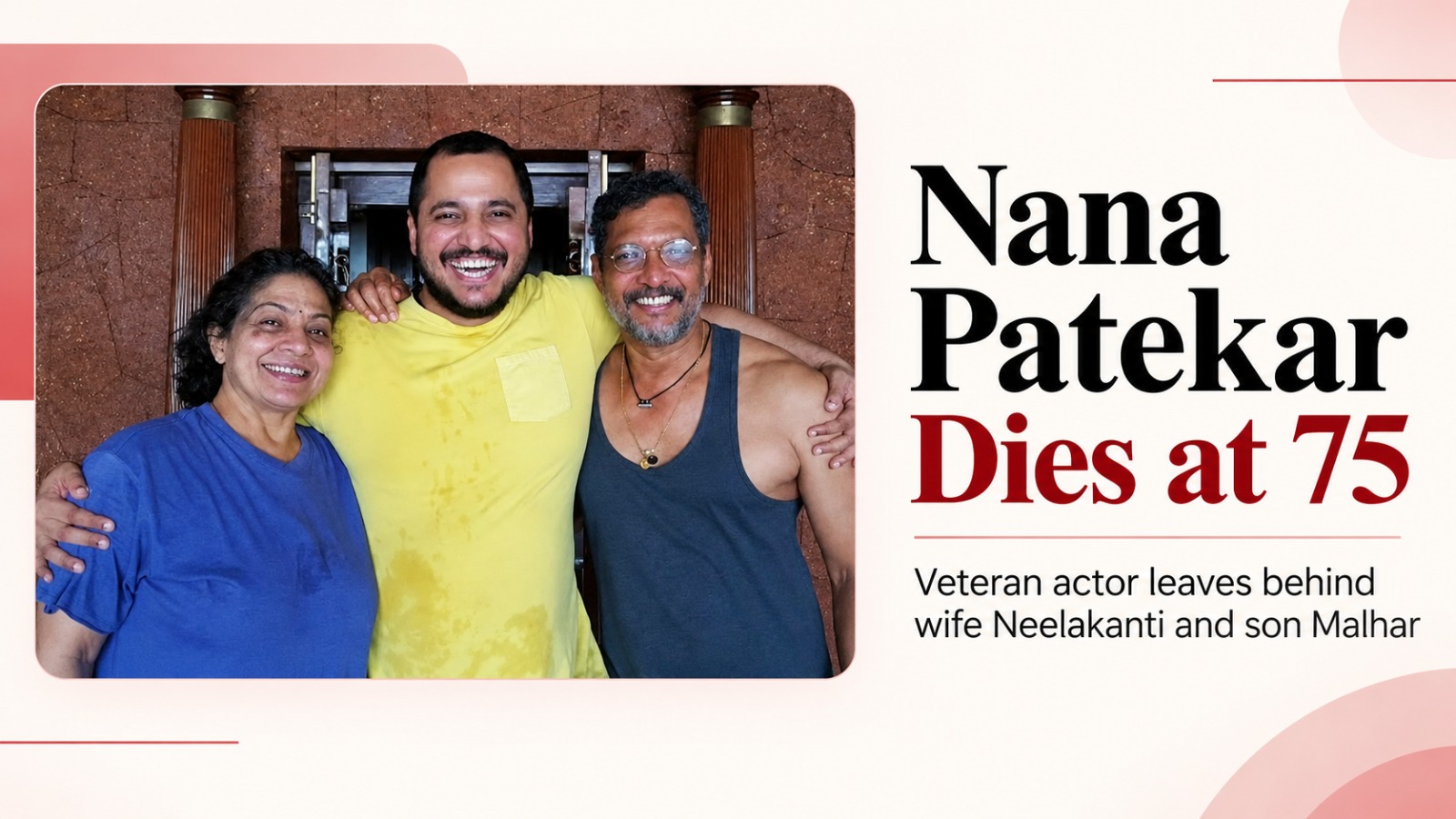
Nana Patekar (1951-2026) died of cardiac arrest in Goa this morning, aged 75. Of all the roles he played, one never reached a screen.
India woke up today to the news that Nana Patekar is gone. He was the man who made rage into poetry in Krantiveer, who put a cop’s conscience on trial in Ab Tak Chhappan, and who made a whole generation laugh as Uday Shetty. Early on Thursday he messaged a friend that he felt unwell. By dawn, doctors at Manipal Hospital in Goa had declared him dead.
Tributes will list his three National Awards, his Padma Shri and his filmography. The story that best explains who he was, though, has no box-office number attached. It took place in 1999, on the mountains of Kargil.
A phone call to the Defence Minister
When war broke out with Pakistan that summer, Nana was already a star with a National Award for Best Actor. Most of the industry showed its support the usual way, with statements, fundraisers and visits to hospitals.
Nana picked up the phone and called Defence Minister George Fernandes. He wanted to go to the front.
The answer was no. Civilians don’t go to war zones.
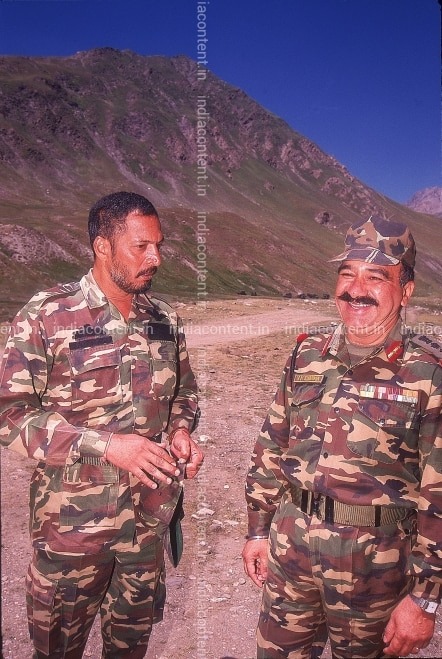
Nana didn’t bring up his fame. He brought up his preparation. In the early 1990s he had spent three years training with the Maratha Light Infantry, and that training went into Prahaar, the army film he wrote and directed. He had done commando drills and he knew weapons. He wasn’t asking to visit. He was asking to serve.
Fernandes finally asked him when he wanted to go.
“Now,” Nana said. He was told to leave that same day.
Twenty kilos on the Line of Control
As an honorary captain, Nana spent August 1999 near the LoC. He served with a Quick Reaction Team, one of the army’s rapid-response units, and worked at the base hospital among wounded jawans. The altitude and the work took a heavy physical toll. He reportedly came down from the mountains more than 20 kg lighter.
Then he went back to Mumbai, back to film sets, and back to the 1BHK flat in Andheri where he lived with his mother.
The silence was the point
What makes this story rare isn’t that a film star went to war. It’s what he did afterwards, which was nothing. There was no press conference, no biopic and no anecdote for award-show hosts. For over two decades he hardly spoke about it, and even when he finally did, he declined to describe what he had actually done there. He said only that he was glad he could contribute something.
In an industry built on visibility, Nana Patekar treated the bravest thing he ever did as none of anyone’s business.
Nana Patekar: The same man, everywhere
People who knew him say this wasn’t a one-off. Action director Shyam Kaushal, whom Nana gave his break in Prahaar, has said Nana stood outside the operation theatre when Kaushal was near death and wasn’t expected to survive. Kaushal credits him, after God, for being alive.
Years later, with Makarand Anaspure, Nana founded the Naam Foundation, which supports the families of farmers in drought-hit Maharashtra. He lived modestly despite decades at the top.
His screen persona was anger: the clenched jaw, the trembling voice, the speeches that brought cinema halls to their feet. Kargil shows where that anger came from. It wasn’t performed patriotism. He had earned it quietly, in uniform, with no one watching.
Most actors play soldiers. Nana Patekar asked to stand beside them, and then refused to make it about himself.
Rest in peace, Captain.
Also Read: Nana Patekar Dies at 75: Three-Time National Award Winner