YouTube monetisation policy: Those joining the YouTube Partner Program for the first time will have a harder time accessing advertisements and Premiums, whereas those already in the YouTube Partner Program will be beyond the new eligibility requirements.
YouTube is raising the monetisation bar for new creators, doubling key eligibility thresholds for joining the revenue-sharing side of the YouTube Partner Program from February 1, 2027.
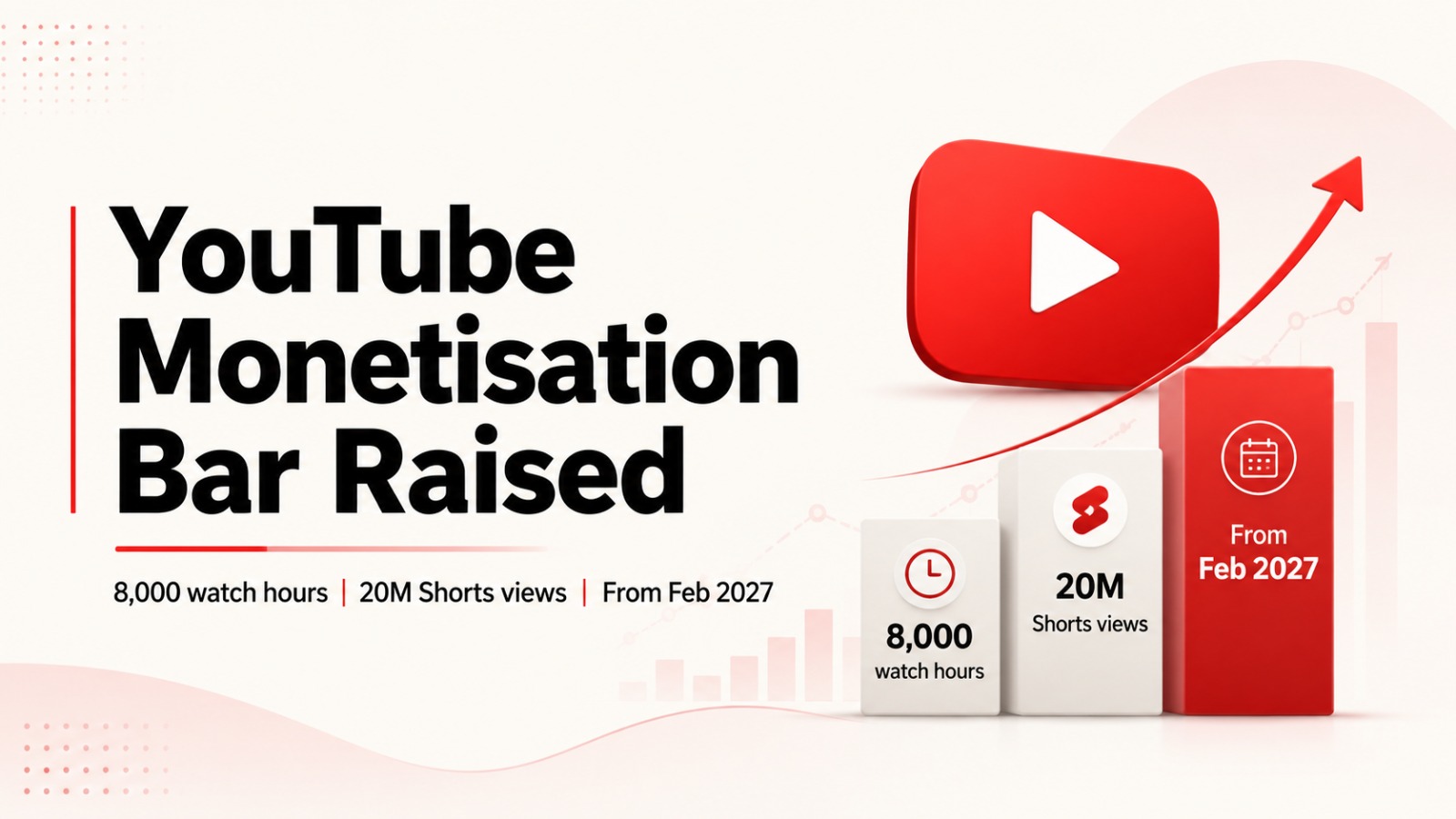
Under the revised rules, new creators will need 8,000 valid watch hours over the previous 365 days or 20 million qualified Shorts views within 90 days to unlock advertising and YouTube Premium revenue sharing.
The minimum requirement of 1,000 subscribers will remain unchanged.
That marks a significant jump from the earlier requirement of 4,000 watch hours in a year or 10 million Shorts views over 90 days. In practical terms, YouTube is doubling both of those entry benchmarks while leaving the subscriber requirement where it is.
The change will apply to creators entering the programme under the revised rules. Creators who are already part of YPP will not be affected by the new entry thresholds.
A tougher entry point, but a separate window for inactive channels
The changes are not limited to new applicants.
YouTube is also introducing a 90-day window for inactive channels, giving them time to meet a lower retention threshold in order to remain in the programme. Those channels will need either 1,000 watch hours in 365 days or 1 million Shorts views in 90 days during that window.
That creates two different paths within the updated framework. New creators will face a substantially higher bar to begin earning advertising and Premium revenue, while inactive channels already connected to YPP will have a lower threshold available during the extended 90-day period.
YouTube also outlines changes for Shorts creators
Short-form video remains another major part of the update.
The information released around the changes separately states that creators seeking advertising and Premium revenue from Shorts will need to maintain 10 million qualified Shorts views over the previous 90 days. Creators who already meet that level are described as unlikely to see their Shorts earnings affected.
The 10 million figure is in addition to the 20 million figure for “qualified Shorts” mentioned as part of the new criteria for entry into the program. There is no additional information about how the two figures relate to each other, so they cannot be considered the same threshold.
For Shorts creators below the 10 million-view mark, YouTube is also introducing targeted incentive programmes. These will include opportunities connected with brand deals and YouTube Shopping.
Shorts advertising and fan-funding terms are changing too
YouTube is also updating its terms to support new advertising formats for Shorts and is making changes to its fan-funding terms.
However, the company has said that the eligibility thresholds, product features and revenue-share rates tied to existing fan-funding features will not change.
The broader update therefore goes beyond simply increasing the number of viewing hours or Shorts views needed for monetisation. It also adjusts the framework around Shorts advertising, incentives and channel activity while preserving some existing revenue arrangements for creators already inside the ecosystem.
January 31 deadline before new rules begin
Creators have been asked to review and accept the updated terms through YouTube Studio by January 31, 2027. The changes are scheduled to take effect the following day, on February 1, 2027.
YouTube has also said it paid more than $100 billion to creators, artists and media companies over the past four years and expects its total payouts to creators in 2027 to exceed those made in 2026.
For aspiring creators, however, the most immediate change is straightforward: the road to full advertising and Premium revenue sharing is getting longer. From February 2027, reaching 1,000 subscribers will still matter, but new channels will also need to clear a much higher viewing threshold before those revenue streams become available.
Also Read: Google Fitbit Air to Launch in India in October 2026: What to Know