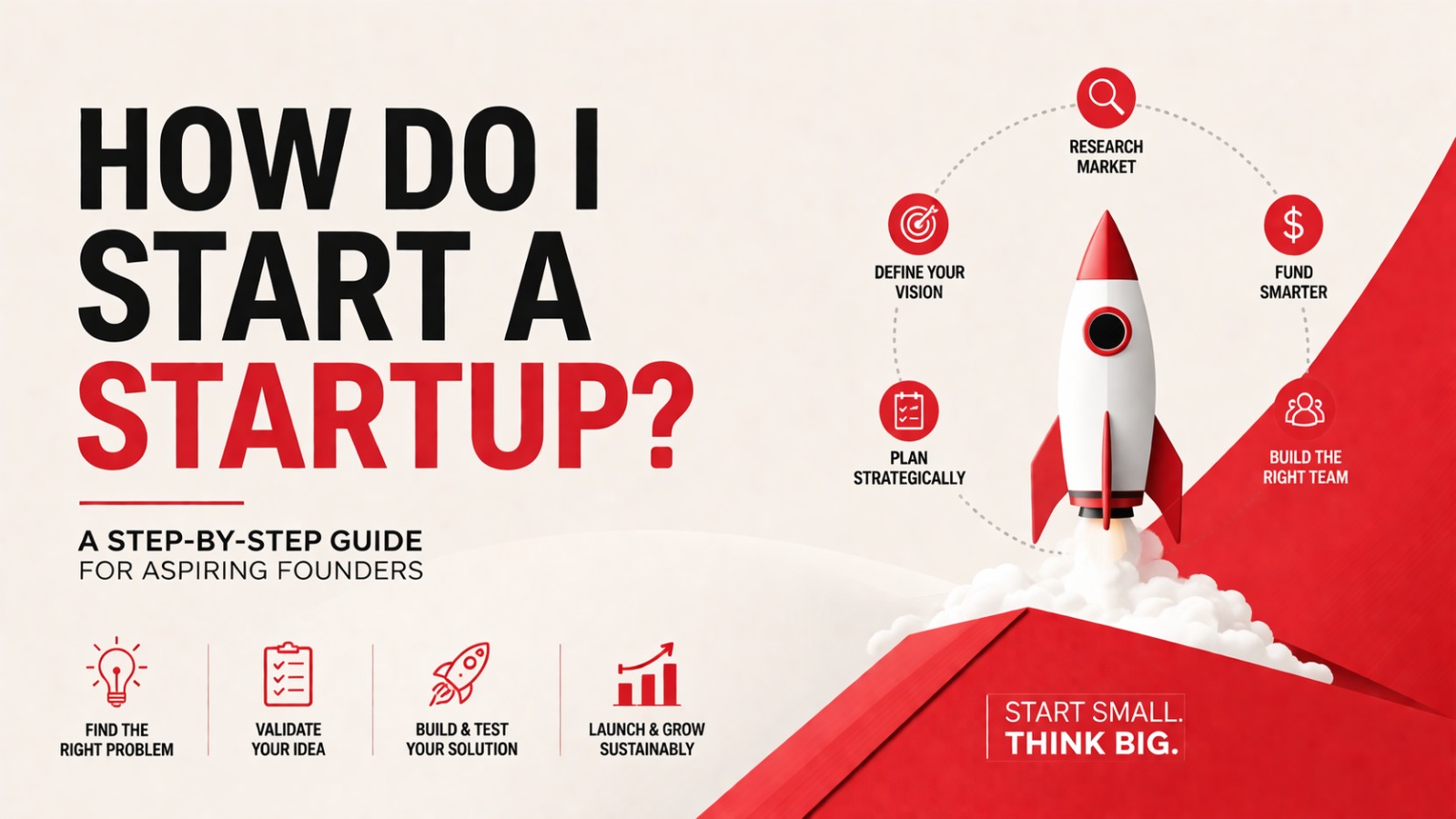
The most common question aspiring founders ask is simple: “How do I start a startup?” Behind that question are several smaller worries. Is my idea good? Do I need funding? Should I register a company first? How do I find customers? What if someone copies my idea?
The honest answer is that a startup does not begin with a logo, office, pitch deck, or investor meeting. It begins with a problem.
A startup is built when someone finds a real problem, understands who faces it, and creates a solution people are willing to use, trust, and eventually pay for. The first step is not to “start a company.” The first step is to identify a problem clearly enough that the market itself begins to guide your next move.
Start With a Problem, Not Just an Idea
Many beginners ask, “What startup should I start?” That is the wrong starting point. A better question is: What problem do people repeatedly face, and why has it not been solved well yet?
A good startup idea usually comes from observation. It may come from your own frustration, your workplace, your community, your city, or a gap you notice in an existing service. The idea becomes stronger when it is connected to a specific user.
Instead of saying, “I want to build an app,” say, “I want to help small shop owners manage daily orders without confusion.” The second sentence has a user, a problem, and a direction.
Validate Before You Build
Another common question is, “Is my startup idea good?” The market answers that better than friends, family, or social media.
Before building a product, speak to potential users. Ask what problem they face, how they currently solve it, what they dislike about existing options, and whether they would pay for a better solution. Do not pitch too early. Listen first.
Validation doesn’t mean you have to start making money from day one. What really matters is whether people genuinely care about what you’re building. Are they curious enough to try it? Do they take out time to talk to you about it? Will they sign up, place a small order, or even tell a friend about it?
Build a Small Version First
New founders often think they need a perfect product. They do not. They need a simple version that solves one clear problem.
This is often called an MVP, or minimum viable product. It could be a basic website, a WhatsApp-based service, a prototype, a landing page, a manual service, or a small batch of products. The goal is not perfection. The goal is learning.
A startup grows faster when the founder tests, listens, improves, and repeats.
Do You Need Funding to Start?
One of the most searched startup questions is, “How do I get funding?” But funding is not the first requirement. Clarity is.
Many startups begin with personal savings, small customer payments, pre-orders, freelance income, or support from early users. Investors usually look for signs that the founder understands the market and can execute. A strong problem, early users, and clear traction are more powerful than a polished pitch deck with no proof.
Funding should help growth. It should not replace validation.
When Should You Register the Company?
Legal registration is important, but you don’t always need to rush into it. If you’re just testing an idea or experimenting in the early days, it’s okay to keep things simple. But the moment you start taking payments, signing agreements, hiring people, raising money, or building something you want to scale seriously, getting your business registered becomes necessary.
At that stage, it’s also worth paying attention to the basics.
Think about taxes, whether your brand name is available, how you and your co-founder are aligned on roles and ownership, and what terms you’re offering customers. If your idea involves something unique, protecting it may matter too. Getting a good lawyer or financial advisor involved early can save you from bigger problems later.
How Do You Get Your First Customers?
Customers rarely arrive just because a product exists. Distribution is as important as the idea.
Begin by targeting a specific audience. Approach them directly. Leverage personal connections, LinkedIn, local communities, entrepreneur circles, WhatsApp, Instagram, industry conferences, and content marketing.
State the problem precisely. Illustrate how your offering can solve the issue. Request their opinion. Ensure that the initial ten customers feel valued.
Early growth is often personal, manual, and slow. That is normal.
What Makes a Startup Work?
A startup works when three things come together: a real problem, a useful solution, and consistent execution. The founder must keep learning from users, improving the product, managing money carefully, and staying honest about what is working.
The best first step is not dramatic. Write down the problem. Identify the user. Speak to ten potential customers. Build a small solution. Test it. Improve it. That is how a startup begins.
Also Read: Vaibhav Suryavanshi’s Rise Is Bigger Than a Net-Worth Number