A hiring anecdote shared by Shubham, a tech professional and founder of @FundMeMommy, has triggered a wider conversation about the state of the global tech job market, where thousands of candidates are competing for a handful of roles and not all of them are being evaluated in the traditional way.
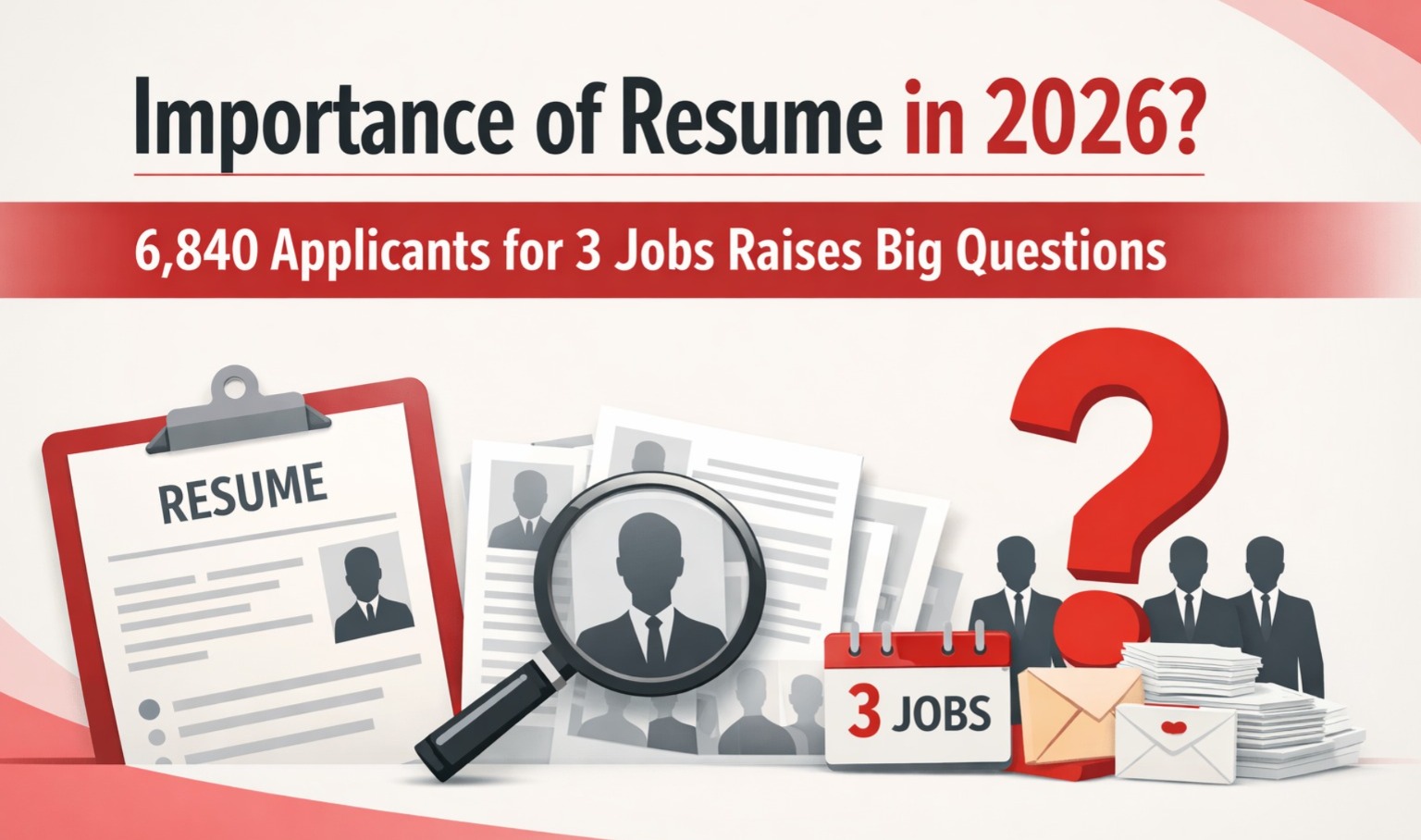
According to Shubham, a US-based founder he is working with recently received 6,840 applications for just three engineering positions. The applicant pool, he noted, included candidates from Indian Institutes of Technology (IITs) and Ivy League universities, institutions typically associated with top-tier talent.
However, what has drawn attention is the hiring approach described by the founder.
“I will randomly select 20 people for interviews and if we don’t find the match, I will randomly select another 20,” the founder told him, as shared in Shubham’s post on X.
The statement has resonated widely, raising questions about whether traditional indicators like resumes and academic credentials still carry the same weight in an increasingly crowded hiring landscape.
Volume Overwhelming the System
The figures themselves provide an insight into the intensity of competition. The fact that there were 6,840 candidates applying for three positions makes the chances of any one person getting shortlisted seem very unlikely.
In such scenarios, the process of screening resumes itself becomes a logistical challenge. The approach described, shortlisting candidates in small, randomly selected batches, suggests that some hiring decisions may now be driven as much by volume constraints as by detailed evaluation.
While the founder’s method, as recounted by Shubham, may not represent standard hiring practices across the industry, it reflects a growing concern among job seekers: that visibility is becoming as critical as merit.
“Your Resume Is Worth Nothing in 2026”
Shubham’s post did not stop at describing the hiring process. It also offered a stark interpretation of what it means for candidates.
“Your resume is worth nothing in 2026. Good places have the competition you have never seen before,” he wrote.
The remark, while opinion-based, captures a sentiment that appears to be gaining traction among professionals navigating the tech job market. Even candidates from elite institutions may find it difficult to stand out when application volumes run into the thousands.
The inclusion of IIT and Ivy League applicants in the same pool underscores this shift. Credentials that once guaranteed attention may now simply place candidates among a large group of similarly qualified peers.
Startup vs Job Security: A Shifting Perception
Another key takeaway from Shubham’s post is a changing perception of risk.
“Startup is less riskier than finding a high paying job atp.,” he added.
This view reflects a broader frustration among job seekers who face intense competition, repeated application cycles, and limited interview opportunities. While the statement is subjective, it highlights how some professionals are beginning to reassess traditional career paths in light of current hiring dynamics.
A Larger Signal from a Single Story
The anecdote shared by Shubham offers a glimpse into how hiring may be evolving in certain segments of the tech ecosystem, particularly in roles that attract global, high-quality talent.
It suggests that:
- Application volumes are rising sharply
- Even top-tier candidates are competing in the same crowded pool
- Hiring processes may be adapting to scale in unconventional ways
At the same time, it is important to note that this account represents a single hiring experience, as shared by Shubham, and may not reflect broader industry, wide practices.
Yet, its impact lies in what it reveals about perception. For many professionals, the concern is no longer just about being qualified, but about being noticed.
In a market where thousands apply for a few positions, the question is no longer only “Are you good enough?” but increasingly, “Will you even be seen?”
Also Read: Royal Enfield Enters Electric Era with Flying Flea C6 Launch in India