

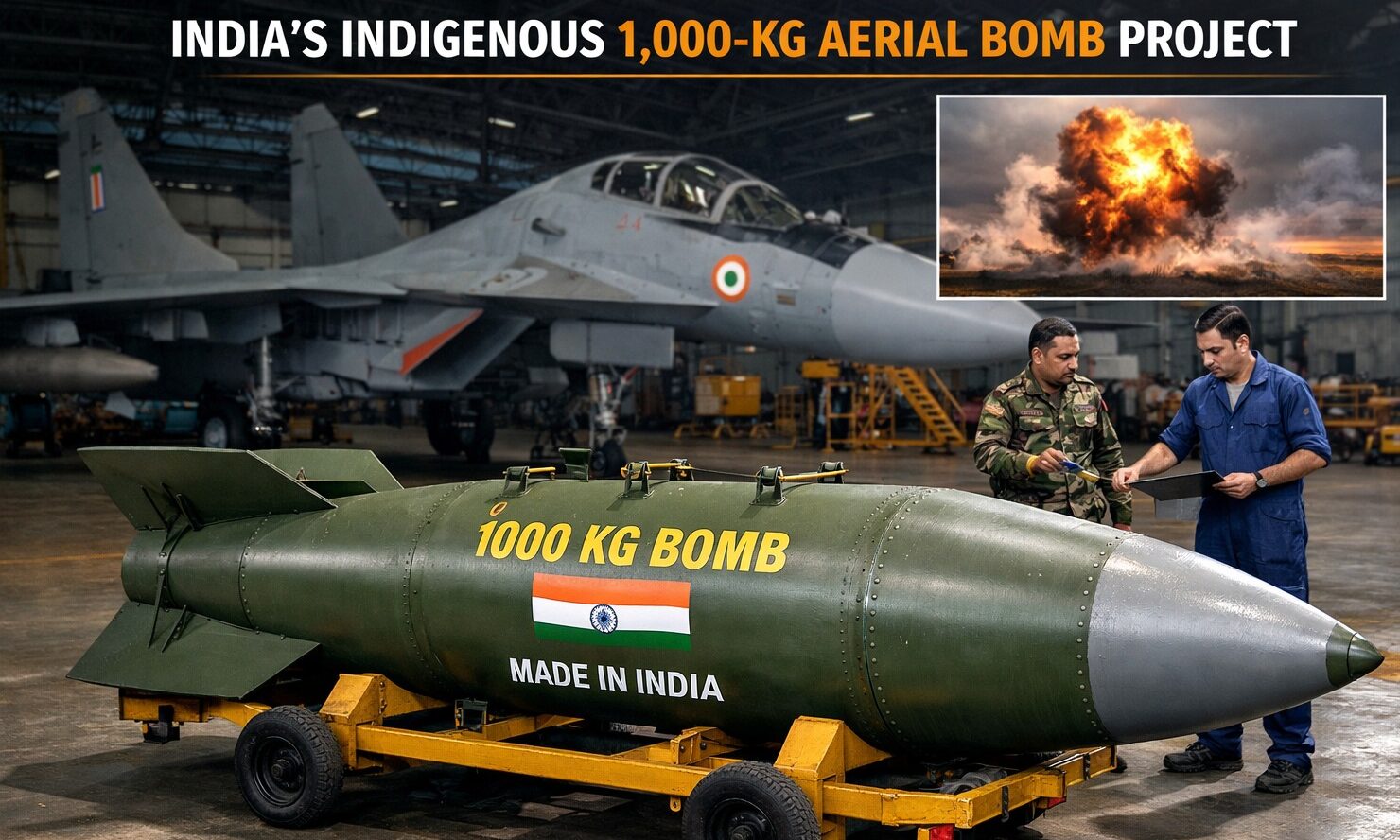
India has taken a significant step toward strengthening its defence manufacturing capabilities with a new initiative to develop indigenous 1,000-kg aerial bombs. The Ministry of Defence has invited industry participation for the design and development of heavy munitions comparable to the widely used Mk-84 class bombs.
The project has been launched under the Defence Acquisition Procedure 2020, aligning with the country’s broader focus on self-reliance in defence production. The proposed bombs are intended to be compatible with both Russian-origin and Western-origin aircraft currently operated by the Indian Air Force. Once developed, these domestically produced munitions are expected to replace imported alternatives, reducing reliance on foreign suppliers.
This initiative falls under the Make-II category, which encourages industry-funded development, along with the Buy (Indian–IDDM) category that prioritizes equipment designed, developed, and manufactured within the country. Together, these frameworks are aimed at boosting indigenous innovation while strengthening domestic defence capabilities.
A Structured Two-Stage Development Plan
The programme has been designed with a clear two-phase roadmap. The first phase will focus on the design and development of six prototypes. These will include both live and inert versions of the bomb, allowing for comprehensive testing and validation under different conditions.
Following successful prototype development, the project will move into the procurement phase. During this stage, the Indian Air Force will evaluate the system through trials conducted within the country. These tests will be carried out on selected aircraft platforms to ensure compatibility, reliability, and operational effectiveness.
A key requirement of the programme is that the final product must meet a minimum of 50 percent indigenous content. This ensures that a substantial portion of the technology, materials, and manufacturing processes are sourced domestically.
The Ministry of Defence has outlined an estimated timeline of approximately two and a half years from the issuance of the Expression of Interest to the signing of the final contract. This period includes prototype development, user trials, technical evaluation, and commercial negotiations.
Also Read: Kuiklo Founder Shyam Gupta Builds ₹1 Crore Quick Commerce Startup in 100 Days
Reducing Dependence on Imported Munitions
At present, the Indian Air Force relies on imported Mk-84 class general-purpose bombs for its heavy munition requirements. This dependence on external suppliers presents challenges in terms of supply chain security and operational flexibility.
The proposed indigenous bomb is designed to serve as a high-calibre, natural fragmentation weapon with a strong blast effect. It is expected to deliver significant peak over-pressure, making it effective against a wide range of targets. By manufacturing such munitions domestically, India aims to secure a more reliable and controlled supply chain while also gaining the flexibility to adapt designs to specific operational requirements.
Local production is also expected to enhance readiness by ensuring timely availability of critical munitions during periods of heightened demand. In addition, it supports the long-term objective of building a robust domestic defence ecosystem capable of meeting complex military needs.
Industry Participation and Evaluation Criteria
The Ministry has opened participation to eligible Indian companies, including private sector players. The initiative also allows for collaboration with foreign partners under defined conditions, such as joint ventures or technology transfer agreements. However, participating entities must demonstrate compliance with the requirement for indigenous design and manufacturing.
The selection process will involve a detailed evaluation of multiple factors. These include the technical capabilities of the applicant, the availability of necessary infrastructure, and the ability to integrate the system with existing aircraft platforms. The extent of indigenous content and adherence to preliminary staff qualitative requirements will also play a crucial role in determining eligibility.
Through this structured evaluation, the government aims to ensure that the selected developers possess the expertise and resources required to deliver a reliable and effective solution.
Strengthening India’s Defence Manufacturing Base
The indigenous 1,000-kg aerial bomb project reflects a broader effort to modernize India’s defence capabilities while promoting self-reliance. By encouraging domestic industry to take the lead in design and development, the initiative is expected to foster innovation and reduce long-term dependence on imports.
As the programme moves forward, it is set to play a key role in enhancing the operational capabilities of the Indian Air Force while contributing to the growth of the country’s defence manufacturing sector.
Also Read: Hyderabad Startup Moves Closer to Reusable Rockets with Successful Engine Test















