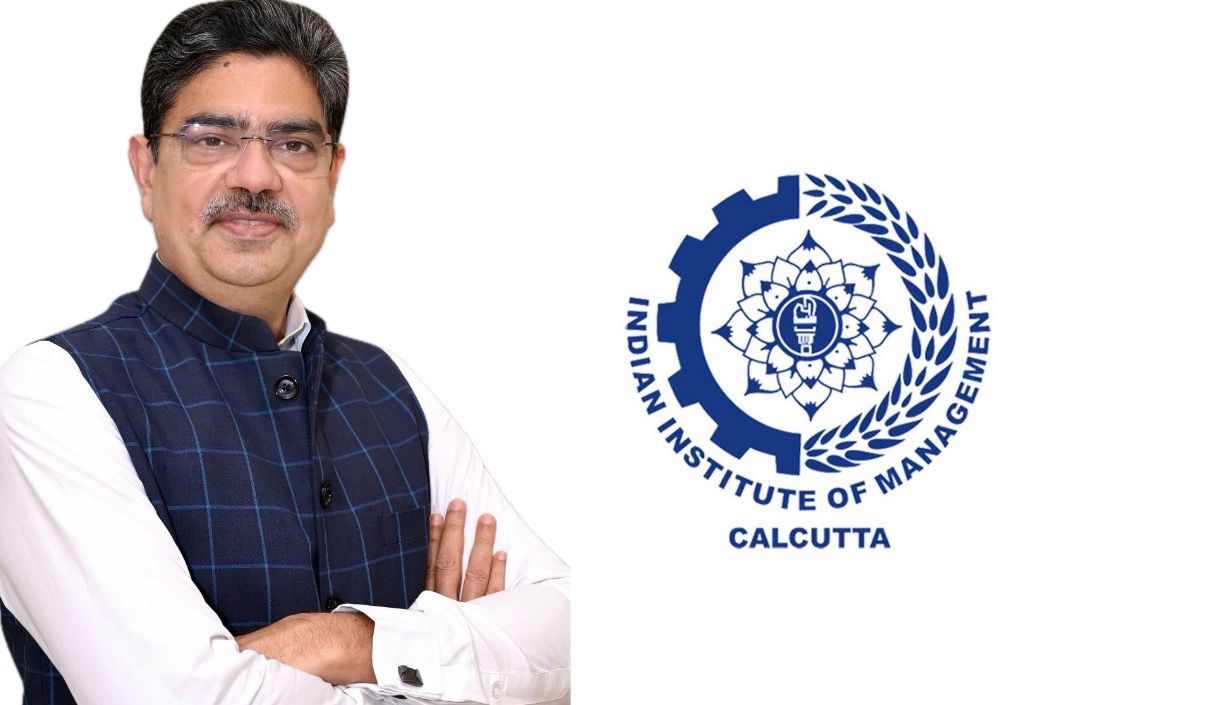
The Indian Institute of Management Calcutta (IIM Calcutta) is again in the spotlight for the wrong reasons. With the latest Director stepping down, the institute has logged its fifth leadership exit in five years, intensifying questions about how the school is governed and whether its executive leadership has the autonomy needed to function.
The pattern is stark. While recent departures have formally been attributed to “personal reasons,” the repeated churn at the top, paired with a slip in IIM Calcutta’s NIRF ranking from 3 to 7, has sparked a broader debate over whether the board–management relationship has fractured to a breaking point.
A Pattern Too Persistent to Ignore
The latest exit involves Prof. Alok Kumar Rai, who assumed charge in 2025 after a notably stable 5½-year term as Vice-Chancellor of Lucknow University. The explanation for his abrupt departure, again, “personal reasons”, has not quelled concerns. On the same day, Chief Administrative Officer Alok Chandra applied for voluntary retirement, a coincidence that only deepened speculation within the campus community.
This is not an isolated incident. The institute’s leadership has been in near-constant flux since 2021, when Prof. Anju Seth resigned. At the time, she alleged interference by the Board of Governors, particularly its chairman Shrikrishna Kulkarni, in day-to-day administration. Since then, subsequent heads have also left, officially for personal reasons amid persistent talk of board-level micromanagement over routine operations, especially around construction permissions and administrative appointments.
The Timeline of Exits
- 2021: Prof. Anju Seth resigns, citing excessive board interference in the institute’s routine functioning, specifically naming Board Chairman Shrikrishna Kulkarni.
- 2023: Prof. Uttam Kumar Sarkar steps down for personal reasons; within the institute, it was widely understood he was displeased with board pressures, including on infrastructure and admin hires.
- 2024: Prof. Sahadeb Sarkar resigns, again for personal reasons.
- 2025: Prof. Saibal Chattopadhyay hands over charge to Prof. Alok Kumar Rai.
- 2025: Prof. Rai subsequently relinquishes charge, citing personal reasons; CAO Alok Chandra applies for VRS the same day.
Five exits in as many years is not a blip. It is a trend, one that questions whether the institute’s leadership is being allowed to lead.
Autonomy vs. Oversight: Where Is the Line?
At the core of the present disquiet is a simple question: Where should board oversight end and executive autonomy begin? Multiple accounts from within IIM Calcutta over the years have pointed to intrusive governance practices by the Board of Governors, led by a chairman continuing on an extended tenure. The stated intent of any board is to safeguard standards and strategy, not to substitute for executive decision-making. Yet, the resignations suggest that line may have blurred.
This tension is not merely anecdotal. The latest EQUIS assessment, by the institute’s international accreditor, explicitly underlines the need for a clear separation between the governing body and the executive management. That recommendation, generic as it may appear in accreditation discourse, lands with particular weight at IIM Calcutta, given the leadership churn and the specific nature of past complaints.
Consequences Beyond the Corner Office
Leadership disruptions rarely stay contained to the top floor. They often affect policy continuity, academic planning, hiring, and long-term projects. The fall in NIRF rank from 3 to 7 is not a definitive verdict on governance, but it is a public-facing signal that stakeholders, students, faculty, recruiters, and alumni, pay attention to. Rankings reflect multiple parameters, yet instability at the helm almost always complicates performance across them.
Within a premier public institution, frequent resignations also risk eroding confidence among potential faculty hires and administrators, who weigh autonomy and predictability as much as compensation and brand equity.
What the Departures Don’t Say
It bears emphasizing what is not being claimed here. There is no allegation of wrongdoing in the recent exit notes. The predominant formal reason remains “personal”. However, in the context of IIM Calcutta’s last five years, that explanation, on its own, cannot stop legitimate scrutiny. The simultaneous VRS by the chief administrative officer only sharpens the questions.
A Mirror for the IIM Governance Model
This episode is also a moment for introspection across the IIM ecosystem. IIMs operate under governing boards with significant powers, but their credibility rests on protecting executive and academic independence. If board extensions, micromanagement, or role ambiguities become normalized, leadership tenures will shorten, decision-making will politicize, and forward planning will suffer.
The EQUIS call for role clarity is not a procedural footnote. It is a governance imperative, especially for institutions that aspire to global parity and compete for top-tier talent in research and teaching.
IIM Calcutta now faces the dual task of restoring stability and rebuilding trust, inside the institute and beyond. That begins with a frank acknowledgment of the pattern and a transparent reaffirmation of boundaries between the Board of Governors and the executive leadership. Without this, any new appointment risks becoming another short chapter in a longer story of churn.
For a school that has shaped generations of business leaders, the test ahead is not just about making another appointment. It is about getting governance right, so that leaders can lead, boards can govern, and IIM Calcutta can return to the business it knows best: building excellence that endures.
Also Read: Piyush Pandey (1955 – 2025): The Man Who Made India Talk to Itself