A month after rolling out a new range of instant cup noodles, Nepal’s Wai Wai finds itself at a familiar crossroads: innovating on a tight, competitive shelf while doubling down on India, the market that turned a regional snack into a subcontinental habit. That duality, fast product refresh and patient market-building, mirrors the arc of its founder, Binod Chaudhary, whose curiosity about Thai instant noodles in the early 1980s snowballed into a 30-country footprint and a rare billionaire story from Kathmandu.
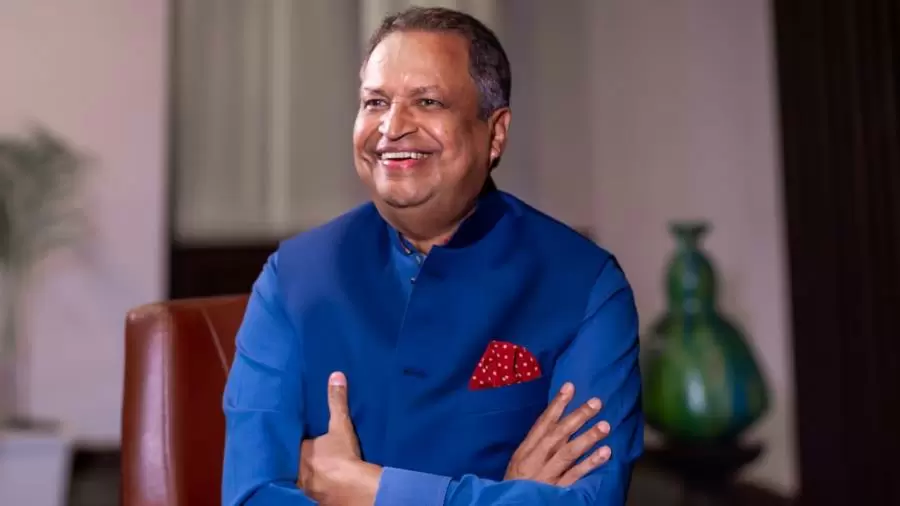
Wai Wai’s origin story is disarmingly simple. In 1984, inspired by the packets travellers brought back from Thailand, Chaudhary spotted a gap: an instant noodle brand that Nepal could claim as its own. Early resistance only sharpened his resolve.
He built a product with small but telling differentiators, a tastemaker, flavoured oil and spiced powder and a way to eat it that wasn’t one-size-fits-all. You could boil it, snack it straight from the pack as chur-mur, or fold it into local comfort foods like Wai Wai bhel and alu mimi. That versatility became culture, not just convenience.
Wai Wai: The India bet
The brand first entered India through the Northeast, an on-ramp that preceded a wider push. By 2006, Wai Wai had set up a factory in Rangpo, Sikkim, a marker of intent that the company would make locally for a market it intended to understand deeply.
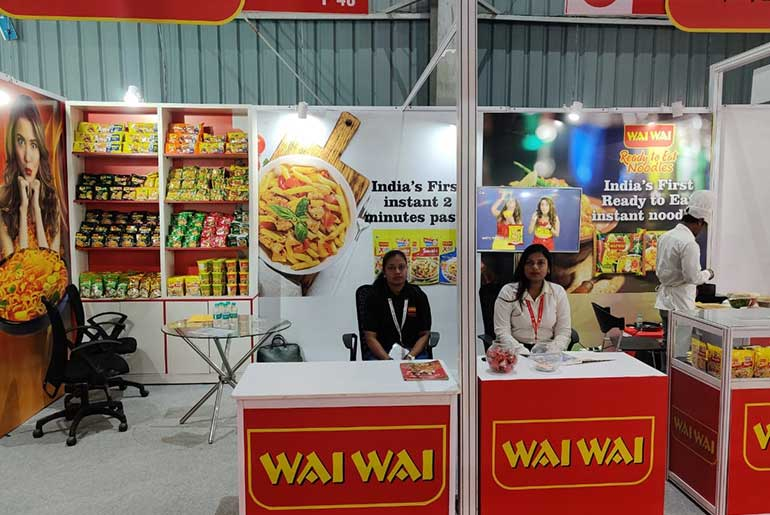
Flavours were tuned for taste and faith: classic masala, chicken, tomato chatpata, even jain masala, reflecting a willingness to tailor rather than transplant. The name stayed the same “Wai Wai” borrowed from the Thai brand it learned from, because it worked and travelled.
Scale, segments, and the new push
Four decades on, Wai Wai describes itself as India’s third-largest instant noodle brand, with a portfolio that has grown from one product to roughly 200–250 SKUs, and distribution in 30+ countries. It reported revenue of ₹800 crore and is targeting ₹1,200 crore by FY26 momentum it aims to build with healthier variants and an expansion into adjacent categories such as snacks, sauces, pasta, and seasonings. The current playbook: more choice on the shelf and wider reach in trade channels to multiply distribution in India.
Binod Chaudhary: The entrepreneur behind the brand
Chaudhary’s journey predates noodles. Born into a Marwari family in Kathmandu with roots in Rajasthan, he was pulled back from accountancy studies in India at 18 due to his father’s illness, and entered the family business. He cut his operator’s teeth early, even running a famed Kathmandu disco in 1973, before launching Wai Wai in 1984.
Over time, he diversified into banking (acquiring control of Nabil Bank in 1995) and hospitality (a hotel portfolio with the Taj brand across Nepal, India, and Sri Lanka). Today, the Chaudhary Group is described as a 136-company empire spanning banking, hotels, FMCG, energy, education, and health. Chaudhary has also served as a Member of Parliament in Nepal, while his sons, Nirvan, Rahul, and Varun are positioned to carry the group forward.
Product as habit
What the company got right early and still leans on, is a “how you eat is up to you” philosophy. The pre-seasoned, ready-to-snack format made Wai Wai as much a break-time munch as a hot bowl. In places like Darjeeling, alu mimi turned the crumbled noodle into a comfort staple. In college canteens, chur-mur was a pocket-money hack. That flexibility helped the brand travel across geographies and generations without forcing a single ritual.
India’s instant noodle aisle is crowded and quick to copy. The response from Wai Wai’s parent, CG Corp Global, is to keep the innovation funnel busy while broadening the pantry: baked or reduced-oil styles, grain or fibre twists, and spillover into sauces and seasonings to anchor the brand beyond noodles. The immediate KPI is clear, the ₹1,200-crore revenue horizon by FY26 and the method is equally clear: more relevant variants, more points of sale, and more reasons for households to keep Wai Wai in the cupboard.
Wai Wai’s claim of being India’s No. 3 noodle brand is a positioning statement, but the operational proof lies in its manufacturing presence (including Sikkim), the breadth of SKUs, and a distribution arc that began in the Northeast before going national. The latest product refresh, cup noodles with region-friendly flavours suggests the company is still iterating for local palates, not just chasing volume.
The Next Phase
The next phase for Wai Wai is less about a single blockbuster and more about compounding: keep the base business steady, seed healthier lines, expand into adjacent kitchen categories, and make India’s general trade and modern retail work harder. For a brand that began as an inspired import and grew into a South Asian staple, the challenge now is to stay indispensable at home and recognisable abroad, without losing the improvisational spirit that made chur-mur and alu mimi household words.
Also Read: From 8-Minute Delivery to Startup: The Journey of Swish in Bengaluru