The Gradiant Story: Industrial water use is usually invisible to the people who drink from the tap. But hidden behind a smartphone, a soda bottle, a car battery, or a microchip are vast volumes of water that must be treated, purified, and often discarded. One estimate suggests that making a single iPhone can consume more than 3,000 gallons of water over its entire supply chain, a staggering footprint for a device that fits in your pocket.
Into this quiet crisis has stepped Gradiant, a water technology company born at MIT and now working with some of the world’s biggest brands, from Coca-Cola and Tesla to Taiwan Semiconductor Manufacturing Company.
The company builds end-to-end solutions that help industrial customers recycle, treat, and purify water at a scale that would have seemed ambitious even a decade ago. According to the company, its systems help customers reuse about 2 billion gallons of water every day and avoid the withdrawal of another 2 billion gallons of fresh water.
At its core, Gradiant’s mission is disarmingly simple: to preserve water for future generations even as global demand climbs. The complexity lies in the execution.
Gradiant: From MIT Lab Concept to Industrial Workhorse
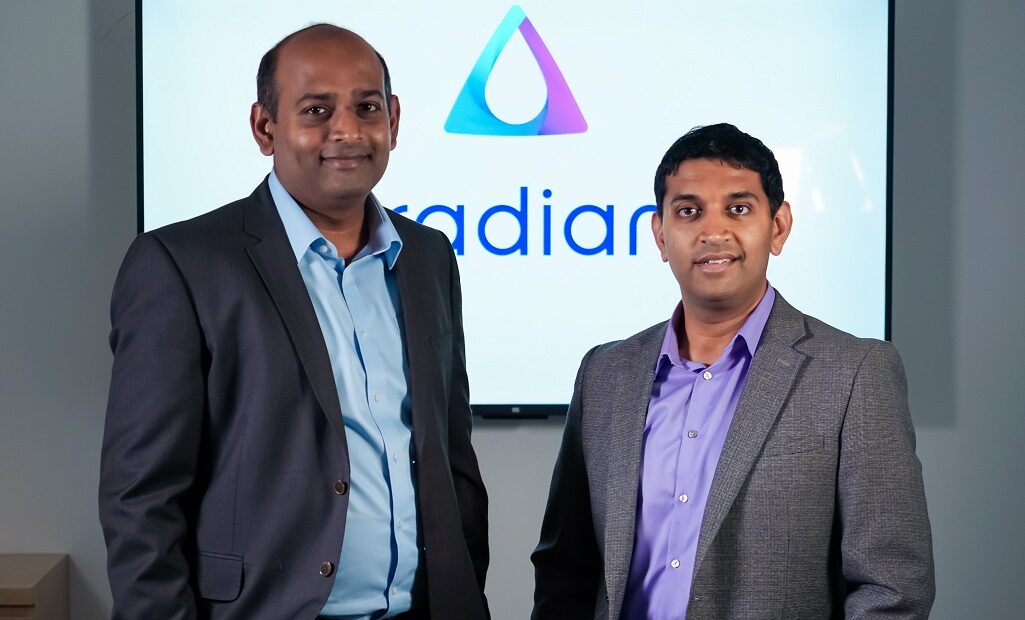
Gradiant traces its origins to MIT, where co-founders Anurag Bajpayee and Prakash Govindan were doctoral students working on advanced water treatment methods. Both focused on some of the hardest water problems, including highly contaminated industrial streams that conventional systems struggle to handle.

Govindan’s motivation was shaped early. Growing up in a drought-hit region in India, he spent his childhood hauling buckets up the stairs whenever a water truck arrived. Whatever he and his brother could carry was all the water the family had for the week. That experience, he has recalled, is how he “learned the value of water the hard way.”
After his undergraduate years at the Indian Institute of Technology, Govindan came to MIT and joined the lab of Professor John Lienhard, who would later become a co-founder of Gradiant. There he began working on a method called carrier gas extraction, a novel way to treat difficult water streams. Bajpayee, also working on water treatment at MIT, followed a parallel track.
With support from MIT’s Deshpande Center, the researchers derisked their technologies, licensed their work, and in 2013 incorporated Gradiant. The company’s first major commercial application was far from the polished cleanrooms of chip fabs: treating wastewater from oil and gas wells in Texas.
From that beachhead, Gradiant stepped methodically into other water-intensive sectors, power generation, mining, textiles, and refineries, before expanding again into electronics, semiconductors, food and beverage, and pharmaceuticals. Today, oil and gas make up only a small slice of its portfolio.
Solving “Extreme” Water Challenges
Gradiant positions itself not as a niche equipment supplier but as a full water partner for industrial customers. Its core pitch is that it can tackle “extreme” water challenges at both ends of the spectrum:
- Ultracontaminated water, laden with salts, metals, and complex pollutants.
- Ultrapure water, needed for processes like chip fabrication, where even microscopic impurities can ruin a product.
To do this, the company assembles bespoke treatment trains that combine chemical, membrane, biological, and thermal processes. Over time, it has layered multiple proprietary technologies onto its platform, including innovations in reverse osmosis, selective contaminant extraction, and free radical oxidation.
The founders like to compare these tools to Lego bricks: a modular kit that can be rearranged for different industries and water chemistries. That modularity is no longer theoretical, Gradiant says it has built more than 2,500 such end-to-end systems for customers worldwide.
The impact at the plant level can be dramatic. In semiconductor manufacturing, for instance, a typical facility might once have used around 40 million liters of water in its chip-making processes, treated the resulting wastewater, and managed to reuse perhaps 30 percent of it. With Gradiant’s systems, recycling rates can reach as high as 99 percent in some cases, according to the company.
That means a plant that once consumed 40 million liters may now need only about 400,000 liters of fresh water, with the rest continually recirculated, a radical shrinkage of its water footprint.
Similar gains, the company says, are being delivered in food and beverage facilities, renewable energy manufacturing, and pharmaceutical production.
AI in the Control Room, R&D in the DNA
Gradiant’s founders argue that their biggest competitive edge is not any single technology, but a culture of continuous research rooted in their MIT experience. The company maintains a research lab at its Boston headquarters and has continued to file patents as it expands.
Alongside physical equipment, Gradiant has also developed a digital layer: an AI-driven control system that monitors water treatment plants in real time, predicts performance, and helps optimize operations. The goal is to turn complex water infrastructure into something customers can treat almost like a managed service, rather than an in-house science project.
That matters because Gradiant’s clients are not water companies; they are chipmakers, drug manufacturers, and beverage brands. As co-founder and CEO Anurag Bajpayee has put it, these companies are not looking to run water treatment plants themselves, they want a trusted partner to take on the entire problem, from design and construction to operation.
Commercially, the approach appears to be working. The founders say Gradiant has been roughly doubling its revenue every year for the past five years, riding a wave of rising industrial demand for secure, sustainable water supplies.
Mining Wastewater for Lithium and Other Critical Minerals
As global supply chains scramble to secure critical minerals, Gradiant is betting that wastewater could become an unlikely mine. The company has recently developed a process to extract materials such as lithium and nickel from the very streams it is hired to clean.
The vision is ambitious: if lithium can be economically and environmentally recovered from brines, for example, from certain industrial or natural sources, it could help countries like the United States significantly reduce dependence on imported lithium for batteries.
Bajpayee has argued that the main barrier to such large-scale extraction has been technology, and that Gradiant’s deployed solutions could “open the floodgates” for direct lithium extraction and transform the industry.
If that plays out, water treatment plants could double as recovery hubs for materials central to the energy transition.
Another frontier for the company lies in tackling PFAS, the family of toxic “forever chemicals” that persist in the environment and have emerged as a major public health concern. Gradiant has validated a method for eliminating PFAS in a pilot project with a major U.S. semiconductor manufacturer.
The company’s next step, it says, is to bring that solution to municipal water treatment plants. If successful, the technology could help cities remove PFAS more effectively from drinking water and wastewater streams, closing another gap in the global water safety net.
Trying to “Give Water Back” to Nature
For all the technology and business metrics, the founders often return to a simple philosophical point: since the Industrial Revolution, industry has largely drawn from nature without returning the favor.
Gradiant’s model, to treat, recycle, and sharply reduce water consumption across some of the most water-hungry sectors is framed as a way to begin reversing that trend. By closing loops in factories and refineries, they argue, it is possible not just to slow the depletion of freshwater sources, but in some cases to “give water back” by cutting withdrawals that would otherwise have been necessary.
From a drought-stricken childhood in India to a global portfolio of industrial plants, the arc of Gradiant’s story is still being written. But if its claims on billions of gallons saved and reused each day continue to hold, the company offers one concrete example of how high-end research, industrial pragmatism, and a sense of urgency around water can combine into a business model with planetary impact.
Also Read: Inagent.ai bets on fully autonomous AI sales agents