

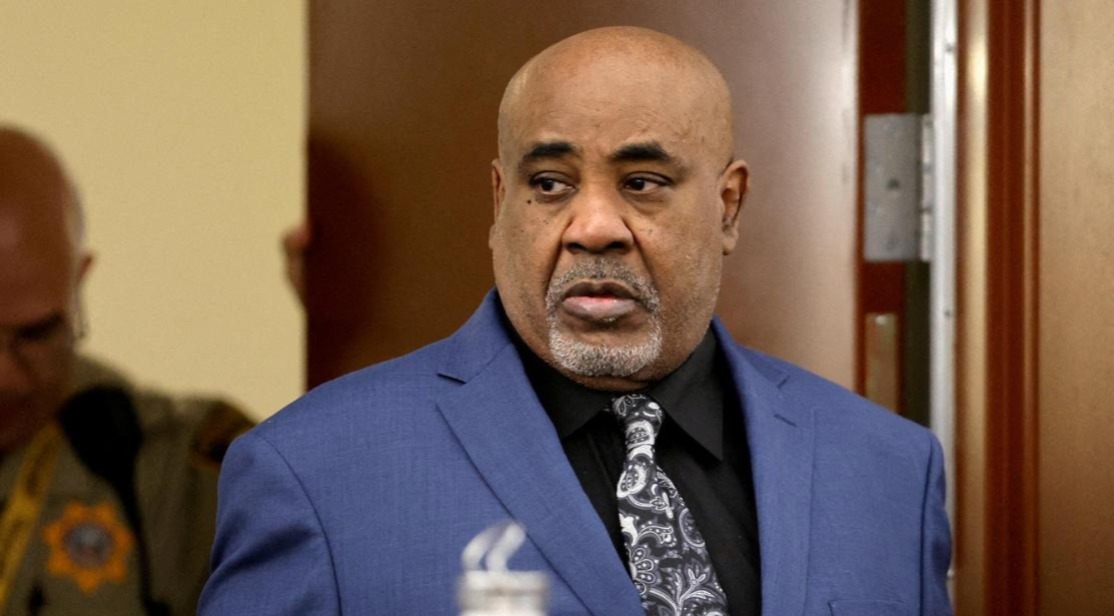
LAS VEGAS: Nearly three decades after Tupac Shakur was fatally shot in Las Vegas, a jury has convicted Duane “Keffe D” Davis of first-degree murder, delivering the first conviction in a case that has remained unresolved in court for generations of hip-hop fans.
The verdict came after jurors deliberated for less than three hours. Davis, 63, was convicted on a single count of murder with a deadly weapon and could face a maximum sentence of life in prison. The trial included testimony from 24 prosecution witnesses and three defense witnesses over nine days.
What gave the prosecution’s case an unusual shape was that it did not depend on proving Davis was the person who fired the shots. Instead, prosecutors argued that he helped set the killing in motion by obtaining the gun and directing the attack.
One detail became especially important in that argument: Davis had repeatedly placed himself inside the white Cadillac from which the shots were fired, even though other parts of his accounts changed over time. Prosecutors presented that consistency as a central thread linking his own statements to the killing.
Tupac Shakur Murder: A case built around responsibility, not the trigger
Shakur was in Las Vegas on Sept. 7, 1996, when a white Cadillac pulled alongside the vehicle he was travelling in while it was stopped at a red light. Gunfire followed. Shakur died six days later from his injuries. Marion “Suge” Knight, who was with him, was also wounded but survived.
For years, no one was charged in Shakur’s death.
That changed after Davis made a series of public statements in which he acknowledged being inside the Cadillac and said he had passed a gun to people sitting in the back seat. He described the shooting as retaliation following an earlier confrontation in which Shakur and members of Knight’s entourage had beaten Davis’ nephew.
The distinction between firing the weapon and helping enable the killing was central to the prosecution’s case. Under Nevada law, a person who assists another person in committing murder can also be convicted of the crime. Prosecutors did not contend that Davis himself pulled the trigger. Their argument was that he supplied the gun and ordered the attack.
Chief Deputy District Attorney Binu Palal told jurors that Davis and others had gone looking for Shakur and Knight after the earlier fight. Prosecutors pointed to accounts that the group searched for them, later spotted Shakur on the road and made a U-turn before the shooting. The state used those details to argue that the attack had been planned rather than occurring spontaneously.
Davis’ own accounts moved to the centre of the trial
Much of the case revolved around statements Davis had made long after the 1996 shooting.
Prosecutors used his 2019 memoir, Compton Street Legend, as well as recorded interviews, to show that although some names and details varied across different versions, the central account remained largely consistent. Davis had also publicly promoted the book as containing what he described as the “real truth.”
The defence challenged the reliability of those statements.
Defence attorney Michael Sanft argued that Davis’ accounts could have been fabricated for financial gain and questioned whether prosecutors had shown that Davis had actually exercised the kind of authority over younger gang members that the state alleged.
A prosecution gang expert described Davis as a figure whose orders younger members were expected to follow, while the defence pressed jurors on whether there was evidence showing he had given similar orders before or after the shooting.
Davis’ descriptions of the gun also varied. In several interviews, he said he handed the weapon to someone in the back seat, while in other accounts, including his book, he stopped short of identifying who fired it.
Prosecutors argued that those differences did not erase what they viewed as the essential point: Davis continued to place himself in the Cadillac and describe a role in the events surrounding the shooting.
A nearly 30-year gap shaped the evidence
The age of the case was impossible to separate from the trial.
Investigators testified that a Las Vegas hotel bill had been discovered during a search of Davis’ residence, although its date was unclear and the current location of that evidence was uncertain. Prosecutors also reminded jurors that evidence collection in the 1990s was very different from modern investigations, a reality that affected what could still be presented in court decades later.
The prosecution also pointed to a scrapbook Davis had kept containing articles about Shakur, introducing it during rebuttal as another piece of the portrait it was presenting to jurors.
A courtroom reaction after decades of waiting
When the guilty verdict was announced, Shakur’s sister, Sekyiwa “Set” Shakur, cried and embraced prosecutors. Davis’ son was also in the courtroom and covered his face with one hand after the verdict was read.
The conviction marks the first successful prosecution in Shakur’s killing, a case that had remained without criminal charges for years before Davis’ own public statements became part of the path that eventually led to court.
Prosecutors said they would dismiss the gang-enhancement portion of the charge because of witness logistics. Davis still faces the possibility of life in prison following his murder conviction.
Also Read: 5 Unheard Lionel Messi Stories Only Real Fans Will Know
















