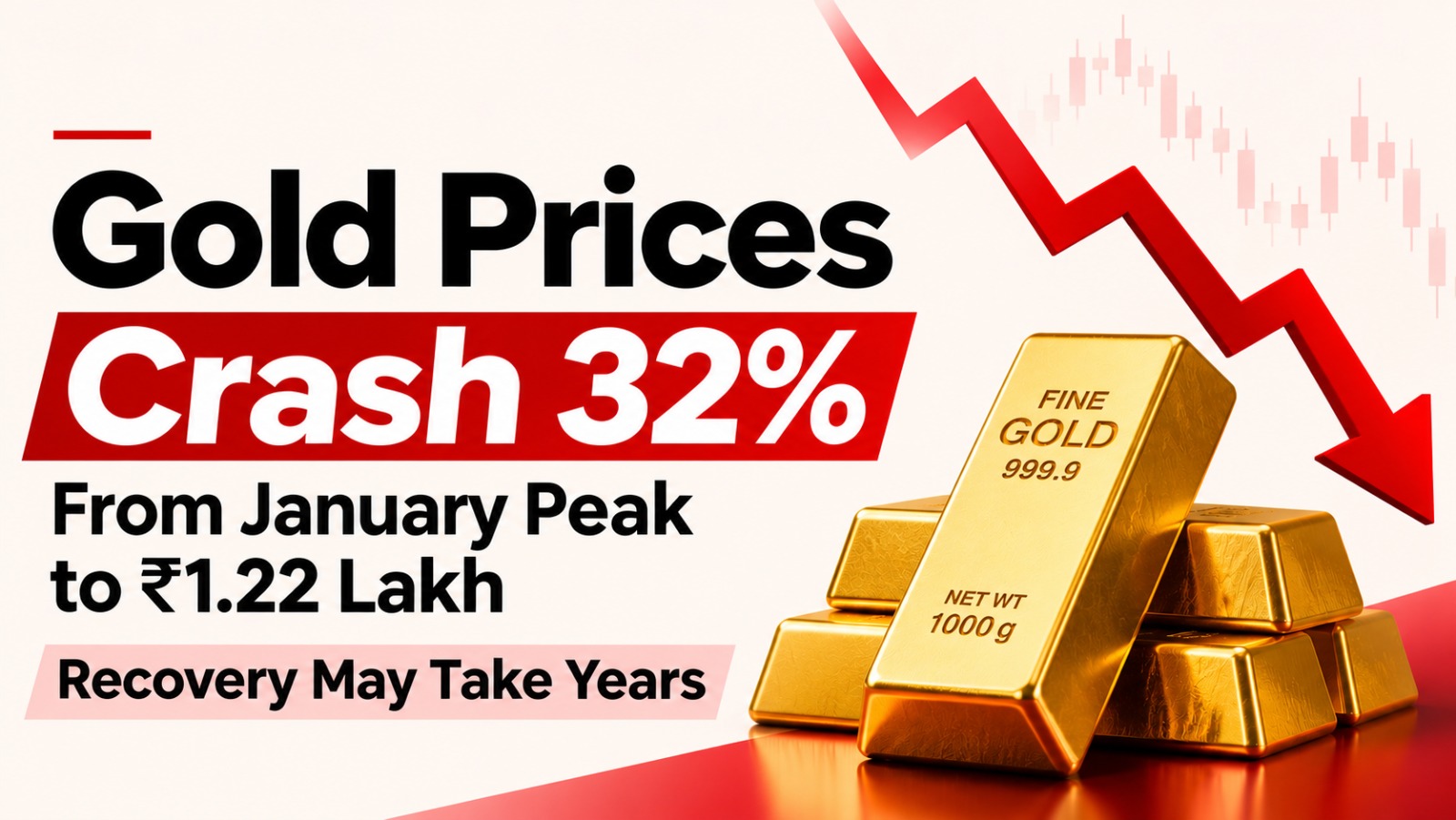
Gold prices in India have fallen more than 32% from their January 2026 peak, raising concerns about how long the precious metal may take to recover. The sharp correction has brought domestic prices down from around ₹1.80 lakh to approximately ₹1.22 lakh per 10 grams, according to MCX data as of November 21, 2026.
The decline has also renewed attention on previous gold market corrections, several of which took years to recover. Historical trends suggest that investors may need to prepare for a prolonged recovery rather than expect prices to return to their previous highs in the near term.
A FundsIndia Wealth Conversations report indicates that gold takes an average of around two years and eight months to reach its lowest point after a major peak. It can then take another four years and seven months to regain its previous high.
Gold Prices Fall Sharply in India and Global Markets
The correction has extended beyond the domestic market. International spot gold prices have dropped nearly 36% from their January record of $5,594.82 an ounce, reaching their lowest level since September 2025.
Several macroeconomic factors have contributed to the decline. A stronger US dollar and rising Treasury yields have put pressure on gold, while expectations of further Federal Reserve interest rate hikes have weakened its appeal.
Gold generally faces greater competition from interest-bearing assets when interest rates remain high, as the metal does not generate regular income.
The changing outlook has also prompted revisions to price forecasts. Goldman Sachs has lowered its end-2027 gold price forecast to $4,650 an ounce, citing near-term pressure from elevated interest rates.
However, the investment bank continues to see potential for a recovery. Continued central bank purchases and a possible revival in investor demand as interest rates ease could support prices over the longer term.
How Long Did Previous Gold Price Crashes Take to Recover?
Previous corrections offer an indication of how extended gold’s recovery periods can be. The current decline is comparable in scale to some of the major downturns recorded over the past several decades.
| Year | Peak-to-trough decline | Recovery period |
|---|---|---|
| 1980 | 57% | Nearly 10 years |
| 1996 | 31% | More than 6 years |
| 2012 | 29% | Around 6.5 years |
| 2026 | Over 32% | Recovery period yet to be determined |
The 1980 correction was particularly severe, with gold losing approximately 57% of its value and taking nearly a decade to regain its previous peak.
The declines in 1996 and 2012 were closer in scale to the current correction. Both took more than six years to complete their respective recovery cycles.
The FundsIndia analysis also highlights that gold’s recovery does not necessarily begin immediately after prices reach their lowest levels. Investors may have to account for an extended period between the initial correction and a return to previous highs.
What Is Driving the Outlook for Gold Prices?
The direction of US monetary policy remains one of the important factors for gold. Expectations of higher interest rates, Treasury yields and movements in the US dollar could continue to influence international prices.
Central bank demand is another factor supporting the longer-term outlook. Continued purchases by central banks, particularly China, provide structural support to the market.
However, demand has not remained equally strong across all investor categories. Retail demand for physical gold in the form of bars and coins has weakened, adding another factor to the changing market environment.
Goldman Sachs’ revised forecast reflects the tension between near-term economic pressures and longer-term demand support. While high interest rates could restrict prices in the immediate future, a shift towards lower rates may improve the metal’s attractiveness.
What Should Gold Investors Do Amid the Correction?
The sharp decline highlights the risks of treating gold as an investment that will always recover quickly after a fall.
Analysts from FundsIndia and Bhaskar English have emphasised the importance of taking a long-term approach. Although gold has historically delivered returns above inflation over extended periods, investors should not assume that every correction will be followed by an immediate rebound.
Staggered buying is one approach suggested for investors considering additional gold exposure. Investing gradually instead of committing a large amount at once can help manage the risk of entering the market during a volatile period.
Investors should also consider their overall portfolio allocation, financial goals and risk tolerance before increasing their exposure to gold.
With domestic prices down more than 32% from their January peak, the historical recovery periods serve as a reminder that a lower price does not necessarily mean a quick return to previous highs. The trajectory ahead will depend on interest rate expectations, currency movements, central bank purchases and the return of investor demand.
Also Read: Gold Nears $3,500 While a 6.3 Factory Reading Deepens Silver’s Trouble