

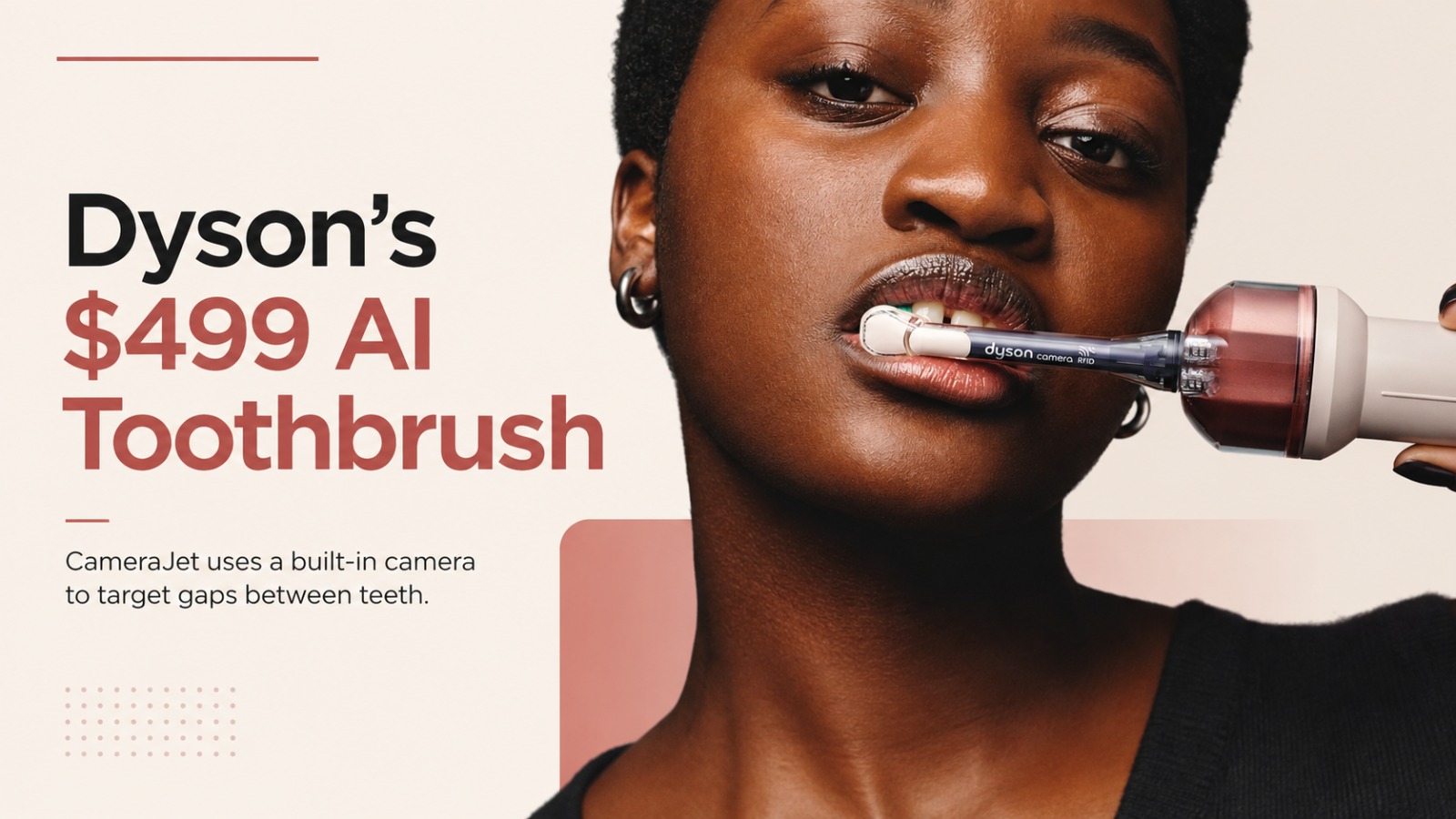
Dyson’s first toothbrush combines an electric brush, a camera-guided mouth-rinse jet and machine learning in one device. The unusual part is not simply that it can show you the inside of your mouth. It decides when and where to fire the rinse while you are still brushing.
Dyson has moved into oral care with the CameraJet, a $499 AI-powered electric toothbrush designed to brush teeth and target the spaces between them during the same cleaning session.
The idea sounds unusually complicated for something that sits beside a bathroom sink, but the way it works is fairly straightforward. A tiny camera watches the teeth as the brush moves through the mouth. Software identifies the gaps between them. When the system sees one, the toothbrush directs a jet of mouth rinse towards that space.
Dyson says it spent six years developing the CameraJet. The device uses a 100,000-pixel macro camera that captures 28 images every second, while its machine-learning system analyses those images in real time to locate interdental gaps. The system was trained using 470,000 dental images and runs on 16 million lines of code.
That combination is what makes the CameraJet different from simply attaching a water flosser to an electric toothbrush.
What exactly does the Dyson CameraJet do?
While the user brushes, the camera continuously looks for the spaces between teeth. Once a gap is detected, Dyson says the system can respond within 100 milliseconds, releasing a conical burst of mouth rinse towards the area.
The liquid comes from a 12.5ml reservoir built into the toothbrush, which is designed to hold enough rinse for one cleaning session. Dyson has chosen a cone-shaped spray rather than the narrower stream commonly associated with traditional water flossers. The company says the wider spray is intended to cover a larger area while operating at gentler pressure. The reservoir can be refilled through the docking station in around three seconds.
The result is effectively three oral-care functions packed into one routine: brushing, rinsing and targeted water-based interdental cleaning.
Dyson, however, has not positioned the CameraJet as a direct replacement for conventional string floss. During a product briefing reported by Gizmodo, the company described it instead as a way to help people who do not floss regularly incorporate some form of interdental cleaning into their routine.
The AI is there to decide when to fire
The most interesting part of the CameraJet may be how little the user has to do to operate its headline feature.
Rather than asking someone to manually aim a water jet between every tooth, the camera and machine-learning system attempt to work out when the brush is passing an interdental gap and trigger the rinse at that moment.
The brush itself can vibrate at up to 58,000 times per minute, while the software anticipates the position of the gaps so the liquid can be released at the right place and time.
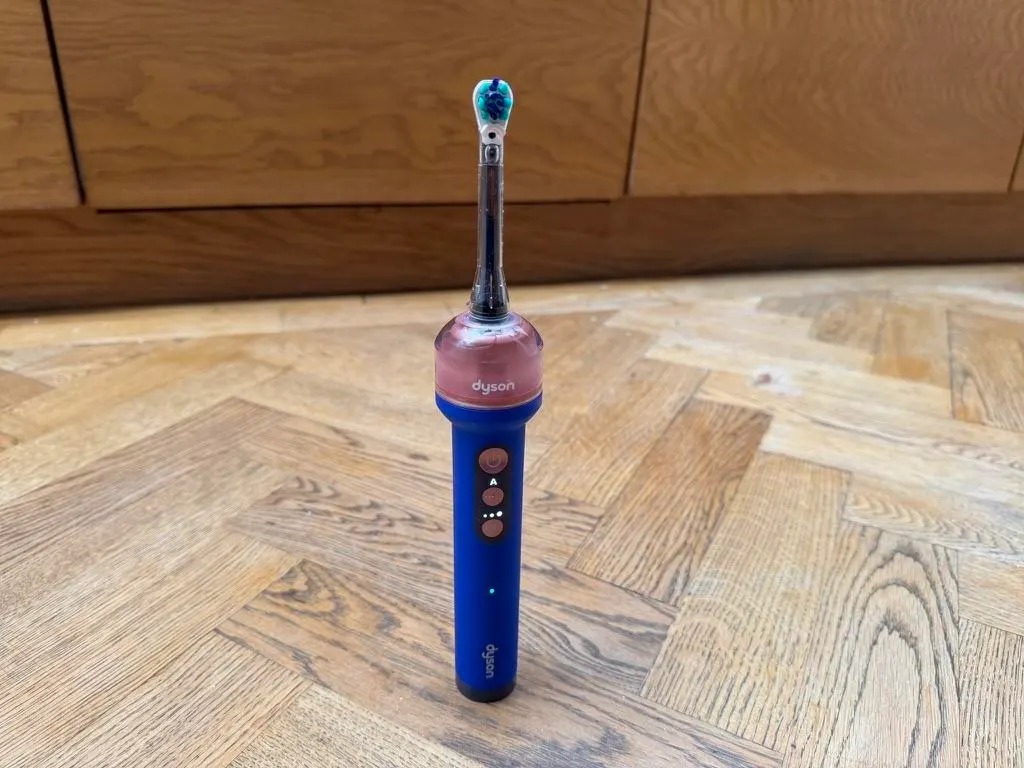
There is also manual control. Users can brush without the automatic jet and activate a rinse jet themselves when they want to.
Yes, you can watch the inside of your mouth
The camera is not limited to operating the automatic rinse system.
CameraJet connects through Wi-Fi and Bluetooth to the MyDyson app, where users can access a live camera view, cleaning guidance, information about areas they have covered and personalised brushing feedback.
That inevitably raises a privacy question because the device is putting a connected camera inside the user’s mouth.
Dyson says the camera operates only during live viewing or automatic jetting and that images are not recorded or stored on the toothbrush or in the cloud.
There is one surprisingly low-tech requirement for all this technology to work properly: the camera needs a clear view.
Dyson recommends using non-foaming toothpaste because excessive foam can block the camera’s view. If toothpaste builds up and the camera can no longer see properly, the automatic rinse jet stops. Users can pause, clear their mouth and continue brushing.
Dyson also recommends smiling while brushing to help give the camera a better view, although a Forbes hands-on account noted that doing so can make the process somewhat messy.
There is still a conventional toothbrush underneath all the technology
Dyson has also redesigned the brush head rather than focusing entirely on cameras and software.
It uses two kinds of bristles. Firmer bristles towards the centre are intended to work on surface stains, while softer outer bristles are designed to clean along the gumline. An RFID chip inside each brush head tracks cleaning cycles and can alert the user when the head needs replacing.
Dyson says the CameraJet can remove up to 69% more plaque in hard-to-reach areas than leading electric toothbrushes, although that figure is a company performance claim rather than an independently established finding in the material reviewed.
The company also worked with the National University of Singapore’s Faculty of Dentistry for five years to develop a synthetic substitute for plaque that could be used to evaluate and refine how the jet removes deposits.
What do you get for $499?
The CameraJet was announced on September 1, with Forbes listing the US order price at $499.99 and the UK price at £419.99.
The toothbrush comes in Ceramic Ultra Blue and Ceramic Pink. The package includes a refill dock, two brush heads, a charging cable and a travel case. Dyson has also said it plans to introduce its own non-foaming toothpaste and low-foaming mouth rinse for the system.
At that price, CameraJet is clearly more than an electric toothbrush with a premium motor. Dyson has effectively turned brushing into a camera-guided system where imaging, machine learning and fluid delivery all have to work together in real time.
Whether consumers want that much technology in a toothbrush is a separate question. But the product itself is easier to understand once the AI label is stripped away: CameraJet watches where the brush is moving, recognises the spaces between teeth and automatically sends mouth rinse towards them.
That is the $499 idea Dyson is betting on.
Also Read: Israeli Startups Raised $577.5M in August as AI Security Funding Surged
















