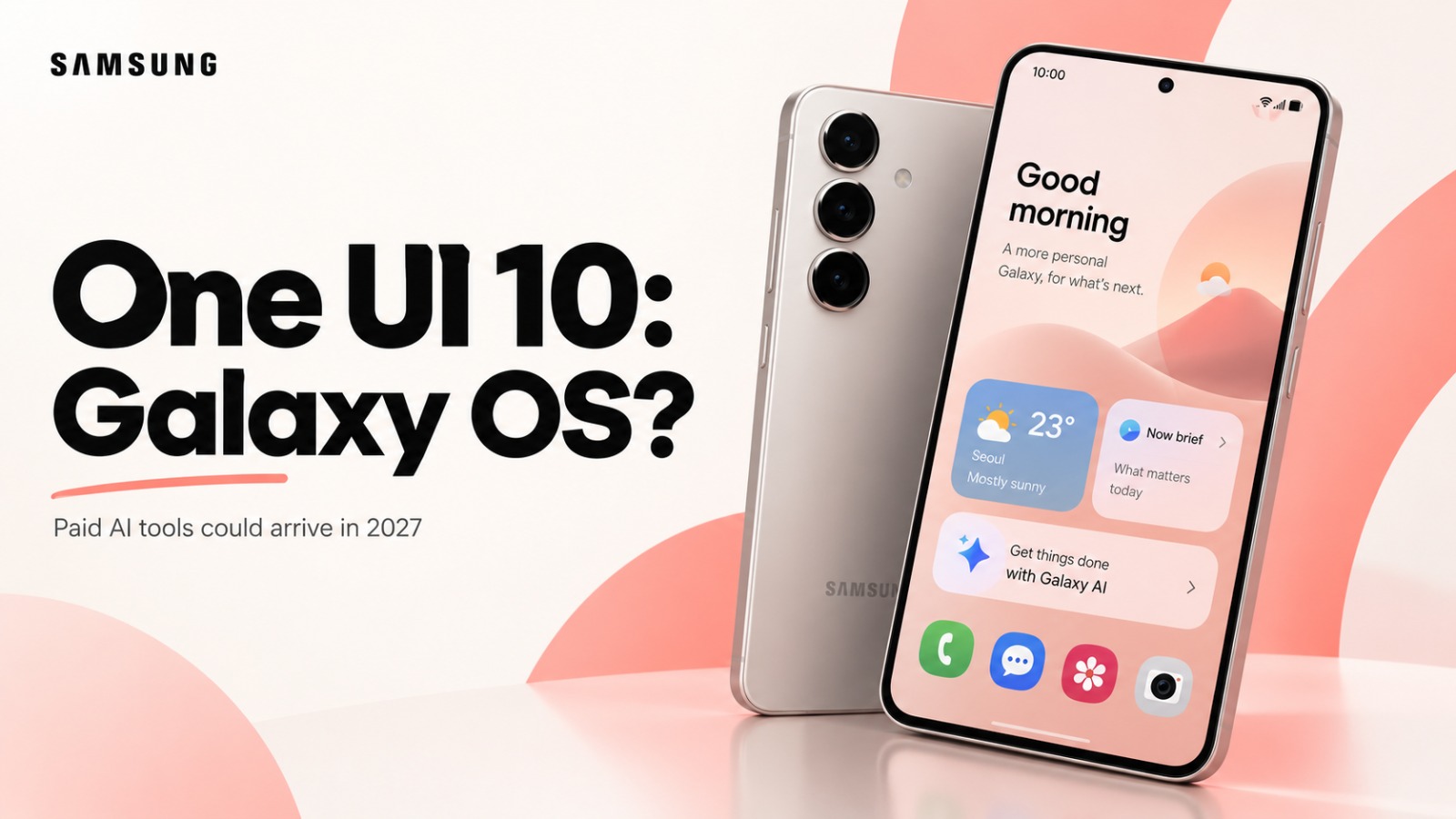
Samsung is reportedly preparing a major software overhaul for 2027, with One UI 10 tipped to introduce sweeping changes to the Galaxy experience. The update could go beyond visual improvements, bringing deeper artificial intelligence (AI) integration, redesigned interfaces and a more connected ecosystem across Samsung devices.
The software is expected to arrive around mid-2027 alongside the Galaxy Z Flip 9 and Galaxy Z Fold 9. According to the rumours, it will be built on Android 18 and could mark one of the most significant changes to Samsung’s software since One UI debuted in 2018.
One of the more intriguing possibilities is a change in branding. Reports suggest Samsung could eventually replace the One UI name with Galaxy OS, although the company has not confirmed any such move. There is also speculation that certain advanced AI features could require a paid subscription in the future.
One UI 10 Could Bring Samsung’s Biggest Software Changes Yet
Tipster Ice Universe has claimed that One UI 10 will introduce changes described as unprecedented in nature. While the exact features remain unclear, the reports point towards a substantial redesign rather than a routine software update.
The changes could extend to the interface, animations and everyday usability, potentially altering how users interact with their Galaxy smartphones. The broader objective appears to be making the software more responsive to individual needs while reducing the effort required to complete common tasks.
A key part of this potential shift is the growing role of AI. Instead of requiring users to open separate applications for different activities, future Galaxy software could use contextual assistance to bring relevant actions together within the interface.
However, Samsung has yet to confirm the update’s features or release schedule. The reported mid-2027 debut should therefore be treated as an expectation rather than an official launch date.
Could Samsung Replace One UI With Galaxy OS?
A possible rebrand is another development attracting attention ahead of the anticipated software overhaul.
Reports citing tipster Phonefuturist suggest Samsung could rename One UI to Galaxy OS. The change could coincide with the Galaxy S28 generation or the tenth anniversary of One UI, depending on the direction Samsung ultimately takes.
The Galaxy OS name would place greater emphasis on Samsung’s wider product ecosystem rather than the interface used on its smartphones alone. It could also create a more unified identity for software running across different Galaxy devices.
The idea draws comparisons with Apple’s iOS and Xiaomi’s HyperOS, which serve as recognisable software brands within their respective ecosystems.
However, the reports do not establish whether Galaxy OS is a confirmed consumer-facing name, an internal codename or simply a possibility being discussed. Samsung has not announced plans to discontinue the One UI branding, so the rumoured rebrand remains uncertain.
AI Could Become the Centre of the Galaxy Experience
Beyond a possible name change, deeper AI integration could be the defining feature of Samsung’s next software generation.
Reports indicate that Samsung is working closely with Google to bring AI further into the operating system. This would represent a shift away from treating AI as a collection of individual tools towards making it a more integrated part of the user experience.
One concept discussed in connection with these developments is the Fluid AI Design System. It envisions adaptive layouts, glass-like visual elements and AI agents capable of helping users carry out tasks across devices.
If these ideas translate into actual products, Galaxy users could eventually see interfaces that adjust to the context of a task, alongside more seamless interactions between smartphones, tablets and wearables.
The broader vision also includes emerging device categories such as extended reality (XR) headsets and smart rings. Deeper software integration could help Samsung deliver a more consistent experience across its expanding range of connected products.
For now, these concepts should not be mistaken for confirmed One UI 10 features. Samsung has not publicly detailed the software’s final design or capabilities.
Could Samsung Charge for Advanced AI Features?
Another question surrounding Samsung’s future software strategy is whether some AI features could move behind a paywall.
Industry speculation suggests the company might eventually introduce subscription-based access to selected premium AI tools or third-party integrations, while keeping essential functionality available without charge.
Such a model would create a distinction between basic software features and more advanced AI capabilities. It could also change how Galaxy owners access certain services as AI becomes more deeply integrated into everyday smartphone use.
Paid AI offerings are already part of the wider technology landscape, including subscription options associated with platforms such as ChatGPT and Google Gemini. However, that does not confirm Samsung will adopt the same approach for One UI.
Samsung has not announced subscription pricing, a paid AI plan or which features, if any, might require payment. Until the company provides details, the possibility remains speculation rather than a confirmed change to its software policy.
What Galaxy Users Can Expect From the 2027 Update
If the current reports prove accurate, One UI 10 could represent a broader shift in Samsung’s approach to mobile software. A redesigned interface, more contextual AI assistance and closer integration across Galaxy products could all play a role in the next stage of the ecosystem.
The potential Galaxy OS rebrand and questions about paid AI access also suggest that the changes being discussed may extend beyond appearance and functionality to Samsung’s wider software strategy.
Much remains unknown, including the final name, supported devices, feature list and rollout schedule. For now, the Galaxy Z Flip 9 and Galaxy Z Fold 9 are tipped to be among the first devices associated with the update, with a possible debut in mid-2027.
Until Samsung makes an official announcement, the reported overhaul, rebranding plans and subscription possibilities should be treated as unconfirmed.
Also Read: Apple’s Next Home View May Follow Your Voice With a 360-Degree Robotic Arm