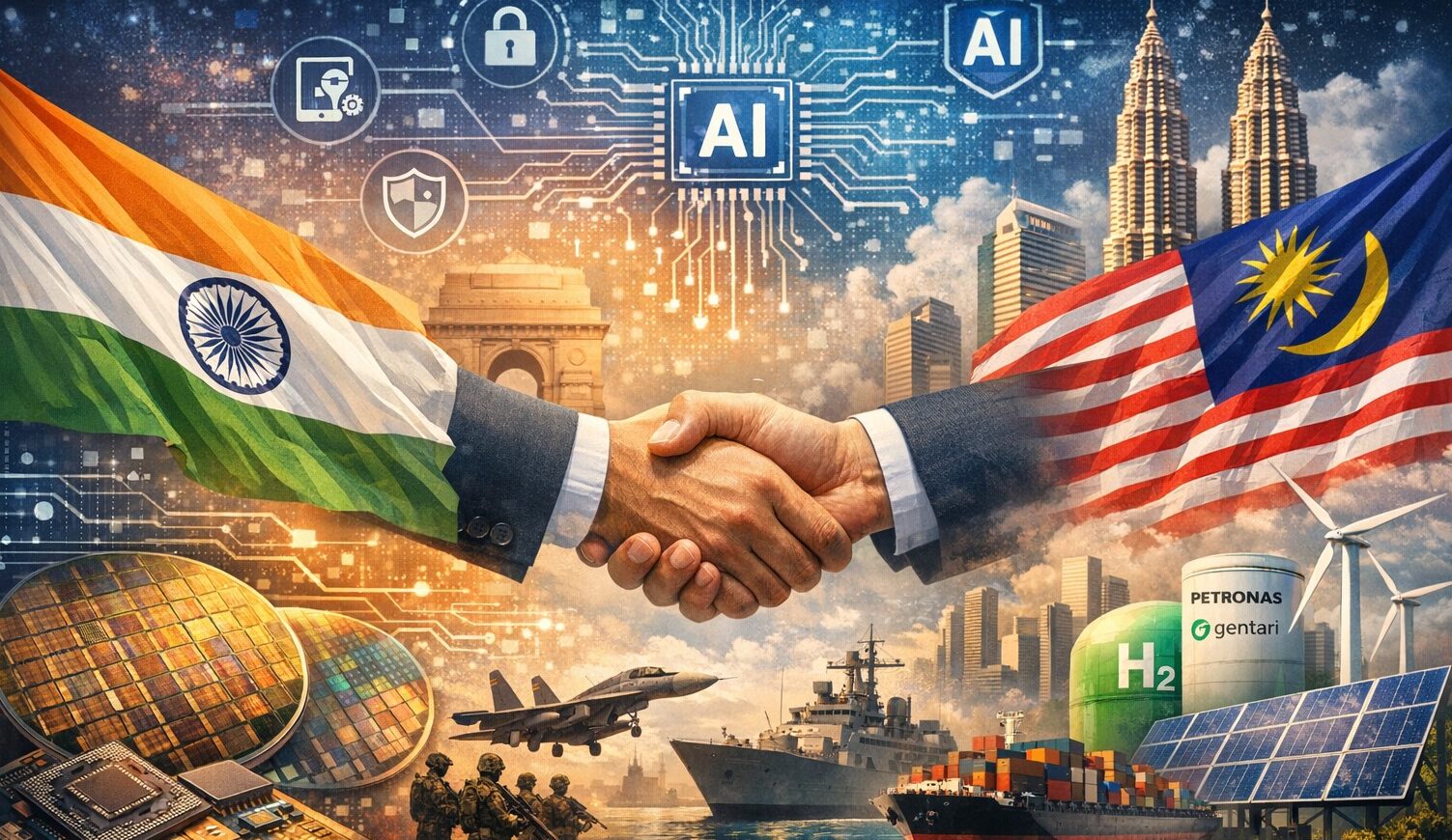
India and Malaysia have entered a new phase of economic and technological cooperation with the launch of the Malaysia-India Digital Council. The platform is designed to deepen collaboration across fintech, e-governance, cybersecurity, artificial intelligence, Digital Public Infrastructure, and other emerging technologies. The council will serve as a structured mechanism linking governments, regulators, and industry stakeholders from both countries to align priorities, identify investible opportunities, and deliver outcome-focused programmes.
The initiative reflects a shared ambition to make bilateral economic engagement smoother and more accessible. By strengthening digital systems and regulatory coordination, both sides aim to reduce friction for tourists, students, small businesses, and individuals sending remittances, while also encouraging innovation-led growth across sectors.
Seamless payments to strengthen everyday economic ties
A key pillar of the agreement focuses on transforming cross-border payments. NPCI International Limited and PayNet Malaysia will work together to establish bilateral payment linkages that enable low-cost and seamless transactions. These systems are expected to benefit tourists, students, and small businesses by simplifying retail payments and improving convenience across borders.
As part of this effort, Prime Minister Narendra Modi announced that India’s Unified Payments Interface will soon become operational in Malaysia. Once implemented, the move will expand UPI’s international presence and further enhance people-to-people connectivity, while also supporting smoother trade and travel-related transactions between the two countries.
Also Read: Bitcoin Slide Erases Trillions as Market Volatility Deepens
Local currency trade to cut costs and boost resilience
India and Malaysia have also agreed to promote trade invoicing and settlements in their respective local currencies, the Indian Rupee and the Malaysian Ringgit. The initiative, to be supported by the Reserve Bank of India and Bank Negara Malaysia, is intended to lower transaction costs and reduce exposure to volatility in global currencies.
This approach aligns with broader economic cooperation goals, as both countries seek to expand bilateral trade beyond $18 billion in 2025. Leaders from both sides see local currency usage as a practical step toward strengthening economic resilience and reducing dependence on third-country currencies in cross-border transactions.
Semiconductors identified as a strategic growth area
Semiconductor cooperation has emerged as a strategic priority within the partnership, reflecting the sector’s importance to global technology resilience. India and Malaysia plan to collaborate on innovation, workforce development, and supply chain stability to support the semiconductor ecosystem.
The cooperation will be supported by institutional linkages, including collaboration between IIT Madras Global and Malaysia’s Advanced Semiconductor Academy. Malaysia’s established semiconductor base, which accounts for nearly 30 percent of its exports, positions it as a critical partner for India as it advances its ambitions in chip fabrication, assembly, and testing.
Defence cooperation expands across multiple fronts
Defence and security ties have also been strengthened through the Malaysia-India Defence Cooperation Committee. Both sides have agreed to establish a Strategic Affairs Working Group and a dedicated Su-30 forum to deepen operational coordination. The recent Harimau Shakti joint military exercise was cited as a demonstration of growing synergy between the armed forces of the two nations.
India and Malaysia reaffirmed their commitment to counter-terrorism cooperation, intelligence sharing, and maritime security. Discussions also covered enhanced collaboration through ASEAN-led frameworks, with both countries condemning terrorism in all forms and committing to address terror financing, radicalisation, and the misuse of emerging technologies.
Energy, food security, and people-to-people links gain momentum
Energy cooperation is set to expand with Malaysian companies PETRONAS and Gentari planning investments in India’s renewable energy and green hydrogen sectors. Opportunities for large-scale solar projects are also being explored, aligning with India’s clean energy transition goals.
On food security, Malaysia reiterated its position as a reliable supplier of sustainable palm oil and agreed to work with India across the value chain. Alongside economic initiatives, people-to-people ties remain a central pillar of the relationship. Education partnerships, scholarships, and cultural exchanges were highlighted, along with the role of the nearly three-million-strong Indian diaspora in Malaysia, described as a living bridge that continues to anchor and strengthen bilateral relations.
Also Read: Mahindra Announces Its Largest Integrated Manufacturing Expansion in Maharashtra