

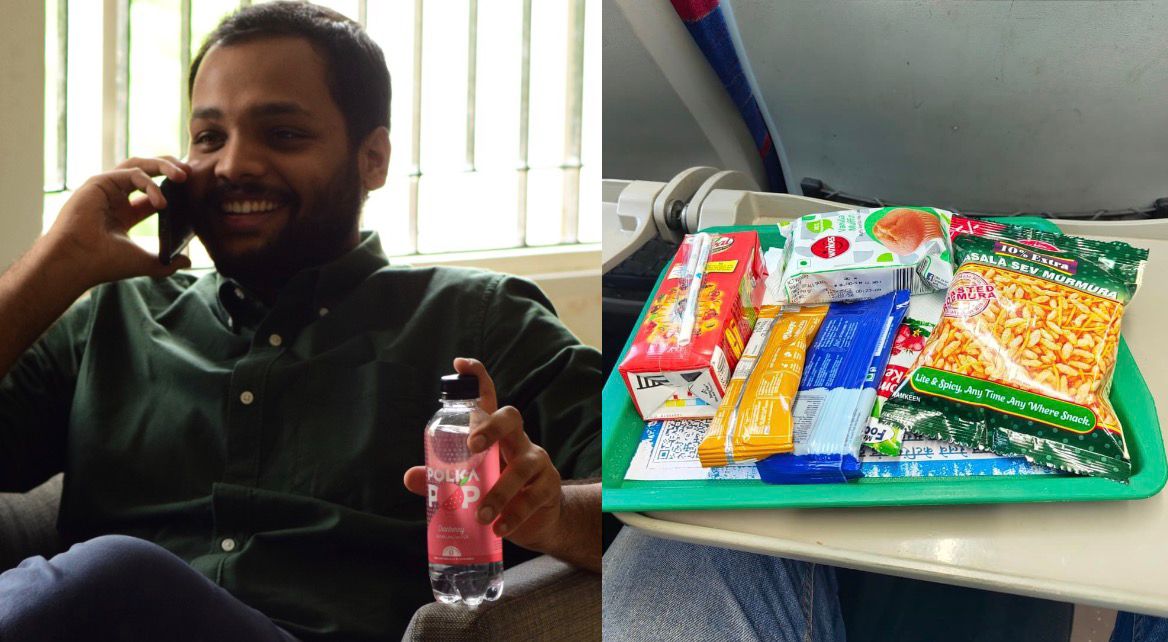
A routine train journey turned into a public-health alarm for entrepreneur Gaurav Khemka, founder of Polka Pop, after he discovered that the IRCTC snack box he received contained 46.09 grams of sugar, nearly double the WHO’s recommended daily limit for an adult.
Khemka says he didn’t even intend to order food. A recent UI change in the IRCTC booking website, he claims, led him to mistakenly add a meal while booking his ticket. But what arrived on his tray, he says, was far more surprising.
What IRCTC served?
Khemka listed the sugar content of each item based on their nutrition labels:
- Winkins Vanilla Muffin (30g): 9.19g sugar
- Girnar Instant Tea (14g sachet): 9.42g sugar
- Peanut Chikki (~15g): 4.8g sugar
- Real Fruit Juice (180ml): 22.68g sugar
- Haldiram’s Masala Sev Murmura (27g): negligible added sugar

He excluded a sauce packet (approx. 2g sugar) as a “wild card” addition. Even without it, the total sugar load came to 46.09g, all of it served to be consumed during a 4.5-hour journey.
How it compares to WHO guidance
The World Health Organization recommends that free or added sugars ideally stay within 25–30g per day for a healthy adult.
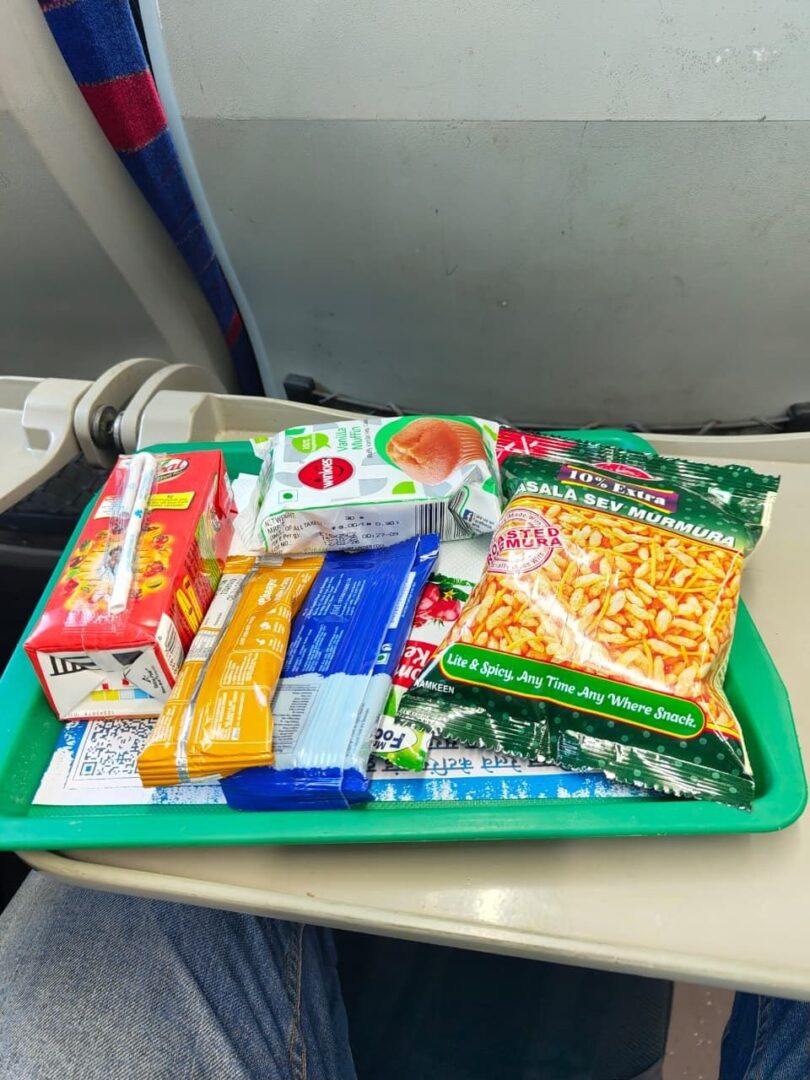
What Khemka received in one snack tray was well above that limit.
“I’ve been off sugar for almost a year. If I weren’t conscious, I could’ve eaten half of this out of habit or boredom,” he wrote.
A concern amplified by India’s diabetes burden
Khemka pointed to data from the Madras Diabetes Research Foundation (MDRF) over 100 million identified diabetics in India and 32.4% of the population at high risk.
With such numbers, he argued, high-sugar snack boxes as the default choice on trains could pose risks to passengers who may not be actively monitoring their sugar intake.
Khemka said the IRCTC e-ticketing portal’s new interface caused him to add food unintentionally. The incident, he suggested, shows how design choices can influence food consumption at scale, especially on high-traffic public platforms.
‘Opportunity and responsibility’ for IRCTC
Calling for healthier defaults, Khemka said IRCTC and IRCTC eCatering have a “responsibility to serve better choices,” adding that even small tweaks to the menu could have a “massive public health impact.”
He tagged food awareness advocates Revant Himatsingka (Food Pharmer) and Jitendra Chouksey in an attempt to draw attention to the issue.
While the items in the tray, muffin, juice, sweetened tea mix and chikki are common train snacks, the combined sugar load raises questions about food choices available to the millions travelling by train each day.
The episode brings into focus a larger debate:
Should high-diabetes nations continue serving ultra-sweet snack combos as the default option on public transport? Khemka hopes the answer and the course correction, reaches “the right people.”
Also Read: Badshah’s Shelter 6 Vodka Debuts With Bold ₹700 Crore Target in India
















