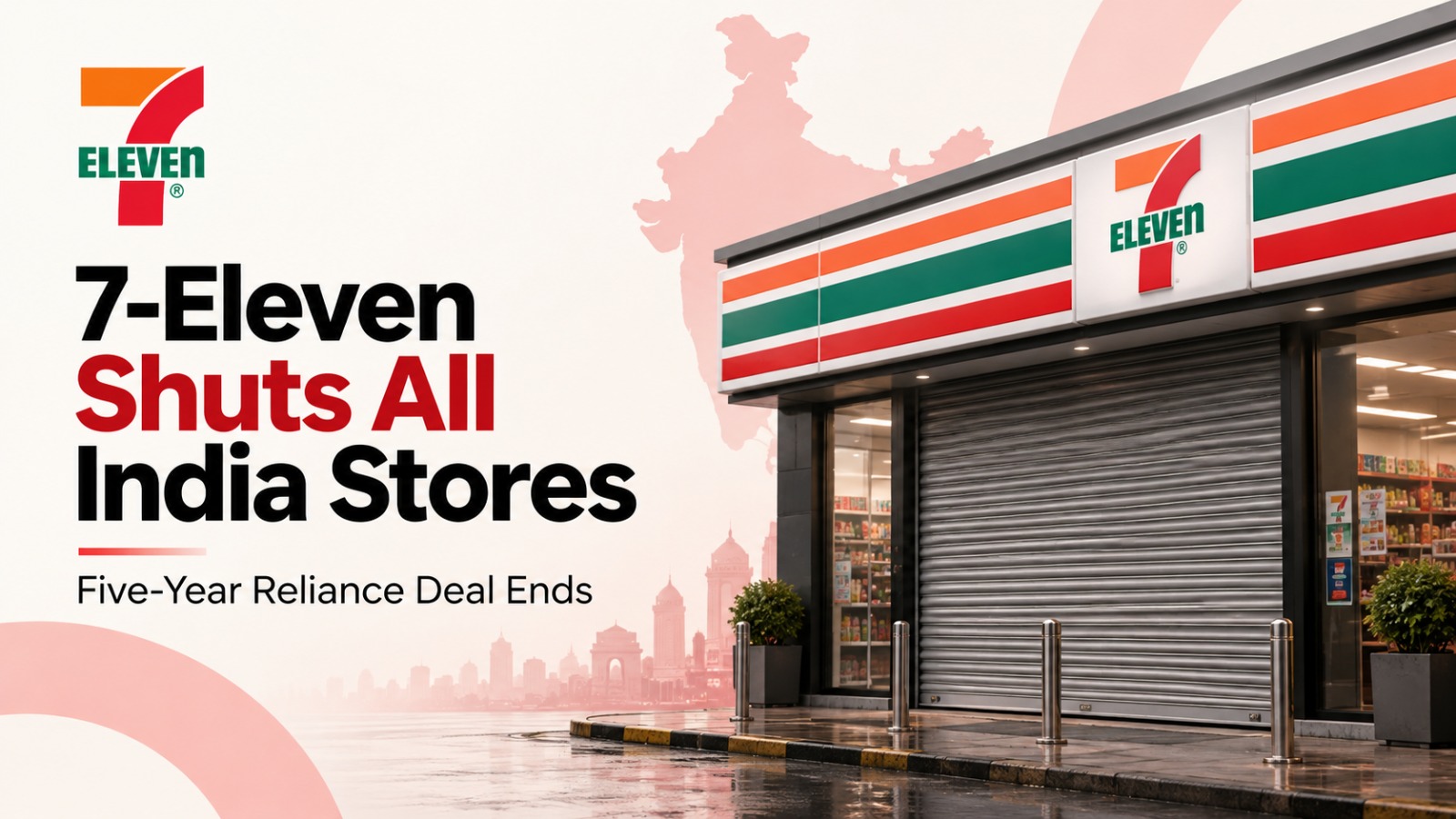
7-Eleven has ended its India operations after all 31 of its remaining stores in Mumbai and Pune shut down on September 30, 2026, bringing the convenience-store chain’s five-year run in the country to an end.
The closures were carried out by Reliance Retail, which operated the brand in India as its master franchisee. The exit comes after the business faced continued operational losses and increasing pressure from neighbourhood kirana stores and quick-commerce platforms.
From 60 stores to a complete India exit
7-Eleven entered India in October 2021 through Reliance’s subsidiary, 7-India Convenience Retail. The partnership was aimed at bringing the international convenience-store format to Indian urban consumers.
The chain expanded to around 60 outlets at its peak. However, its footprint later declined as the business struggled to achieve sustainable profitability.
The remaining 31 outlets, located across Mumbai and Pune, were eventually closed on September 30. Employees from the business were absorbed into other grocery and neighbourhood retail formats operated by Reliance.
Losses put pressure on the convenience-store model
The financial performance of the India business highlighted the challenges it faced. In FY26, the venture reported revenue of ₹92 crore against losses of nearly ₹90 crore.
High rents, low transaction values and limited economies of scale contributed to the pressure on the business. The model also had to compete with India’s established kirana network, where consumers can often access everyday products close to home.
At the same time, quick-commerce platforms have changed expectations around how quickly groceries and other daily-use products can be delivered.
Why 7-Eleven struggled to find room in India’s retail market
India’s retail market presents a difficult environment for conventional convenience stores. Kirana shops continue to play a major role in everyday retail, while quick-commerce services have added another layer of competition by offering rapid delivery.
The preference for fresh street food also created an additional challenge for a convenience-store format built around packaged food and everyday purchases.
For 7-Eleven, these factors made it difficult to generate enough transactions and store-level profitability to support the expansion of its physical network.
What the exit means for organised convenience retail
The closure of all 31 remaining stores highlights the pressure on organised convenience retailers trying to build a large physical footprint in India’s major cities.
Quick-commerce has increasingly become part of the competitive landscape for everyday purchases, while traditional retailers continue to benefit from their proximity to consumers.
This leaves convenience-store operators with the challenge of finding locations and formats that can generate enough customer traffic without carrying unsustainable operating costs.
Seven & i leaves the door open for a return
The India exit may not necessarily be permanent for 7-Eleven’s parent company.
Seven & i Holdings has indicated that it may explore new options to enter the Indian market again in the future. Any potential return could involve a different operating structure or a model better suited to the country’s retail environment.
For now, however, the closure of the final 31 outlets marks the end of 7-Eleven’s current India venture, five years after its first stores opened under the Reliance partnership.
Also Read: Inside NPrep, the Jodhpur Startup Using AI for Nursing Exam Preparation