

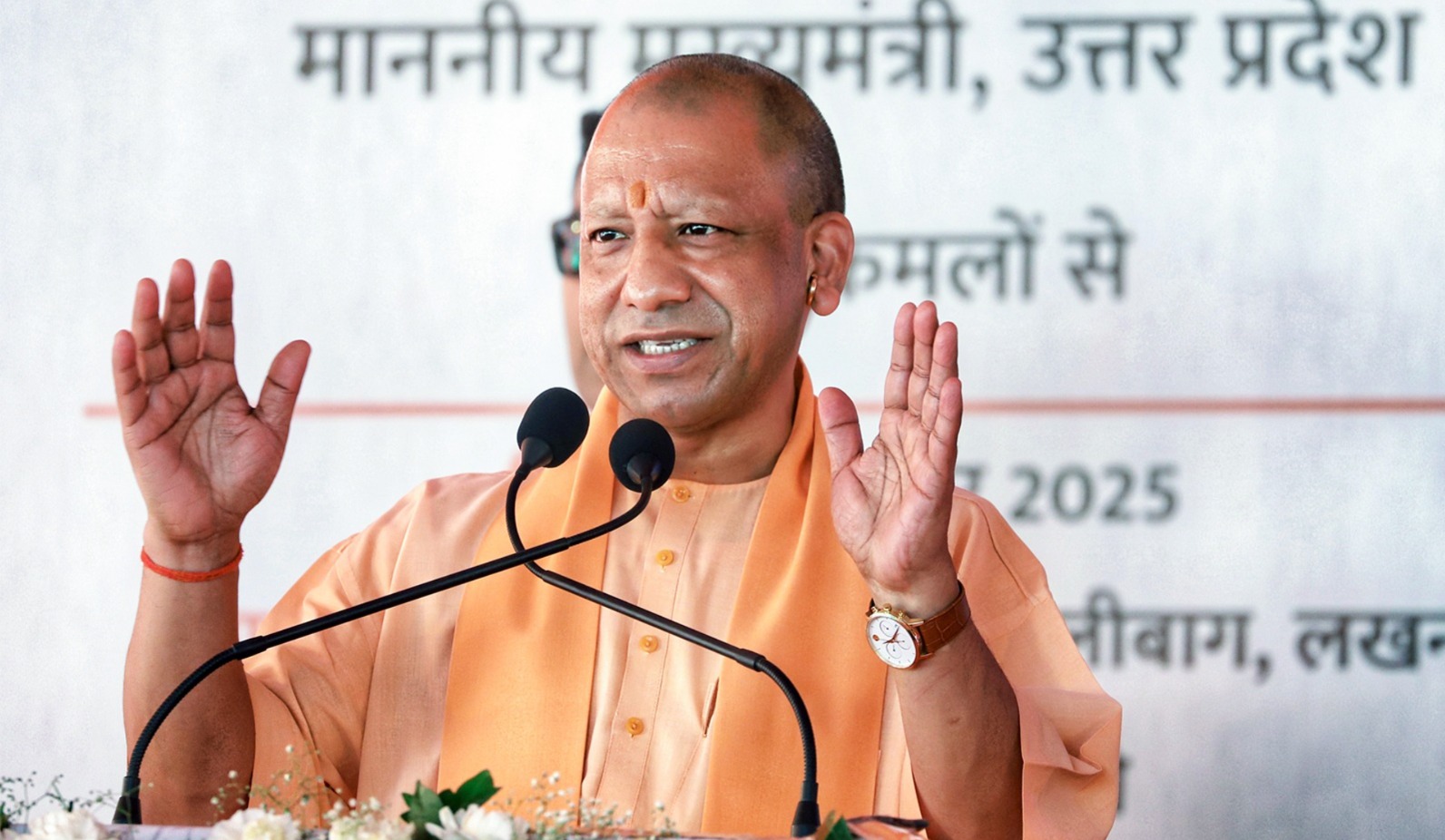
Uttar Pradesh chief minister Yogi Adityanath has asked his bureaucracy to shed any remaining hesitation and treat the state’s digital economy push as a global race, not a routine policy rollout. Chairing a review of the IT and electronics department in Lucknow on Saturday, he said Uttar Pradesh has already moved up sharply in startups, semiconductors, data centres and electronics manufacturing and must now “position itself at the forefront of global competition.”
At the heart of his message were three themes: a faster and cleaner approvals regime for investors, deeper integration of young people into tech-led sectors, and a stronger backbone of land banks and incentives in hubs such as Noida, Greater Noida and the Yamuna Expressway Industrial Development Authority (YEIDA) region.
Approvals, not announcements, will decide UP’s credibility: Yogi Adityanath
The chief minister was blunt about the need to cut friction for companies looking at IT and IT-enabled services (ITES) in the state. He asked officials to ensure “a simple, transparent and time-bound approval system” for investors in these sectors, signalling that policy on paper is no longer enough as actual investments begin to scale.
He also underlined that one semiconductor project has already been approved, and that the state government must stay in “continuous engagement” with the Union government to push two more proposals over the line. For this emerging semiconductor and electronics corridor, officials have been told to assemble new land banks in Noida, Greater Noida and YEIDA to avoid project delays when large investors arrive.
The subtext is clear: as multiple Indian states pitch themselves as semiconductor and data centre destinations, Uttar Pradesh wants a reputation for quick decisions and ready land, not just headline investment MoUs.
Data placed before the chief minister shows how sharply the state’s electronics and IT exports have risen over seven years. Electronics exports have jumped from ₹3,862 crore in 2017-18 to ₹44,744 crore in 2024-25, while IT exports have increased from ₹55,711 crore to ₹82,055 crore in the same period.
Even without external comparisons, the curve is steep. In electronics alone, the shift from a few thousand crore to tens of thousands represents more than an eleven-fold rise over the period, indicating that large-scale manufacturing is no longer confined to a handful of units.
In IT services, the growth is more measured but still significant, adding over ₹26,000 crore in export value between 2017–18 and 2024–25 based on the figures shared in the meeting.
Under the state’s Electronics Manufacturing Policy 2020, officials reported receiving 67 investment proposals worth ₹15,477 crore, with the potential to generate 1,48,710 jobs. Incentives worth ₹430 crore have already been approved, and 25 additional proposals are expected to be cleared by March 2026.
This pipeline suggests that the current export numbers are not the ceiling but a staging point, provided the state can deliver on approvals, infrastructure and skilled manpower.
Data centre race: Noida-Greater Noida at the core
The most visible symbol of Uttar Pradesh’s digital ambitions is the rush of data centre investments, particularly in the western belt. Under the Data Center Policy, companies including the Hiranandani Group, NTT Global, Web Werks, Adani Enterprises and ST Telemedia have proposed investments exceeding ₹21,342 crore, with an estimated 10,000 jobs linked to these projects.
By tying this investment wave to fresh land banks in Noida, Greater Noida and YEIDA, the government is effectively trying to convert these locations into a long-term data centre and cloud services cluster, rather than a one-cycle investment story.
Startups: More funds on paper, more accountability demanded
The chief minister was also briefed on the state’s Startup Policy, which has seen a sharp rise in financial support. Funds released for startup promotion have gone up from ₹274 lakh in 2021–22 to ₹2,600 lakh, according to officials.
Yogi Adityanath, however, framed this not as an end in itself but as a responsibility to ensure that money translates into market-ready ventures. He said the state’s startup ecosystem is “expanding rapidly” and must be strengthened through comprehensive support for training, testing and market linkages.
He was categorical that eligible investors should not face delays in receiving incentives and that the department must ensure “clear accountability” for timely processing. That push for accountability is crucial in a space where startup founders often lose time navigating incentive paperwork rather than building products and customers.
Youth at the centre of a tech-led economy
A recurring line in the review meeting was the role of young people. Calling the integration of youth into a technology-driven economy a key government priority, the chief minister asked the department to step up efforts to increase youth engagement in IT and ITES sectors.
He also flagged the need for “innovative training models” and stronger collaboration with organisations. The message here is that traditional, classroom-heavy training may not be enough for fast-moving areas like cloud infrastructure, cybersecurity, AI-enabled services or electronics design; industry-linked and practice-focused models will be critical if UP wants to supply talent at the same speed as it attracts investment.
From targets to traction
Taken together, the numbers presented to the chief minister and the instructions issued during the meeting point to a clear pivot: Uttar Pradesh is no longer talking about entering the data centre and electronics race; it believes it is already on the track and is now chasing pole position.
Whether the state can indeed “position itself at the forefront of global competition” will depend on how quickly those approved policies, proposed investments and rising budget outlays convert into operational plants, live data centres and scaled-up startups.
But the direction is unambiguous, approvals have to move faster, industrial land must be ready before investors come knocking, incentives must reach on time, and young people in UP must see IT, electronics and startups not as distant sectors, but as realistic career paths.
For now, the review in Lucknow has set a clear benchmark: the government is publicly tying its ambition to concrete export numbers, investment proposals and policy instruments. The next few years will show whether that ambition can be matched by delivery on the ground.
Also Read: Polka Pop Founder Alarms IRCTC After 46g Sugar Snack Box
















