

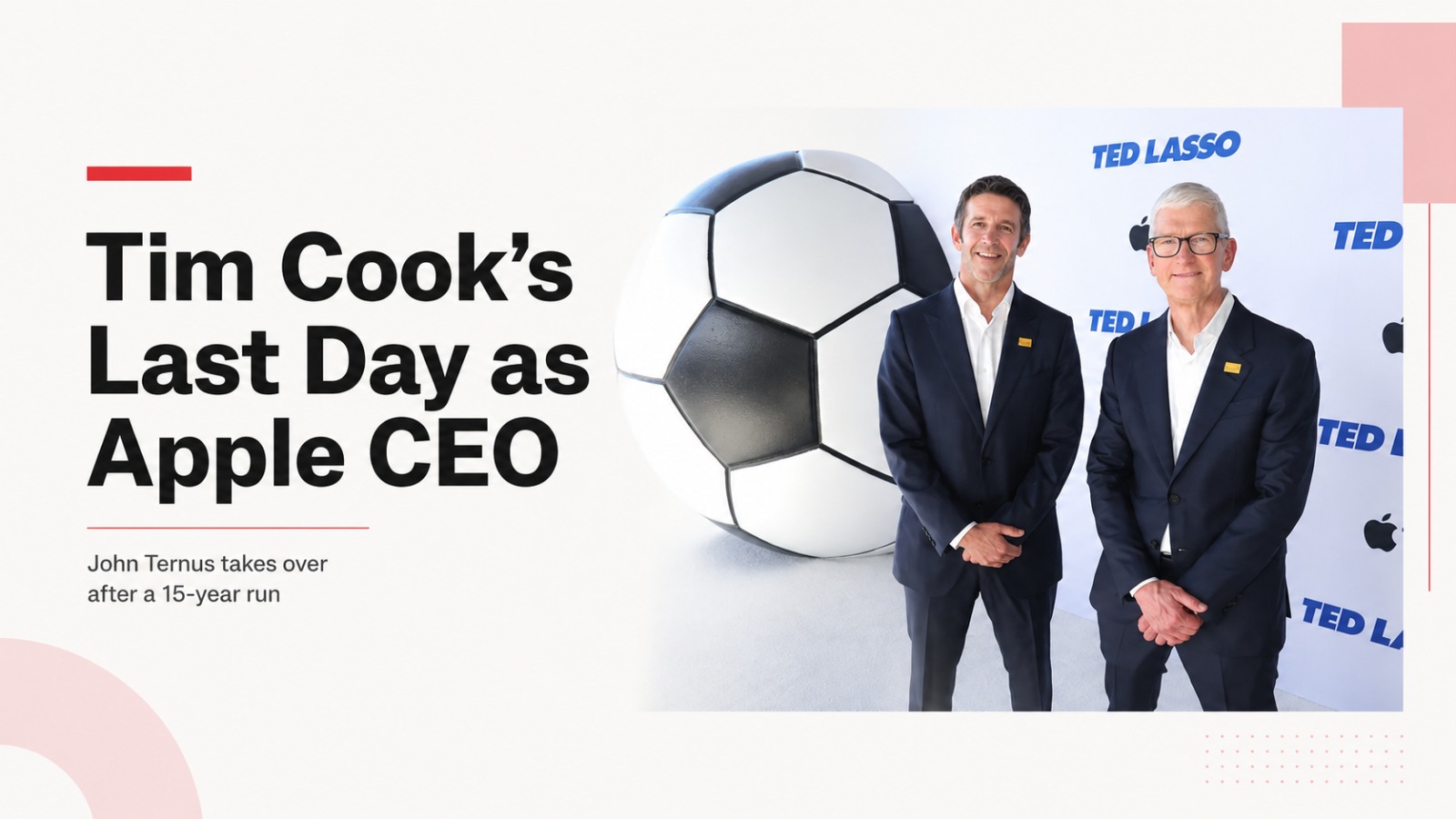
After nearly 15 years at the helm, Tim Cook leaves the Apple CEO’s office having expanded the company far beyond the iPhone. His final message, however, focused less on financial milestones and more on the culture he believes made them possible.
Tim Cook’s final day as Apple’s chief executive arrived on August 31, 2026, closing a chapter that began with one of the most difficult leadership transitions in technology.
There are plenty of numbers that can be attached to Cook’s tenure. Apple’s market value grew from roughly $350 billion in 2011 to $5 trillion in July 2026. Revenue rose from about $108 billion to nearly $400 billion. New businesses were built, entire product categories emerged, and services became a much larger part of Apple’s commercial engine.
Yet Cook chose a very different measure when saying goodbye.
In a message to Apple employees on his last day as CEO, he wrote that he was most proud of what an annual report could never capture. For Cook, that was Apple’s culture.
It was an unusually fitting conclusion to a tenure often described through balance sheets, market capitalisation and product shipments. Cook spent years turning Apple into a larger, broader and more operationally powerful company, but his farewell placed the people behind that expansion at the centre of the story.
A journey at Apple that began long before the CEO title
Cook did not arrive at the top job as an outsider.
He joined Apple in 1998 as senior vice president for worldwide operations and became closely associated with the overhaul of the company’s supply chain and manufacturing operations. That expertise would become increasingly important as Apple grew into a global business serving customers at enormous scale.
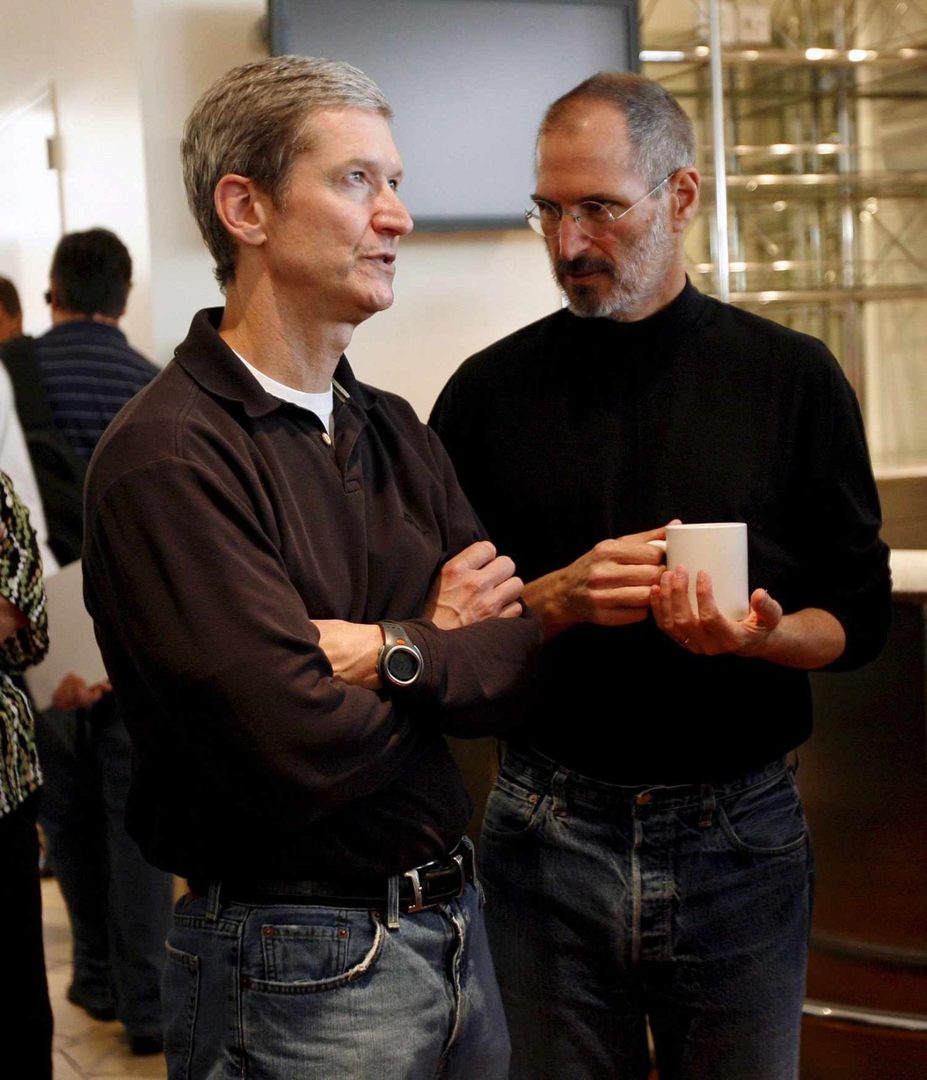
Then came August 24, 2011.
Steve Jobs stepped down as CEO because of ill health, and Cook took charge. Jobs died later that year, leaving Cook with a challenge few executives would have wanted: leading Apple after the person whose identity had become inseparable from the company itself.
Cook’s era did not attempt to reproduce the Jobs years. Apple under his leadership took a different route, built around scale, disciplined operations, an expanding ecosystem and businesses capable of generating growth beyond a single blockbuster device.
Nearly 15 years later, the extent of that transformation can be seen in the company Cook is handing over.
The Apple Cook leaves behind is much bigger than the iPhone
The iPhone remained central to Apple, but one of Cook’s most important contributions was reducing the company’s dependence on customers regularly replacing hardware.
Services became a major pillar.
Apple Music, iCloud, Apple Pay, Apple TV+, Apple Arcade, AppleCare and the App Store helped build a stream of recurring business around the devices already in customers’ hands. Apple’s Services segment generated $109.1 billion in revenue in the latest fiscal year cited in the supplied material.
That shift mattered because it changed the relationship between Apple and its customers. Selling the device was no longer necessarily the end of the transaction. Increasingly, it became the beginning of a wider ecosystem.
Cook also oversaw Apple’s expansion into product categories that did not exist when he became CEO. Apple Watch and AirPods developed into significant businesses, while Vision Pro took the company into mixed reality.
Not every expansion worked equally well. Vision Pro has struggled to achieve widespread adoption since its 2024 launch, a reminder that Cook’s record was not without weaker bets.
Still, the broader change is clear. Apple at the end of Cook’s CEO tenure is a more diversified company than the one he inherited.
Apple Silicon may prove to be one of Cook’s most enduring bets
Some of Cook’s biggest decisions were less visible than the devices sitting on store shelves.
In 2020, Apple announced that the Mac would move away from Intel processors and towards the company’s own Apple Silicon. The transition across the Mac range was completed by 2023.
The change improved performance, battery life and power efficiency while giving Apple greater control over the technology inside its computers. It also created a foundation for the company’s approach to processing artificial intelligence directly on devices.
For a chief executive known first for operations, the silicon transition stands out because it pushed Apple towards deeper ownership of the technology underpinning its products.
Cook’s Apple increasingly wanted control not just over hardware design and software, but over the chips connecting the two.
Privacy also became part of the Cook-era Apple identity
The transformation was not purely financial or technological.
During Cook’s tenure, privacy and security became increasingly prominent in Apple’s public identity. The company positioned privacy as a distinguishing feature and emphasised security and on-device processing as part of its broader product philosophy.
That positioning helped define what the company wanted the Apple brand to represent beyond design and performance.
Taken together, the expansion of services, the arrival of wearables, Apple Silicon and a stronger focus on privacy show why Cook’s contribution cannot be reduced to whether he produced another product with the cultural impact of the original iPhone.
His Apple was built differently.
It became larger, more integrated and spread across more businesses.
The numbers are enormous, but Cook’s farewell barely sounded like a victory lap
Cook could have used his final message to employees to recite those achievements.
Instead, he directed much of the credit elsewhere.
He told Apple employees that whatever could be said about his own success was because of them. He described the company as proof that “culture triumphs over everything” and returned to Steve Jobs’ idea of leaving a “dent in the universe.”
Cook’s tenure has often been understood through his reputation as an operator, the executive capable of taking Apple’s ideas and building them at extraordinary scale. His final message suggested that he wanted another part of the record to survive alongside the financial one: the belief that Apple’s culture, rather than any individual leader, was responsible for keeping the company moving.
There was also no attempt to frame his departure as a complete goodbye.
Cook made clear that he is stepping away from the CEO role, not from Apple.
John Ternus inherits the company, while Cook stays close
John Ternus, Apple’s senior vice president of Hardware Engineering, takes over as CEO on September 1.
Cook will move into the role of executive chairman of Apple’s board and is expected to remain involved in areas including engagement with policymakers around the world.
His endorsement of Ternus in the farewell memo was unusually personal. Cook said he took “enormous comfort” in handing over leadership to him and praised Ternus’ understanding of what it takes to build products capable of changing the world.
The handover also comes with unresolved challenges.
Apple’s work in artificial intelligence remains important to its next phase, including efforts around Apple Intelligence and its delayed Siri upgrade. Those issues will now move onto Ternus’ desk as he begins his tenure.
Tim Cook’s legacy is the Apple that kept expanding
Cook inherited a company already capable of changing industries. His contribution was showing how far that company could expand without abandoning the ecosystem at its centre.
He helped take Apple from roughly $350 billion in market value to a company that reached $5 trillion. He oversaw the rise of a services business producing more than $100 billion annually, the creation of major businesses around Apple Watch and AirPods, the switch to Apple-designed silicon and the strengthening of privacy as part of Apple’s identity. Apple shares also gained nearly 2,300% during his time as CEO.
But perhaps the most revealing detail of his final day is that Cook did not choose any of those milestones as the centrepiece of his farewell.
After almost 15 years of being measured by some of the largest numbers in corporate history, he ended his CEO journey talking about something that could not be placed neatly into a financial statement.
Culture.
For an executive who spent his career making Apple bigger, that may be the contribution he most wanted the company to remember.
Also Read: iPhone 18 Pro, iPhone 18 Pro Max and iPhone Ultra: Expected Specs, Prices and Key Differences















