

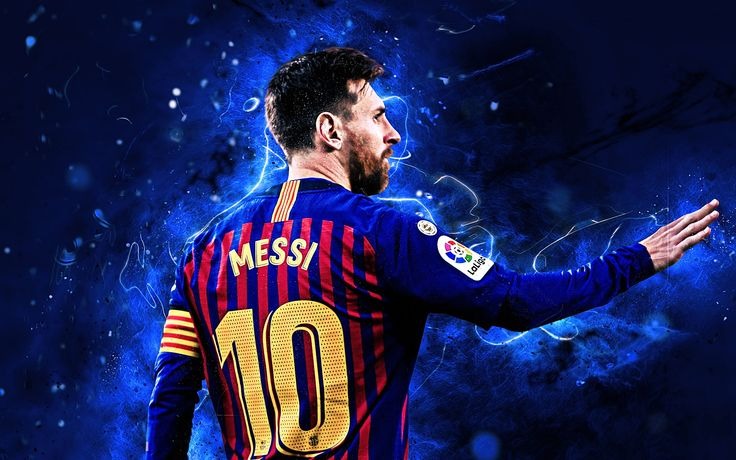
Lionel Messi has called time on his Argentina career after two decades in the national shirt. As the World Cup-winning captain steps away from international football, his financial story shows how a playing career worth hundreds of millions evolved into a wider portfolio spanning real estate, endorsements, consumer brands and football investments.
Lionel Messi has spent much of his career being measured in goals, trophies and records. With his retirement from international football now confirmed, another number has come into focus: an estimated $1 billion net worth.
The 39-year-old has announced that he is stepping away from the Argentina national team, bringing an end to a journey that stretched across roughly two decades. His decision had been on his mind since Argentina’s 1-0 defeat to Spain in the 2026 FIFA World Cup final on July 19.
The timing became more personal after the death of his father, Jorge Messi, who died aged 68 on August 7 following a long illness. Messi said he had written his retirement message on July 21, two days after the World Cup final, and that his father’s death left him even more convinced that the moment had arrived.
“It was a decision that hurt and still hurts in my soul, but I understand that this is the moment,” Messi said.
He also pointed to the emergence of a new generation of Argentine players as one of the factors behind his departure. In his farewell, Messi thanked the family members, coaches, teammates and officials who had accompanied him and said he would now support Argentina “from the outside.”
His exit closes an international career crowned by the 2021 and 2024 Copa América titles, the 2022 Finalissima and, above all, Argentina’s 2022 FIFA World Cup triumph. He also helped take the country back to the World Cup final in 2026.
But while one part of Messi’s career is ending, the financial structure built around more than 20 years at the top of football is far from dependent on him continuing to play for Argentina.
What is Lionel Messi’s net worth?
Messi’s net worth is estimated at $1 billion. The estimate reflects far more than the money deposited into his account through football contracts.
Over his professional career, he has earned more than $700 million in salary and bonuses, with hundreds of millions more coming from endorsements, sponsorships, licensing arrangements and business ventures. Real estate, private investments and his Inter Miami compensation package also form part of the financial picture behind the billion-dollar estimate.
That distinction matters. Career earnings and net worth are not the same thing. Messi has generated enormous gross income over his career, but the $1 billion figure is an estimate of the wealth he has accumulated through a combination of earnings and assets rather than simply a total of every contract he has signed.
Barcelona created the financial foundation
Most of Messi’s fortune can be traced back to the club where his career became extraordinary.
At Barcelona, he went from academy prospect to the club’s central figure and eventually one of the highest-paid footballers in the world.
His richest Barcelona agreement came in 2017. The contract reportedly carried an average annual base salary of about $168 million before bonuses, with signing payments, loyalty incentives and performance-related compensation adding to its value. At the height of that deal, salary combined with endorsement income put his annual earnings at roughly $200 million.
After leaving Barcelona in 2021, Messi joined Paris Saint-Germain. His two-year PSG contract was estimated at around $75 million a year before taxes.
The European years supplied the cash-generating foundation. His move to the United States changed the shape of the business.
Why the Inter Miami deal was different
Messi chose Inter Miami in 2023 despite having been linked with a substantially larger salary offer from Saudi Arabia.
His Miami contract was unusual because the package was not built around salary alone.
His base pay has been reported at roughly $54 million to $60 million a year, while total annual compensation could reach an estimated $70 million to $80 million once commercial arrangements and equity-related rights are considered.
The arrangement has also been reported to include a revenue-sharing component linked to Apple’s MLS Season Pass subscriptions and rights connected with an ownership interest in Inter Miami. The precise financial value of those elements has not been publicly disclosed, making it important not to treat the estimates as guaranteed cash payments.
That structure is significant for Messi’s wealth because it potentially gives him exposure to the commercial growth surrounding the league and club rather than paying him solely for his time on the pitch.
Adidas and the business of being Messi
Another pillar of his fortune has been sponsorship.
Adidas has backed Messi since 2006 and developed an extensive Messi-branded football product business around him. His overall annual endorsement income has been estimated at around $70 million across sponsors, with Adidas remaining his most significant long-term commercial relationship.
That longevity matters. Messi’s earning power did not disappear when he left Barcelona, and it was not tied to any single league or club. His commercial profile travelled with him from Spain to France, the United States and the Argentina national team.
It also gave him the capital and global recognition to start moving beyond endorsement cheques into ownership and investment.
From sports drinks to restaurants and football clubs
Messi’s post-playing financial footprint is already taking shape.
In 2024, he launched Más+ by Messi, a hydration and sports drink brand created in partnership with Mark Anthony International. He has also invested in Argentine restaurant chain El Club de la Milanesa.
Perhaps the more revealing part of his portfolio is his growing involvement in football ownership.
His investments include Spanish lower-division club Cornellà and a stake in Uruguay’s Deportivo LSM, which he co-owns with longtime friend and former teammate Luis Suárez. He is also involved with lower-division club Los Leones in Rosario.
For someone approaching the end of his playing career, those holdings provide a glimpse of where the Messi name could remain active long after his final match.
Real estate has become another major asset base
Messi’s wealth is also spread across property rather than sitting entirely in football-linked investments.
His portfolio includes luxury residential property in Spain and South Florida, alongside a Spanish real estate investment vehicle holding hotels and commercial properties.
That is one of the quieter parts of the Messi financial story.
The public image remains dominated by football contracts and sponsorship campaigns, but his wealth has increasingly moved toward longer-term asset ownership. His real estate holdings sit alongside private investments, consumer businesses, football interests and the commercial structure of his Miami deal.
Retirement changes the stage, not necessarily the business
Messi’s announcement concerns his international career with Argentina, not an announcement that he is retiring from professional club football altogether.
That distinction is important.
For Argentina, his departure closes the chapter that ultimately delivered the trophy that had defined so much of his international story. For Messi’s finances, however, the transition away from the national team is unlikely to be viewed in the same way as the end of an income stream.
The larger financial transformation has already happened.
Messi began by earning extraordinary sums for playing football. Over time, those earnings were supplemented by endorsements. More recently, his wealth has been spread across property, private investments, consumer ventures and stakes linked to the sport itself.
So the most telling figure at the moment of his Argentina retirement may not simply be the estimated $1 billion net worth.
It is what sits underneath it.
A fortune that once depended overwhelmingly on what Lionel Messi could do with a football is increasingly tied to assets designed to exist when he no longer needs to kick one.
Also Read: Tim Cook’s Last Day as Apple CEO: 15-Year Legacy Ends at $5 Trillion
















