

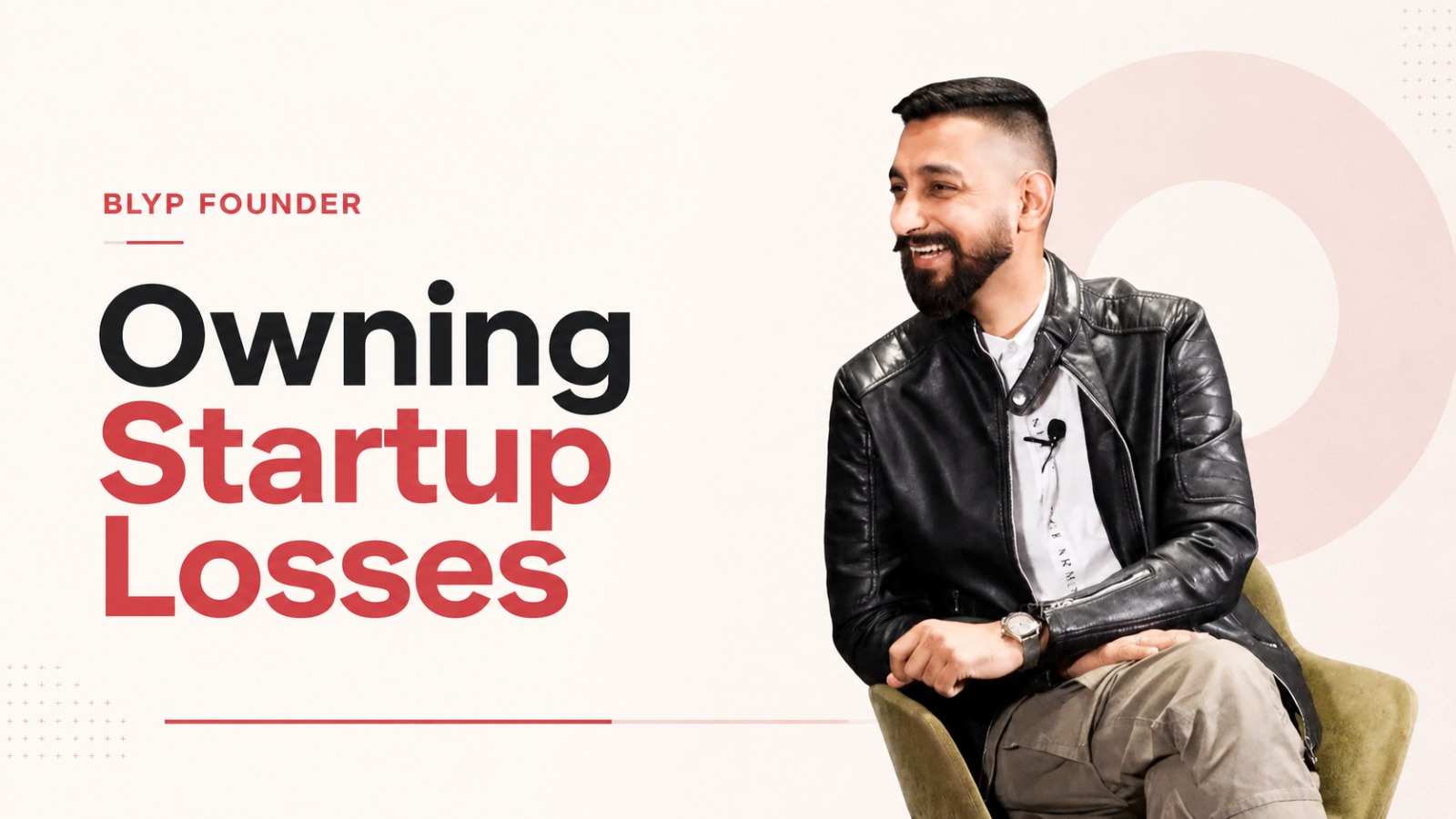
In a social media culture where success is usually polished, packaged and posted first, Blyp founder Dhananjaya Bharadwaj has chosen to say something many entrepreneurs avoid saying publicly: the week had losses too.
The founder of the parking services startup wrote that social media is full of people sharing only their wins, and admitted that he has been no different. But he also said he now wants to change that pattern. From now on, every time he posts about a win, he plans to also share the losses he faced in the same week.
His first such post listed two setbacks.
The first was a lost project in Mumbai. Bharadwaj said the company missed out on a big opportunity because he “sounded too desperate” to win it.
The second was an investor rejection. Despite what he described as strong, sustainable growth and good numbers, a venture capital investor turned Blyp down because the business was seen as “operations heavy.”
For a startup founder, both admissions carry weight. They are not dramatic failures. They are the kind of quiet, weekly blows that shape companies but rarely make it to LinkedIn posts, founder interviews or celebratory startup threads.
The Unspoken Side of Startup Building
Startup storytelling usually rewards momentum. Founders announce new clients, new funding, expansion plans, product milestones and team wins. Losses are often kept private, either because they look weak, or because founders fear that one rejection may be read as a larger signal about the company.
Bharadwaj’s post breaks from that pattern. It does not present failure as a grand life lesson after success has already been achieved. It presents loss while the work is still ongoing.
That makes the post more grounded. It shows the side of entrepreneurship that sits between the pitch deck and the press release. There are deals that slip away. There are investor calls that end in polite rejection. There are founder instincts that do not always land the right way.
The Mumbai project loss is especially revealing because the reason was not pricing, product or competition. Bharadwaj said he lost it because he sounded too desperate. That is a deeply human admission. Founders are expected to be hungry, but not anxious. Persuasive, but not needy. Confident, but not arrogant. The line is thin, and in high-stakes conversations, tone can sometimes matter as much as the offer.
When “Operations Heavy” Becomes a Funding Concern For Blyp
The second loss points to a more structural challenge faced by businesses that are not purely digital or software-led.
Bharadwaj said a VC rejected Blyp even though the company had strong, sustainable growth and great numbers, because the business was considered “operations heavy.”
For a parking services startup, operations are not incidental. They are central to the business. Managing parking services often involves physical locations, coordination, staff, processes, customer experience and day-to-day execution. That kind of work can build real-world value, but it may not always fit the cleanest venture capital narrative.
The phrase “operations heavy” can sound like a criticism, but for many service-led companies, operations are also the moat. The ability to execute consistently on the ground can separate a serious business from a good-looking idea.
Bharadwaj’s post does not argue against the VC’s decision. It simply records the rejection. That restraint makes the post stronger. It does not turn the investor into a villain. It shows the gap between how founders may see their progress and how investors may evaluate the same business.
The significance of Bharadwaj’s post lies in its honesty. He did not dress up the setbacks as “learnings” first. He called them losses.
That matters because startup culture often converts every failure into motivational content too quickly. The result is that even vulnerability begins to look polished. Bharadwaj’s post feels different because it is direct, specific and uncomfortable in the right way.
A lost Mumbai project is not an abstract failure. A VC rejection over an “operations heavy” model is not a vague struggle. These are real founder problems. They also offer a more useful view of entrepreneurship than only celebrating growth charts and client wins.
A More Honest Founder Narrative
Bharadwaj’s decision to pair wins with losses could become a more meaningful way to talk about business building. It keeps success in perspective and gives setbacks their rightful place in the story.
Entrepreneurship is not just made up of announcements. It is built through conversations that fail, deals that do not close, investors who pass, and founders who have to return to work the next morning with a sharper sense of what went wrong.
By sharing these losses publicly, the Blyp founder has offered a more honest version of the founder journey. Not every week ends with a win. Sometimes the most important update is the one that explains what did not work.
Read More: Vaibhav Suryavanshi’s Rise Is Bigger Than a Net-Worth Number
















