

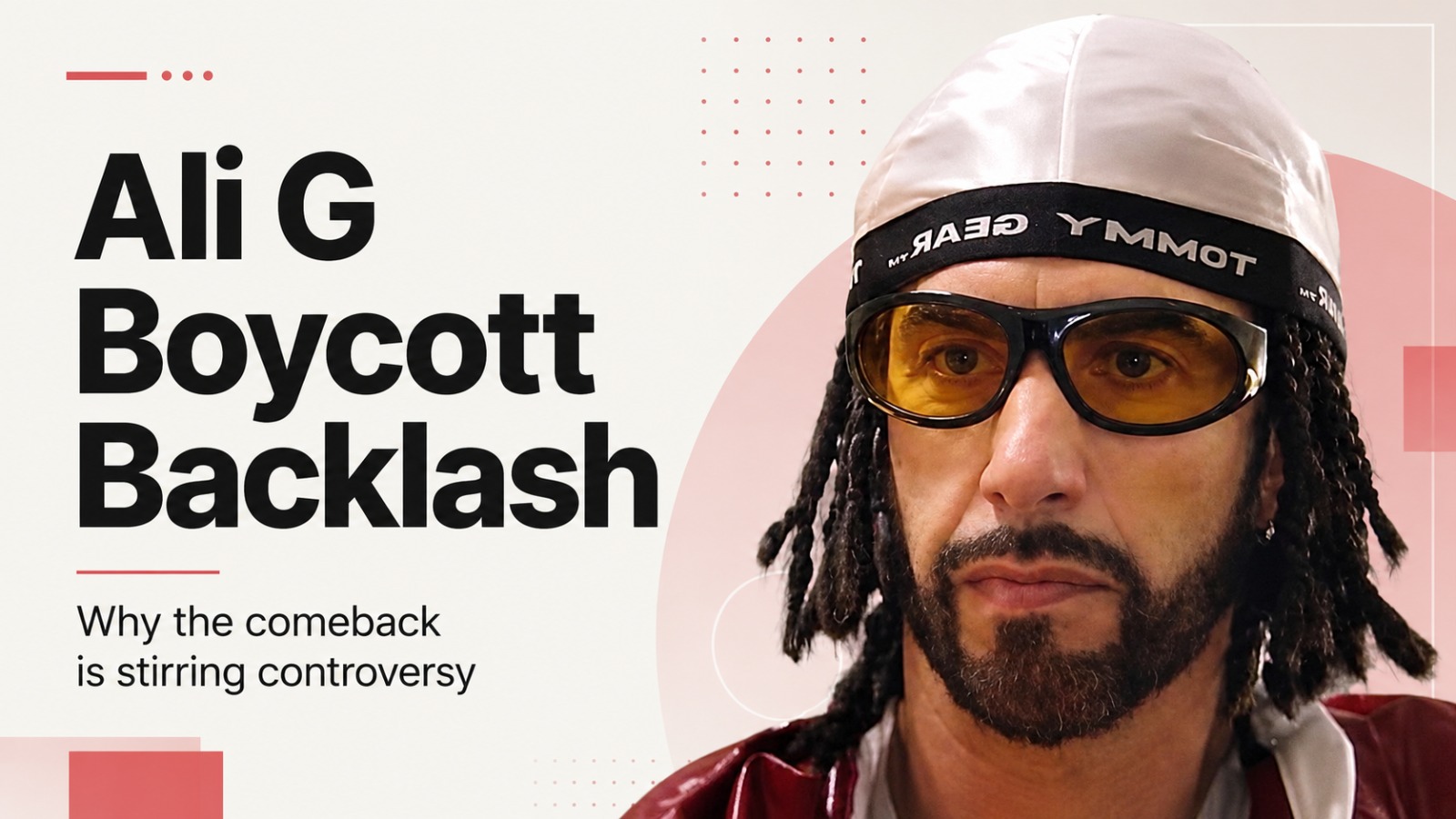
Sacha Baron Cohen is bringing Ali G back after 24 years, but the character’s return has revived a debate that never fully disappeared.
The upcoming mockumentary Ali G: Who Iz I?, scheduled to open on October 23, follows Cohen’s fictional character as he attempts a career comeback. Even before its release, the film has become the focus of a boycott campaign, with activists urging cinemas not to screen it.
At the centre of the controversy is a simple but difficult question: is Ali G a satire of cultural appropriation, or has the character itself become an offensive caricature?
What is the Ali G controversy all about?
Ali G is a fictional character created and portrayed by Sacha Baron Cohen. This character is that of a white British individual who tries to create a false impression using slang, dressing, and mannerisms of Black individuals.
That has always been central to the joke. Ali G is portrayed as someone who appears unaware of how ridiculous his attempts to imitate another culture look to everyone around him.
Supporters of the character have therefore viewed the comedy as satire directed at Ali G himself, rather than at Black culture.
Critics see it differently.
The latest backlash argues that regardless of the original intention, the character relies on racial stereotypes that some viewers consider offensive, outdated and no longer acceptable.
That criticism has become more prominent ahead of Ali G: Who Iz I?, particularly because the character is returning to screens more than two decades after becoming widely known.
Why are activists calling Ali G racist?
Some critics argue that the problem is not simply that Ali G imitates Black culture, but that the humour depends on exaggerated ideas about how Black people speak, dress and behave.
British writer Afua Hirsch criticised the revival by arguing that the social context surrounding those jokes has changed. She said Black people do not dress or speak in the exaggerated way associated with the character anymore and also objected to elements involving the portrayal of Black and working-class women.
That criticism has pushed the conversation beyond whether Ali G was offensive when first created.
The bigger question now is whether a character built around a particular style of cultural parody can still work when attitudes towards race, representation and appropriation have changed considerably.
The Ali G character is intentionally designed to appear ridiculous. He is a white British individual who makes awkward attempts at emulating Black culture and hence his actions are the source of ridicule.
That divide explains much of the current controversy.
One side believes the satire is obvious.
The other believes the stereotype itself remains harmful regardless of who the intended target is.
Why is there a boycott campaign against the new Ali G movie?
The controversy moved from online criticism to organised action when NewsCord, a UK-based watchdog that says it uses artificial intelligence to track media bias, mobilised supporters to contact cinemas.
The group has backed the sending of 37,000 emails to cinemas around the world, urging them not to screen Ali G: Who Iz I?.
The campaign argues that exhibitors have a choice over what they programme and should refuse to show a film built around a character activists regard as racially offensive.
That is why the current dispute is being described as a boycott push rather than simply criticism of a trailer.
The campaign is attempting to influence whether the film reaches cinema screens.
Why has the boycott campaign gained attention now?
Timing is a major part of the story.
Ali G is returning after 24 years, meaning the character is being reintroduced into a very different cultural environment.
Some criticism has focused not only on whether the character is offensive, but also on whether he is still relevant.
Online reactions cited in the reporting range from enthusiasm about the comeback to criticism that Cohen has waited too long to revive the character.
One reaction argued that Ali G no longer has much relevance today and suggested that the sharper satire might have been to mock an ageing celebrity attempting to reclaim former success through an outdated character.
That criticism gives the controversy another layer.
For some viewers, the debate is not only about race. It is also about whether the cultural moment that made Ali G effective comedy still exists.
What has Sacha Baron Cohen said about the backlash?
Cohen appeared to anticipate criticism when promoting the film.
Posting the trailer on X, he wrote: “In an age where a comedian’s career can be ended by a single un-PC joke, I thought I’d play it safe and bring this guy back.”
The comment makes clear that the controversy surrounding the character is not incidental to the comeback.
It is already part of how the film is being introduced to audiences.
Are cinemas actually boycotting the film?
So far, there is no verified indication that cinema chains have agreed to the boycott campaign.
NewsCord had reported that one cinema would ban the film, but later retracted that claim.
Danish cinema chain NFBIO has taken the opposite position.
The company acknowledged that Cohen’s satire and characters can be viewed as offensive or provocative, but said it did not believe cinemas should reject legally distributed films for those reasons.
NFBIO argued that cinema should accommodate a broad range of work, including films that challenge or offend sections of the audience, and said viewers should be free to decide for themselves what they want to watch.
That response has turned the Ali G dispute into something larger than a debate about one comedian.
It is now also a discussion about censorship, artistic freedom and how cinemas should respond when organised groups object to a film before its release.
What is the Ali G boycott really about?
At its core, the boycott campaign reflects two competing interpretations of the same character.
Critics believe Ali G relies on racial caricature and cultural stereotypes that have aged badly.
Defenders of the satire argue that Ali G himself is the joke, a white man embarrassing himself through exaggerated imitation.
The return of the character after 24 years has forced those two interpretations back into direct conflict.
The question is no longer simply whether Ali G was controversial in the past.
It is whether the character still functions as satire in 2026, and whether audiences should be allowed to make that judgement after seeing the film rather than having cinemas make it for them.
When is Ali G: Who Iz I? releasing?
Ali G: Who Iz I? is scheduled to open on October 23 and marks Sacha Baron Cohen’s directorial debut. Representatives for the Amazon MGM Studios film had no immediate comment on the backlash when the controversy was reported.
Given that so many boycott emails have already been circulated and that one theater manager has rejected any demand to boycott the film, Ali G’s controversial story is almost a part of the film’s revival tale without even seeing it.
Also Read: 45 Shocking Facts About Breaking Bad: Periodic Table Secret to Warren Buffett’s Walter White Praise
















