BlueStone’s rise traces the arc of India’s consumer internet story, beginning with a software engineer’s leap into entrepreneurship, a misfire in online media, and then a methodical attack on one of retail’s last opaque strongholds: fine jewellery.
The Founder’s Pivot: From Code to Carats
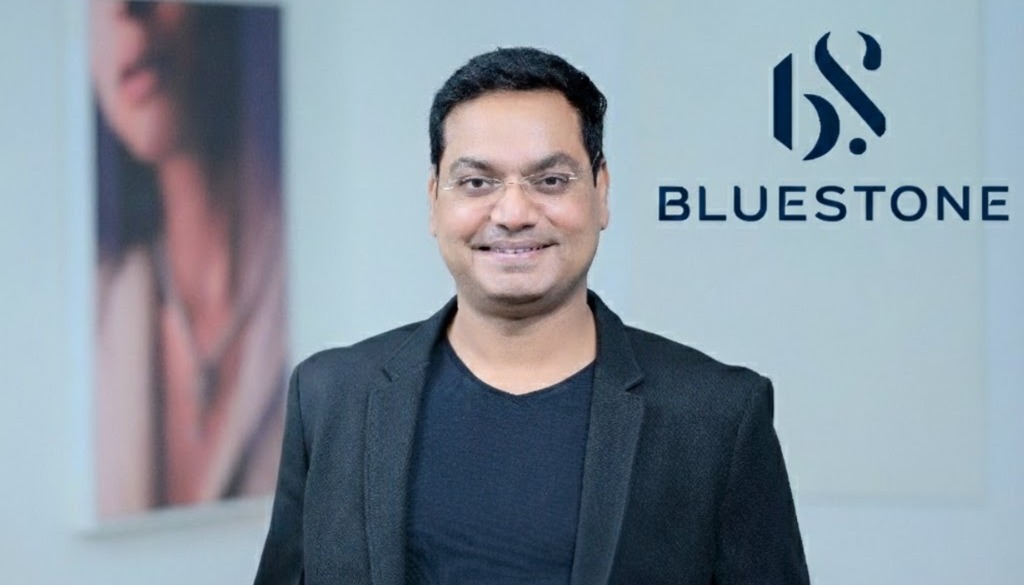
After graduating in computer science from IIT Delhi, Gaurav Singh Kushwaha built a comfortable career as a senior software engineer at Amazon, working in both the US and India. The entrepreneurial turn came early. He left Amazon after 18 months to launch “Chapak,” a movie portal he ran for four years. Monetisation was weak and smartphone penetration in 2010 hadn’t yet caught up, Chapak couldn’t scale. But the setback revealed a bigger opportunity.
Around 2011, India’s fine-jewellery market, pegged at roughly $55 billion then, was barely online. Even as platforms like Flipkart and Amazon grew, categories requiring trust and transparency lagged. Jewellery had limited designs, little price clarity, and an offline mindset. Kushwaha saw the opening.
The Idea: Design-First, Tech-Backed, Trust-Centric
In 2011, Kushwaha teamed up with co-founder Vidya to build an online-first jewellery brand with a design-first approach and a technology backbone. The name, BlueStone, was deliberate: Blue for reliability, Stone for craftsmanship.
Trust became the core product feature. BlueStone listings detailed carat weight, purity, and design information, and each piece shipped with a hallmark certificate. A “Try at Home” service, rare for the time, closed the trust loop by letting buyers see and feel the product first.
BlueStone adopted an inventory-light, made-to-order model and raised ₹60 crore from Accel, Kalaari, and Saama. With fresh capital, the company pushed to ₹80 crore in revenue by 2015 and raised an additional ₹100 crore, led by Accel, IvyCap, and Ratan Tata.
Within a year of scaling, BlueStone was processing about 7,000 orders per month. Average ticket sizes hovered around ₹25,000, with pieces like the Twin Wingflow Ring and Avighna Pendant leading the way. Revenue reached ₹250 crore by 2016, followed by a ₹200-crore round from Accel and Iron Pillar at a ₹511-crore valuation.
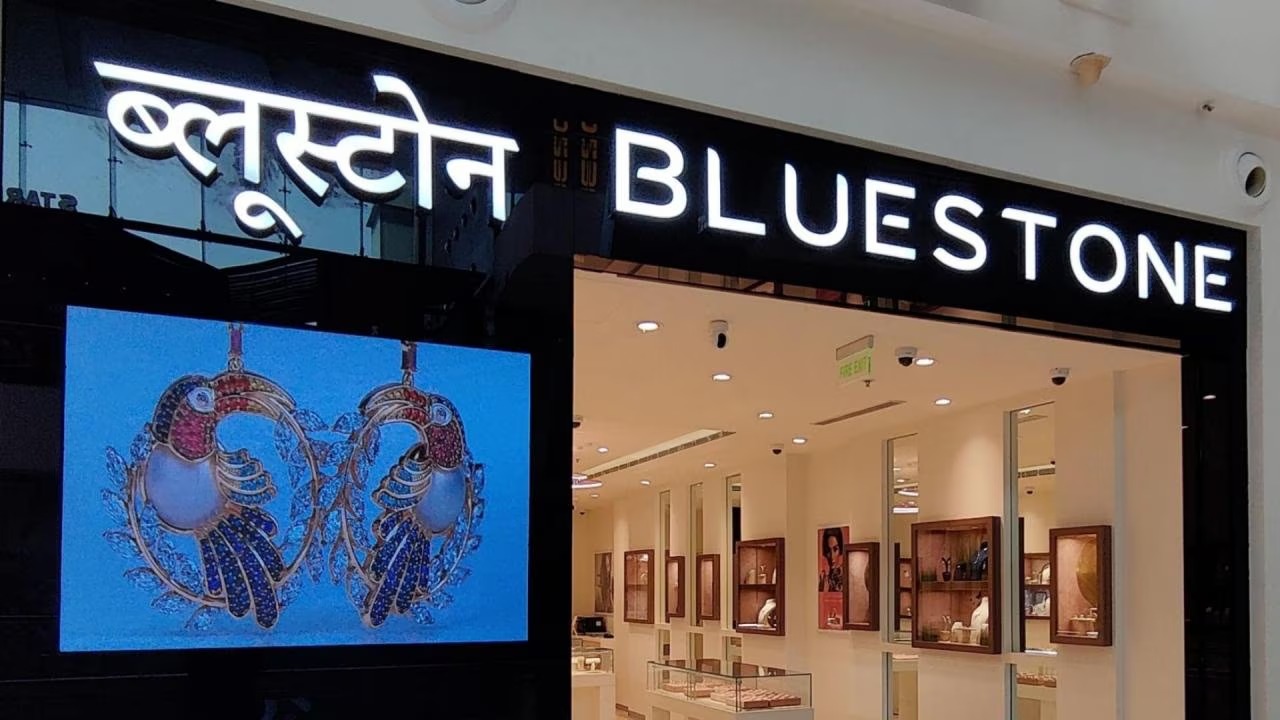
Despite momentum, online jewellery penetration remained thin, about 0.5%. BlueStone moved to meet customers where intent converts: offline. In 2018, it opened its first store at Delhi’s Pacific Mall, adding 20 more by 2019. The strategy pushed the revenue run-rate to ₹500 crore and the company’s valuation to about ₹800 crore.
Brand, Gen Z, and a Wider Footprint
As the network of stores deepened, BlueStone refreshed its brand for millennials and Gen Z with a “LoveLike” campaign echoing early-2000s romance films. By 2023, the company reported ₹788 crore in revenue and 175 stores, supported by a ₹550-crore raise led by Info Edge at a ₹3,530-crore valuation.
By 2024, BlueStone had expanded to 190 stores across 175 cities and raised ₹600 crore led by Prosus. The company was effectively primed for public markets in 2025.
On August 19, 2025, BlueStone became the first player in its space to list publicly, with a ₹1,540-crore IPO. Post-listing, the company’s market capitalisation stood at around ₹7,600 crore.
BlueStone now reports ₹1,770 crore in revenue and operates 275 stores across 117 Indian cities, with a catalogue exceeding 7,400 designs. The company’s current valuation stands at ₹11,227 crore. Kushwaha’s line has become something of a mission statement for the brand: “Our jewellery shouldn’t live in a locker. It should live with you.”
Why This Pivot Worked?
1) Trust engineered into the product, not just the brand.
Detailed specs, hallmark certificates, and “Try at Home” made a high-involvement category feel safe online.
2) Capital matched to model.
An inventory-light, made-to-order approach reduced working capital stress while funding rounds (₹60 crore; ₹100 crore; ₹200 crore; later ₹550 crore and ₹600 crore) supported design, logistics, and footprint expansion.
3) Omnichannel as the conversion engine.
Even with strong digital discovery, jewellery converts best with tactile experience. Opening the first store in 2018, then rapidly scaling to hundreds, gave BlueStone the last-mile trust to unlock scale.
4) Segmentation and storytelling.
Targeting millennials and Gen Z with the LoveLike campaign helped refresh the category’s often-traditional cues and expand the top of funnel.
Key Milestones
- 2011: BlueStone founded by Gaurav Singh Kushwaha with co-founder Vidya; online-first, design-centric approach.
- 2015: ₹80 crore revenue; raises ₹100 crore (Accel, IvyCap, Ratan Tata).
- 2016: ₹250 crore revenue; raises ₹200 crore (Accel, Iron Pillar) at ₹511-crore valuation.
- 2018–2019: First store in Delhi’s Pacific Mall; 20 more stores; revenue run-rate hits ₹500 crore; valuation ~₹800 crore.
- 2023: ₹788 crore revenue; 175 stores; raises ₹550 crore (Info Edge) at ₹3,530-crore valuation.
- 2024: 190 stores across 175 cities; raises ₹600 crore (Prosus).
- Aug 19, 2025: Lists with a ₹1,540-crore IPO; market cap ~₹7,600 crore.
- Today: ₹1,770 crore revenue; 275 stores in 117 cities; 7,400+ designs; valuation ₹11,227 crore.
BlueStone didn’t “digitise jewellery.” It rebuilt the buying experience around clarity, convenience, and touch, then layered brand and distribution to scale. That combination, design depth, transparent specs, home trials, and an omnichannel footprint, turned a sliver of online demand into a national network with compounding trust. (Inspired By a post by Aditya Arora, CEO, Faad Capital).
Also Read: Meet the Billionaires Amazon Accidentally Trained