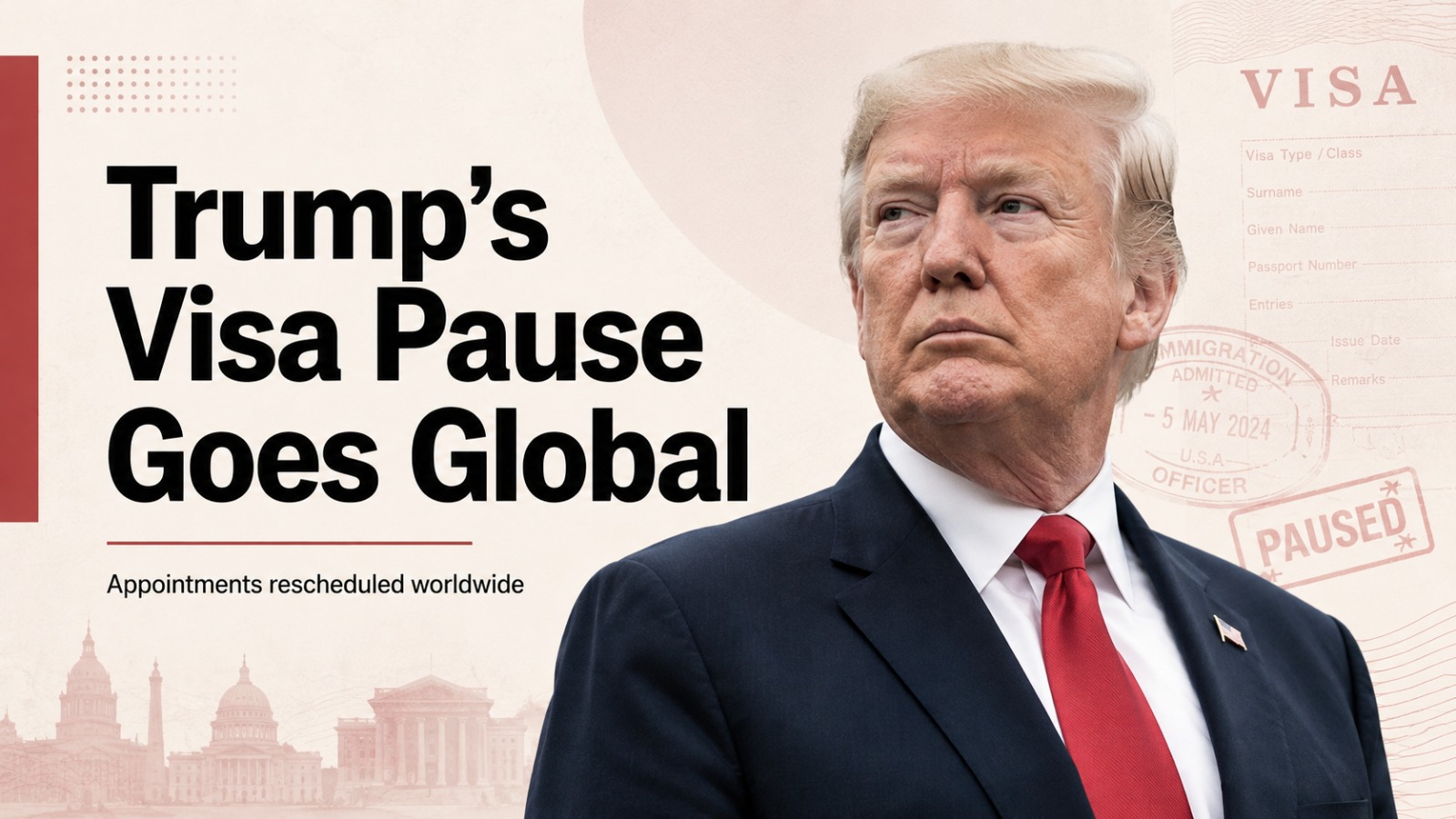
The United States has begun rescheduling US visa appointments around the world while consular officers undergo new training focused partly on identifying applicants who could become dependent on US public benefits, creating fresh uncertainty for people already navigating the American immigration system.
The State Department said a global training initiative is under way across US embassies and consulates and that visa appointments are being adjusted so officers can participate. The department has not provided a clear timetable for when normal appointment scheduling will resume.
The development comes as President Donald Trump’s administration continues a wider effort to tighten both legal and undocumented immigration during his second term.
US Visa Appointments: What exactly has the US changed?
The most clearly established change is to visa appointments.
The State Department says appointments for visa services are being adjusted worldwide to accommodate training for consular officers. Reuters reported that immigrant visa applicants who already had interviews scheduled had received notices saying their appointments were being rescheduled, with new dates to be provided later.
The Guardian separately reported that immigrant visa applications have been paused while the training takes place, citing a State Department official. According to that account, the initiative was launched across embassies and consulates and required appointments to be adjusted for what the official described as “in-depth training.”
That distinction matters. The available information confirms disruptions to the immigrant visa process and appointment scheduling, but it does not establish that every existing US visa has been canceled.
Why is the State Department doing this?
The immediate explanation is training.
The State Department says it wants consular officers to evaluate applicants more comprehensively and consistently, with particular attention to whether an applicant could become reliant on US public benefits. Reuters reported that the department has not disclosed detailed information about the training or how long it will last.
That makes this more than an administrative scheduling exercise.
The training connects directly to the Trump administration’s broader attempt to make immigration screening more selective, including through policies focused on the financial circumstances of applicants and the possibility that they could require public assistance.
The Guardian reported that officials presented the initiative as a way to ensure visa recipients would not ultimately depend on public benefits, while placing the move within a wider tightening of both lawful and undocumented immigration.
What happens to people who already had visa interviews?
For applicants with appointments already on the calendar, the immediate consequence can be delay.
According to reporting cited in both accounts, some applicants were told that previously scheduled interviews had been canceled or rescheduled and that they would be contacted with a new date.
There is currently no confirmed public timetable for how quickly those interviews will be restored.
That uncertainty is particularly significant for immigrant visa applicants because interviews often come after months of preparation, document collection and other steps in the immigration process.
Immigration attorney Brian Simmons told the Financial Times that many affected applicants may have spent thousands of dollars and disrupted their lives to attend interviews before having appointments canceled at short notice. The Guardian reported that it remains unclear when those interviews will be rescheduled.
Why is the timing significant?
The appointment disruption follows a legal setback for another Trump administration immigration policy.
A US judge recently struck down a policy that suspended the issuance of immigrant visas to applicants from 75 countries. The judge concluded that the measure exceeded Secretary of State Marco Rubio’s statutory authority.
The new worldwide training initiative therefore arrives while the administration is still pursuing tighter immigration screening through other mechanisms.
Trump has said his immigration crackdown is intended to improve domestic security. His administration has also introduced measures affecting legal immigration, including additional costs for some work visa applicants.
Critics, including human rights and immigration advocacy groups, have challenged parts of the administration’s immigration agenda on discrimination, free speech and due process grounds.
Does this mean the US has stopped issuing visas permanently?
Nothing in the available information supports that conclusion.
What has been confirmed is a worldwide disruption or adjustment to visa appointment scheduling connected to consular training, with immigrant visa applicants clearly affected.
The State Department has not announced that the pause is permanent. It has also not provided a specific date for normal scheduling to resume.
For applicants, that leaves two questions unresolved: how long the training period will affect embassy and consulate capacity, and how quickly appointments that have already been displaced will be put back on the calendar.
What should applicants take from this?
The most important point is that a rescheduled interview is not the same thing as a final visa refusal.
Applicants receiving notices from US embassies or consulates may face additional waiting while the State Department completes its training program and reorganizes interview schedules.
Until the department publishes a clearer timetable, uncertainty around appointment availability is likely to remain the central practical issue.
The bigger policy story is also becoming clearer. The administration is not limiting its immigration agenda to enforcement at the border or deportations. It is increasingly applying tighter scrutiny within the legal visa system itself, and the current training program shows how that policy shift can directly affect people who have already entered the formal application process.
Also Read: Mitsubishi Pajero SUV to Make a Global Comeback on September 2