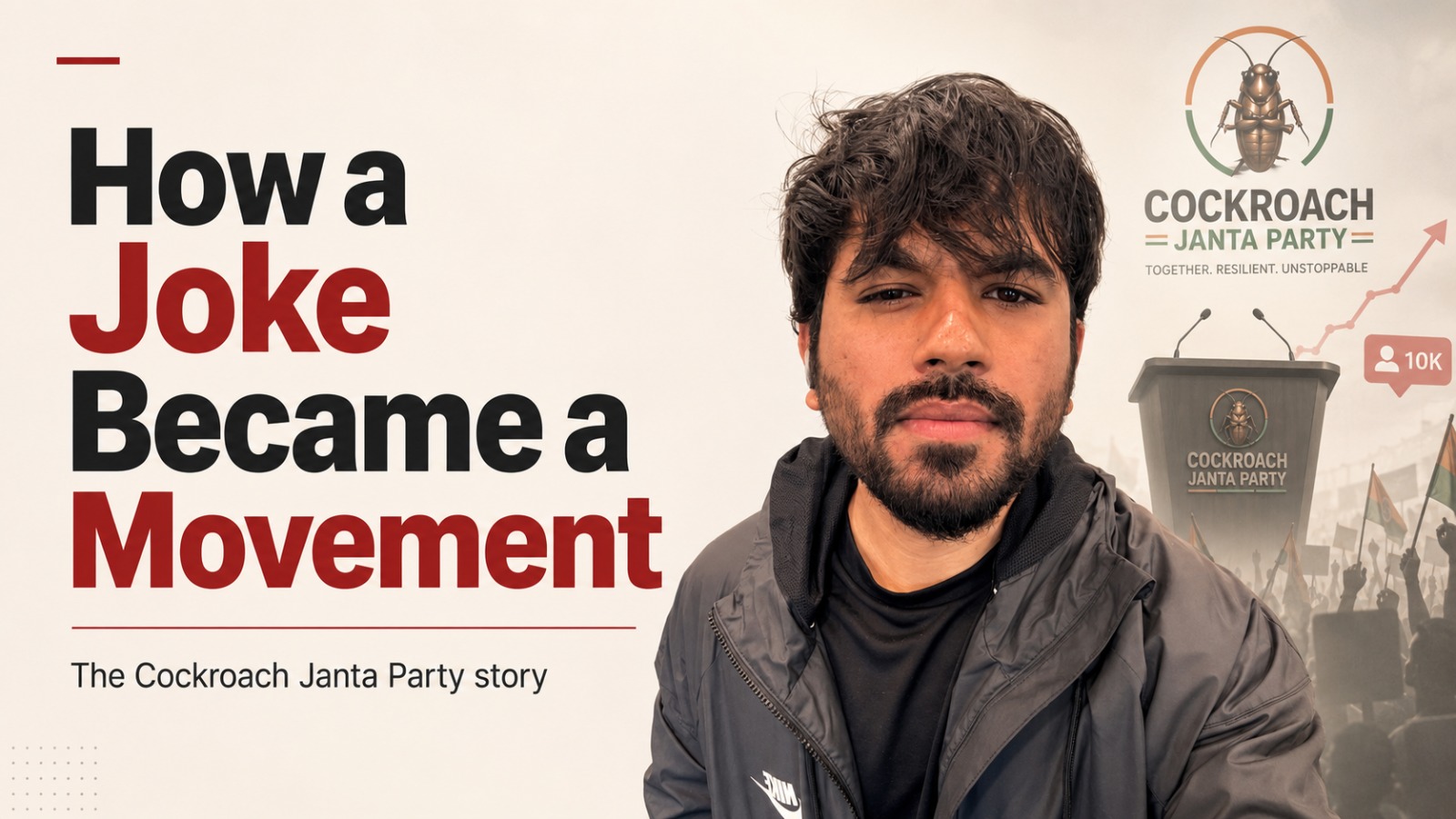
A four-day viral surge has put Abhijeet Dipke’s satire project at the centre of India’s digital politics debate
In Indian politics, parties usually grow through cadres, campaigns, booth networks and years of ground work. The Cockroach Janta Party did something very different. It arrived as satire, spoke in the language of internet humour, and within days turned into a national talking point.
The trigger was outrage. The format was a joke. The response was anything but small.
By May 21, the Cockroach Janta Party, or CJP, had crossed the 10 million follower mark on Instagram, overtaking the Bharatiya Janata Party’s official follower count on the platform in several media tallies. Some reports placed CJP at 10.1 million followers, while BJP’s official Instagram account was reported between 8.6 million and 8.7 million followers. On X, CJP had also gained over 1.76 lakh followers.
For a movement that openly calls itself satire, the numbers created an awkwardly serious question: why did so many young Indians rush to identify with a party built around the word “cockroach”?
The answer lies in the strange mix that powers modern political virality: insult, identity, humour, unemployment anxiety, distrust of institutions and a generation that often prefers memes over manifestos but understands both.
From a courtroom remark to a digital rebellion
The Cockroach Janta Party emerged after remarks attributed to Chief Justice of India Surya Kant, in which unemployed youth were compared to “cockroaches” and “parasites”, triggered anger online. Justice Kant later clarified that his remarks were misquoted and taken out of context.
But by then, the word had already left the courtroom and entered the internet.
Abhijeet Dipke, the man behind CJP, leaned into the term rather than reject it. The party’s online identity turned insult into self-description. Its website presents CJP as the “Voice of the Lazy & Unemployed,” and its mission statement says it was built for young people who keep getting called lazy, chronically online and, most recently, cockroaches. It also makes clear that “the rest is satire.”
That clarity is important. CJP is not presenting itself as a registered political party fighting elections. It is a satirical political front. But satire works best when it touches a real nerve, and this one clearly did.
Its membership language is deliberately absurd. Eligibility requirements include being unemployed, lazy, chronically online and capable of “ranting professionally.” The joke lands because it borrows from the way young people are often mocked in public debate, especially around jobs, exams and online activism.
In other words, CJP did not invent youth frustration. It gave it a logo, a name and a punchline.
The founder: Abhijeet Dipke and the AAP link
Abhijeet Dipke is 30, originally from Maharashtra, and has studied journalism in Pune before moving to the United States for higher studies in public relations at Boston University. He has been described as a political communication strategist whose work focuses on narrative building, public messaging and the role of digital platforms in shaping political opinion.
That background matters because CJP’s rise does not look like accidental virality alone. Its messaging shows an understanding of internet tempo, political timing and emotional hooks.
Dipke has also previously worked with the Aam Aadmi Party’s social media ecosystem. Reports say he volunteered with AAP’s social media team between 2020 and 2023, including during the 2020 Delhi Assembly election campaign, where meme-driven content was used for outreach and youth engagement.
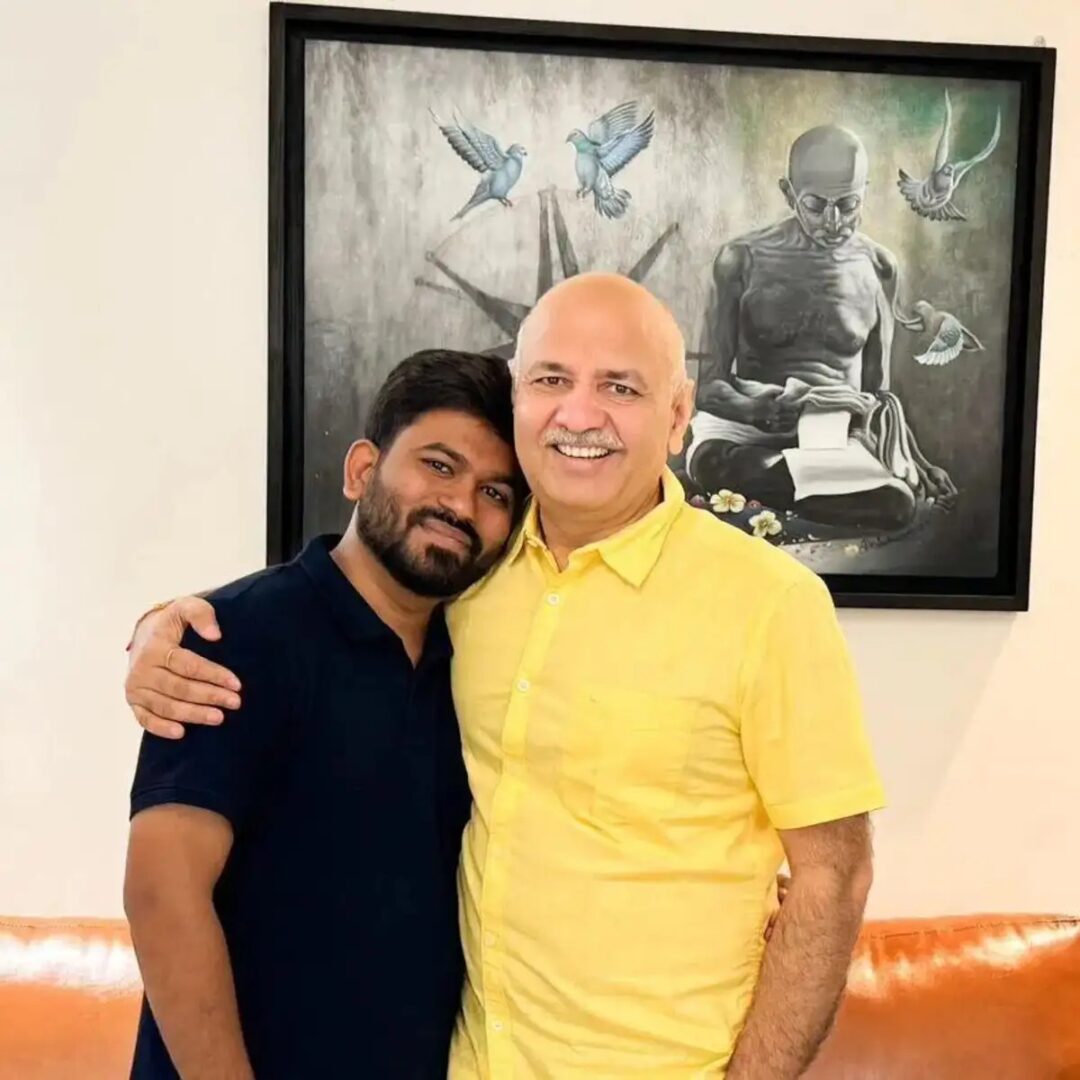
That past has now become part of the CJP story.
An old post by Dipke, before he left for Boston, resurfaced online. In it, he thanked former Delhi Deputy Chief Minister Manish Sisodia for opportunities and wrote that no distance would weaken his commitment to AAP. Another post thanked Sisodia and Atishi for support and guidance.
These posts do not prove that CJP is an AAP project. They do, however, explain why questions are being asked about the movement’s political proximity. Several handles on X alleged that CJP was a plant by AAP. Dipke has dismissed such claims, saying his post was sarcasm.
This is where the story becomes more layered. CJP is satire, but its founder is not politically blank. He has experience in political communication and a past association with AAP. That combination does not automatically make the campaign partisan, but it makes the neutrality question unavoidable.
Sisodia’s public backing gave it another push
The CJP wave gained sharper political attention after Manish Sisodia publicly backed the movement. In an Instagram reel posted on May 20, Sisodia said, “If there is a war between a crocodile and cockroaches, I will proudly stand with the Cockroach Janata Party.”
That statement did two things at once. It gave CJP mainstream political validation, and it also made the AAP connection harder to ignore.
For CJP supporters, Sisodia’s line may have felt like a senior politician acknowledging youth anger. For critics, it looked like a political figure embracing a viral campaign that already had links to a former AAP volunteer.
Both readings can exist together. That is the nature of digital politics now. A meme can be satire, campaign material, protest language and political signal all at once.
What CJP says it stands for?
Behind the humour, CJP’s mock manifesto includes demands that are clearly designed to provoke debate. Reported promises include barring retired Chief Justices from receiving Rajya Sabha seats, greater representation for women in Parliament and Cabinet positions, action against deletion of valid votes, electoral bans for defecting legislators, action against misinformation by media outlets, and cancellation of licences of media organisations owned by major business groups.
Some of these points are framed theatrically. Some are legally and politically unrealistic in their current form. But that may not be the main point.
The manifesto works because it taps into anxieties already circulating among young users: joblessness, political defection, institutional privilege, media credibility, women’s representation and distrust of elite systems. CJP packages those concerns in meme language, but the concerns themselves are not jokes.
That is why its rise cannot be dismissed merely as “online fun.” It is fun, but it is also feedback.
Why the internet chose a cockroach
The cockroach is an unusual political symbol, but that is exactly why it worked.
Traditional political branding usually depends on pride, development, ideology or identity. CJP chose the opposite. It embraced humiliation. It took a word used in anger and converted it into a badge of survival.
For a generation that jokes about unemployment, competitive exams, parental pressure, inflation and burnout, the cockroach became a strangely relatable symbol. It is not glamorous. It survives. It is ignored until it appears everywhere. That is the metaphor CJP has successfully claimed.
Its content style also helped. The movement operates almost entirely through internet culture, using exaggerated political posters, absurdist messaging, revolutionary tones and Gen Z humour. Supporters describe themselves as survivors of unemployment, inflation, competitive exams and societal pressure.
This is not how old political campaigns speak. It is how meme pages speak. CJP’s achievement is that it made that language feel political without making it boring.
Instagram milestone, political reality
The headline number is striking: a satirical front crossing 10 million Instagram followers and overtaking BJP’s official Instagram count. But it needs context.
Instagram following is not electoral strength. It does not equal votes, booths, workers, ideology, alliances or state power. The BJP remains India’s dominant political organisation in real world politics. A viral Instagram account cannot be compared with a national party’s machinery in any direct electoral sense.
Still, the comparison matters symbolically.
For years, the BJP has been seen as India’s most effective digital political machine. A four-day satirical surge overtaking its Instagram count, even if only on one platform and at one moment, shows that attention is becoming more volatile. The internet can still produce surprises that no party fully controls.
That is the real story. Not that CJP is bigger than BJP. It is not. The story is that a joke account could briefly command the kind of attention that political parties spend years trying to build.
The bigger message for Indian politics
CJP’s rise shows that young Indians are not necessarily apolitical. They may simply be allergic to the old tone of politics.
They are willing to engage when the language feels familiar, the humour feels sharp and the anger feels shared. They may not attend rallies, but they will repost a political joke. They may not read a manifesto, but they will rally around a meme if it captures their mood.
For political parties, this is both an opportunity and a warning.
The opportunity is obvious: youth mobilisation no longer needs to begin with speeches. It can begin with culture. The warning is equally clear: young users can also mock, hijack and outpace formal political messaging with brutal speed.
CJP is not a conventional movement. It may fade as quickly as it rose. It may remain a satire page. It may become a recurring pressure point in youth discourse. At this stage, none of that can be stated with certainty.
What can be said is this: in four days, Cockroach Janta Party turned a controversial remark into a viral identity, pushed unemployment and institutional anger into mainstream conversation, attracted political reactions, and forced people to ask whether satire is now one of India’s most effective political languages.
That is no small joke.
Also Read: Cockroach Janta Party: How a Meme Protest Turned Into Gen Z’s Political Case Study