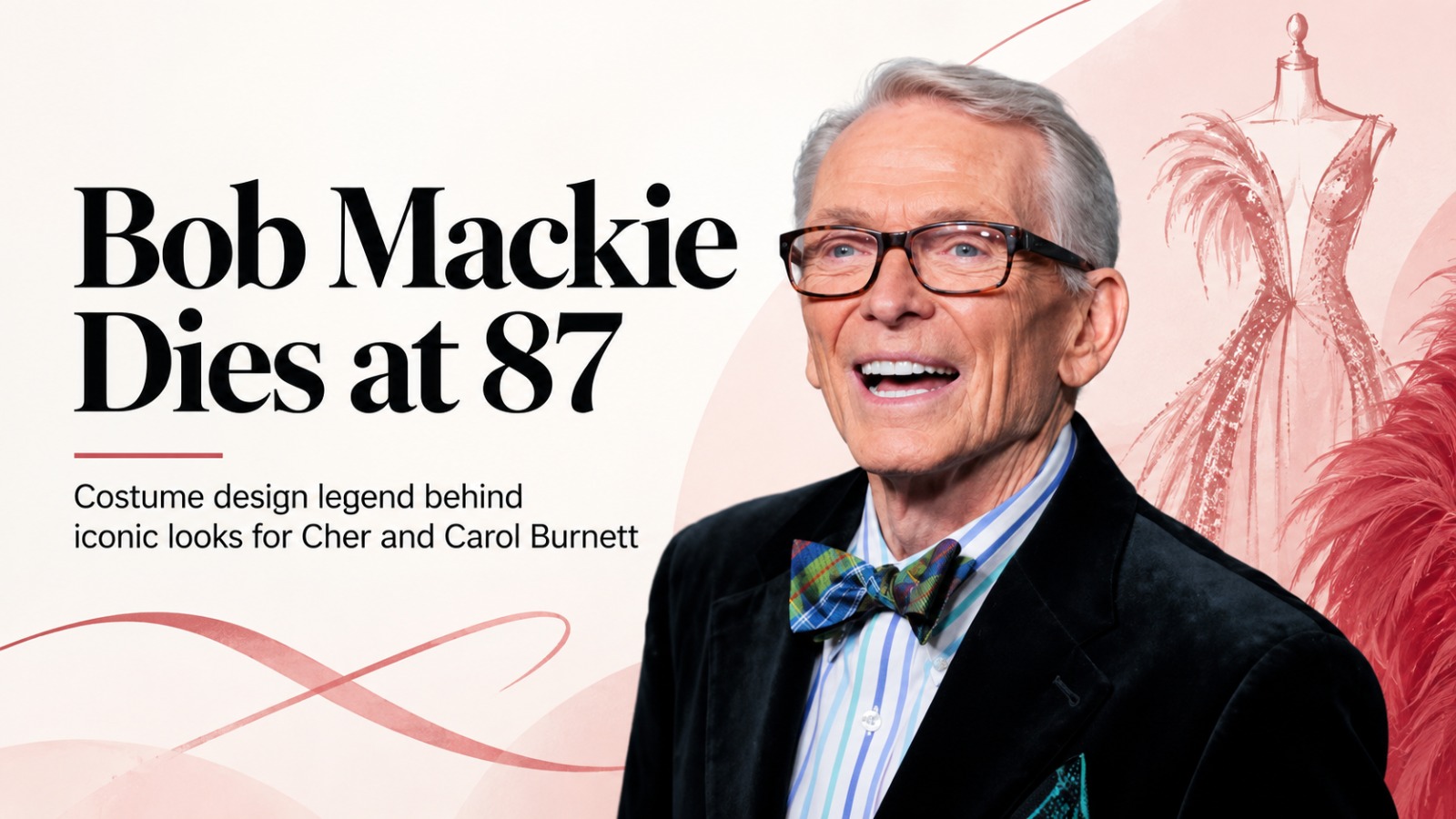
Bob Mackie, the fashion and costume designer whose exuberant work helped shape the stage and screen identities of some of America’s biggest entertainers, died on Monday, September 14, in Palm Springs, California. He was 87.
Mackie died at a hospital, with his death confirmed by his longtime design director, Joe McFate. His team also announced the news on social media, saying the designer had spent his 87 years fulfilling the ambition that mattered most to him: becoming a fashion and costume designer.
For audiences who knew Mackie primarily through Cher’s elaborate stage costumes or Carol Burnett’s comic transformations, his clothes were often inseparable from the performances themselves. Sequins, rhinestones, feathers, beads and dramatic silhouettes became part of his vocabulary, but the spectacle rarely existed simply for decoration.
Mackie’s work could make a singer appear larger than life. In another setting, the right skirt, wig or visual joke could help a comedian discover an entirely new character.
Television turned Bob Mackie into a household name
Mackie began his Hollywood career after leaving college, working as a sketch artist and gaining experience with designers including Jean Louis and Edith Head. Television, however, gave him the platform that would define a major part of his career.
When The Carol Burnett Show began in 1967, Burnett selected Mackie to design its costumes. The scale of the job was remarkable. Across the programme’s 11 seasons, he created an average of about 60 costumes every week for Burnett, Harvey Korman, Vicki Lawrence, Tim Conway, Lyle Waggoner, guest stars and supporting performers.
That relentless production schedule produced one of American television comedy’s most recognizable costumes.
For the show’s Gone With the Wind parody, titled Went With the Wind, Mackie took the familiar idea of a dress made from curtains and pushed the joke further. He asked for a curtain rod and incorporated it into Burnett’s costume as Starlet O’Hara. The result was not merely a spoof of period fashion. The costume itself became the punchline before Burnett had finished the scene.
His clothing could influence performance in less obvious ways too. While developing Burnett’s Mrs. Wiggins character, Mackie created a tight black skirt and instructed her how to position herself in it. The awkward posture helped produce the character’s distinctive walk.
It was a good illustration of what separated Mackie’s television work from conventional wardrobe design. He was not simply deciding what a performer should wear. He was helping determine how that performer might move, enter a room and be remembered.
Cher and Bob Mackie created a visual partnership of their own
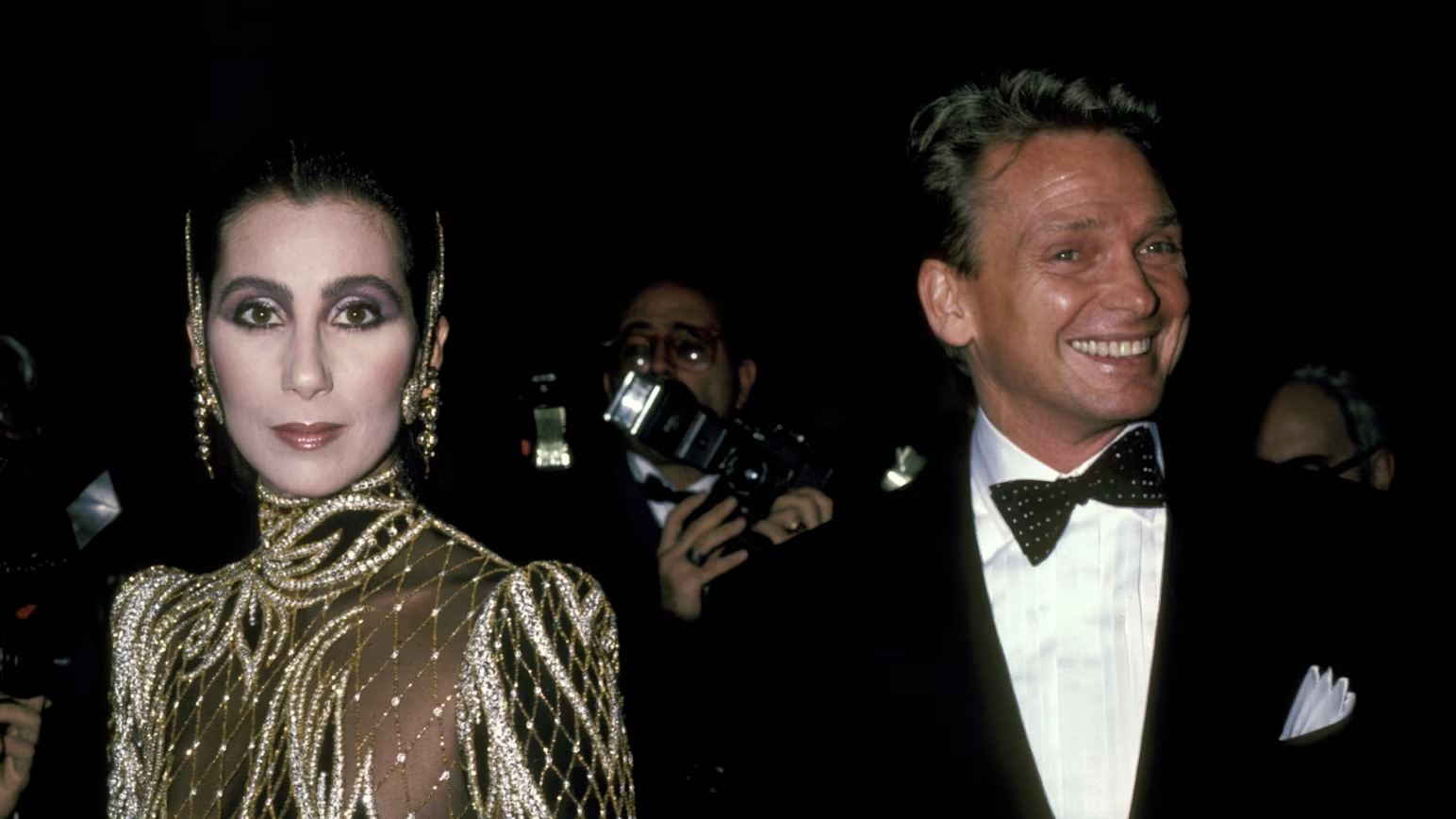
If television comedy established Mackie’s reputation, his long collaboration with Cher placed his designs at the centre of popular music, celebrity culture and red-carpet fashion.
He dressed Cher for television appearances, tours and major public events, creating looks that embraced theatricality rather than trying to soften it. Among the best-known examples was her striking ensemble for the 1986 Academy Awards.
The partnership helped establish Mackie’s reputation for body-conscious, heavily embellished clothes that could appear daring without losing their sense of construction and showmanship.
His designs later came to be associated with the “naked dress” aesthetic, in which strategically placed embellishment creates the illusion of barely-there clothing. Fern Mallis, the former executive director of the Council of Fashion Designers of America and founder of New York Fashion Week, told CNN in 2019 that Mackie’s influence could still be seen across modern red carpets.
Cher was far from his only famous client.
Mackie’s work was worn by performers including Diana Ross, Tina Turner, Liza Minnelli, Elton John, Bette Midler, Dolly Parton and RuPaul. His designs also continued to attract younger stars, with his archive remaining relevant well beyond the period in which he first became famous.
Even Barbie became part of the Mackie universe, extending his extravagant visual language beyond stage and television wardrobes.
A career that stretched from Hollywood studios to Broadway
Mackie’s career lasted more than six decades and moved easily between television, concerts, awards shows, fashion and theatre.
His honours included nine Emmy Awards, three Academy Award nominations and induction into the Television Academy Hall of Fame. He later won a Tony Award for his costume work on The Cher Show. The Council of Fashion Designers of America also honoured him with a lifetime achievement award.
His career had strong California roots.
Raised in Southern California, Mackie attended Chouinard Art School and began professionally as a sketch artist at Paramount Pictures. In 2020, he moved to Palm Springs, where he participated in cultural events, book signings, film-festival activities and local fundraisers.
The move brought the later years of his life back to the state where his career had begun.
More than glitter
Mackie’s reputation will inevitably remain tied to sparkle. His work earned him nicknames including the “Sultan of Sequins,” the “Rajah of Rhinestones” and the “Guru of Glitter.”
But reducing his career to embellishment misses what made those clothes endure.
His costumes worked because they were designed around performers. A Cher gown had to command a stage. A Carol Burnett costume might have to land a joke before the dialogue did. A concert look had to survive movement, lights and distance while still instantly communicating a personality.
That combination of craftsmanship and theatrical instinct allowed Mackie’s designs to become more than wardrobe. Many became part of the public image of the artists who wore them.
His team, announcing his death, said his designs would continue to bring beauty into the world.
For a designer whose clothes were made to be noticed, Mackie’s most lasting achievement may be that decades later, many of them still are.
Also Read: What Is the Sydney Sweeney Ad Controversy? Why Olympians Are Slamming Her Novig Campaign