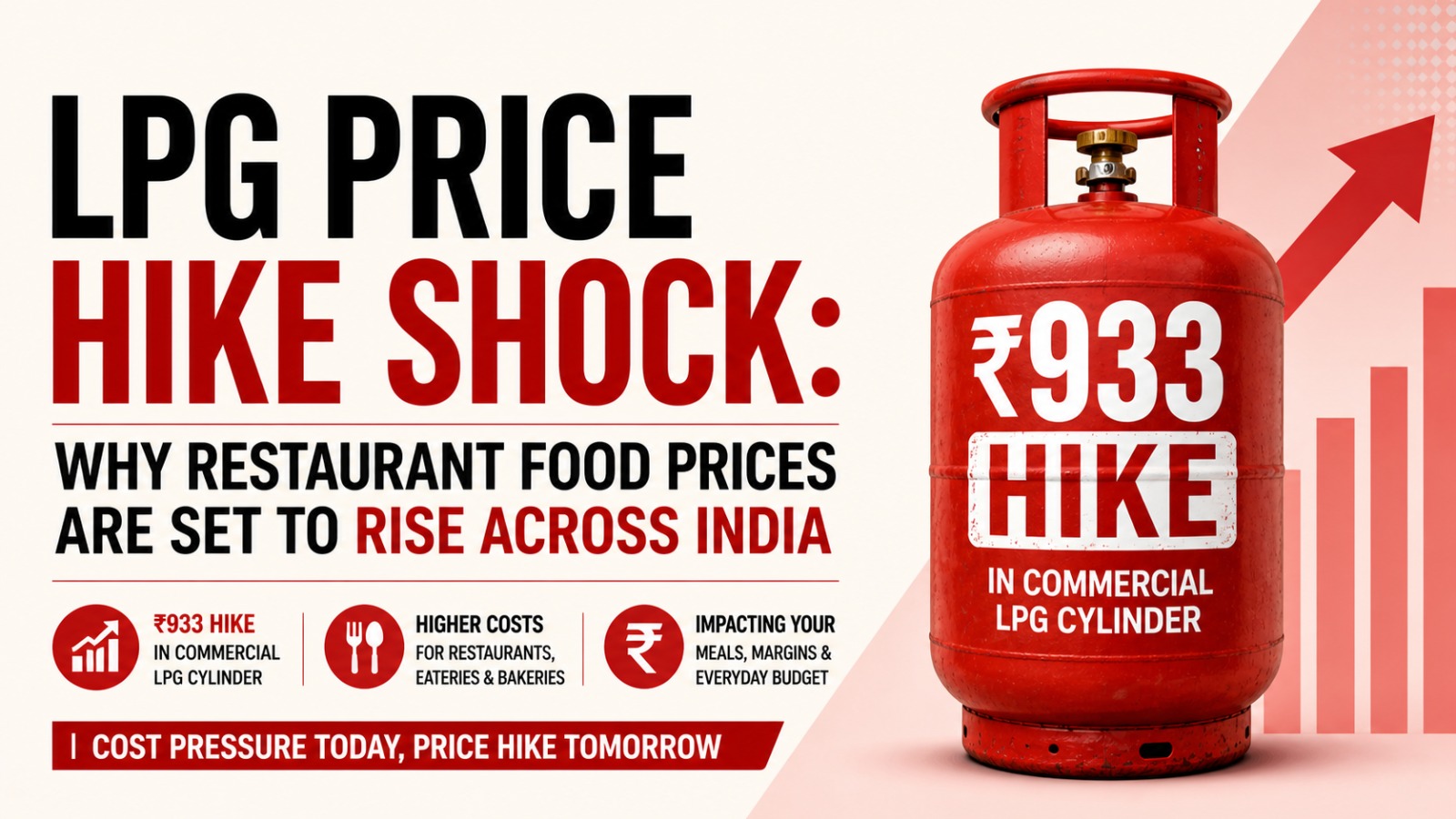
LPG Price Hike: India’s commercial kitchens are staring at another cost shock after the price of a 19-kg commercial LPG cylinder rose sharply at the end of April, putting fresh pressure on restaurants, hotels, caterers, bakeries, cloud kitchens and roadside eateries.
In Bengaluru, the price of a commercial LPG cylinder has climbed to ₹3,152 after a ₹993 increase, making it the steepest recent jump for the city’s food-service sector. The cylinder had cost ₹1,844 on March 1, ₹2,162 on April 1 and ₹3,152 by May 1, marking a rise of over 70% in about 60 days.
The impact is likely to be felt first in the food business. For small eateries, gas is not a side expense. It is central to daily operations. A sudden fuel cost jump can quickly disturb menu pricing, margins and daily cash flow.
Delhi has also seen a steep rise, with the commercial LPG cylinder price reaching ₹3,071.50. The increase has triggered concern across restaurants, roadside food stalls, caterers, bakeries and cloud kitchens.
Hotels and restaurants in Bengaluru are already preparing customers for higher food prices. The Bengaluru Hotels’ Association has indicated that price increases across food items are now difficult to avoid, while leaving the final decision on the quantum of hike to individual businesses.
The pressure is sharper because businesses were already dealing with supply disruption. In Bengaluru, LPG cylinder availability had reportedly fallen to around 60%, forcing hotels to depend on alternatives and absorb higher operating stress.
The cost burden may not stop at restaurants. If eateries raise prices, customers pay more. If they avoid raising prices, businesses absorb losses. Smaller operators may respond by cutting portions, reducing staff shifts, delaying purchases or temporarily scaling down operations.
The GST burden has also become part of the debate. Commercial LPG cylinders attract 18% GST, while domestic cylinders attract 5%. Hoteliers have sought parity with domestic LPG, arguing that a lower GST rate would offer relief when cylinder prices are already at record levels.
For consumers, the change may show up quietly. A ₹5 or ₹10 increase in a meal, a smaller serving, higher catering bills or dearer bakery items may look small individually. But together, they can raise the everyday cost of eating outside.
The larger concern is that commercial fuel inflation can travel through India’s informal economy. Restaurants buy from vegetable sellers, dairy vendors, wholesalers, packaging suppliers and transporters. When food businesses slow down, the pressure can move through these connected small enterprises too.
There is also a possible shift toward piped natural gas in cities where infrastructure exists. PNG offers continuous supply and reduces cylinder storage and refill concerns. But for small eateries, roadside vendors and businesses outside strong pipeline networks, shifting may not be simple or affordable.
For now, domestic LPG prices have not been raised, shielding households from a direct hit. But the cost may still reach ordinary Indians through another route: the plate.
Also Read: Benne Dosa: From a Bandra Dosa Nook to a Rs 350 Crore Valuation