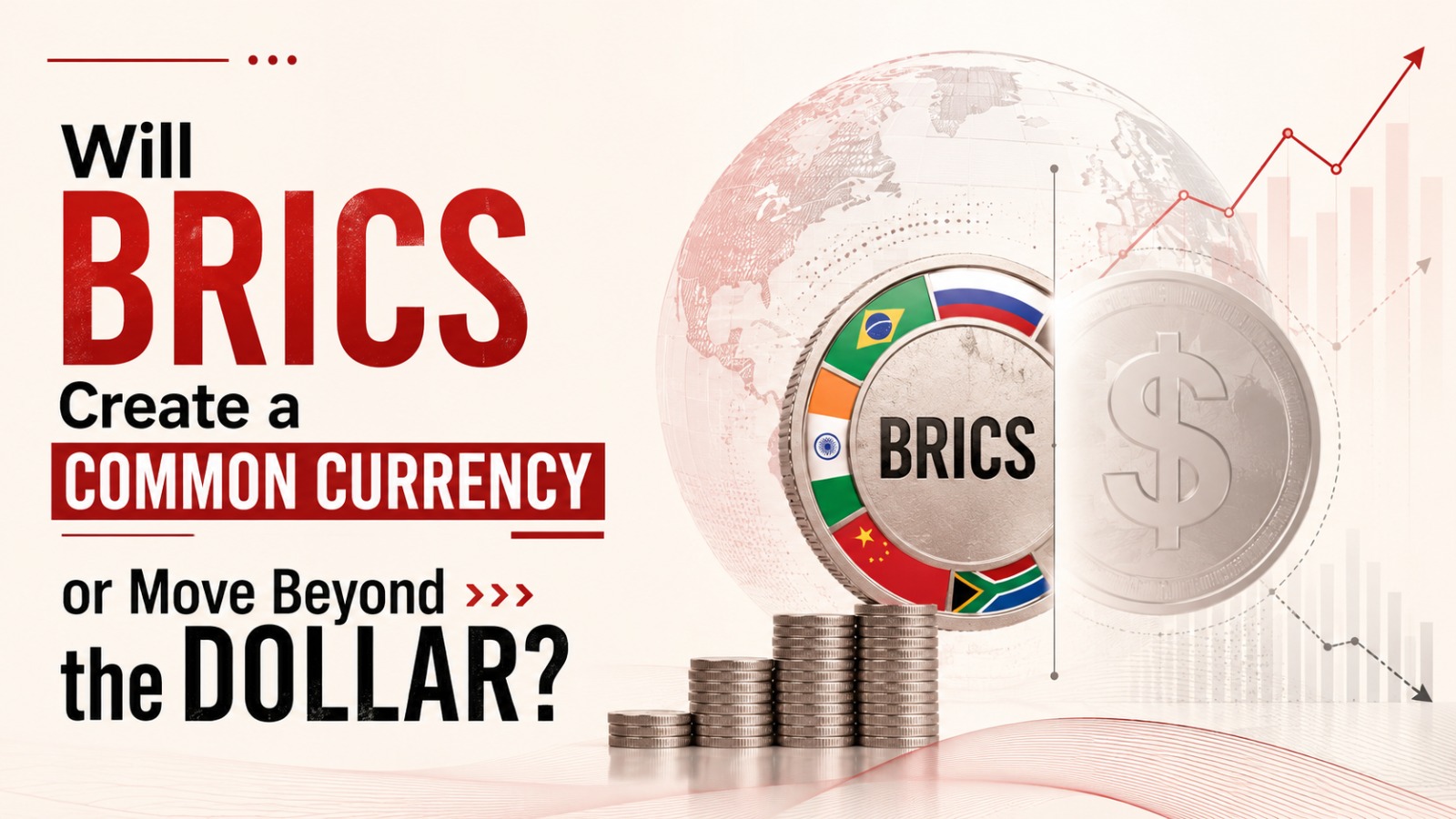
The possibility of a common BRICS currency is unlikely to be a major outcome of the upcoming BRICS summit in New Delhi. Instead, the grouping is expected to focus on practical ways to reduce dependence on the US dollar, including greater use of national currencies, faster cross-border payments and stronger links between digital payment systems.
India has made its position on a common BRICS currency clear. Commerce and Industry Minister Piyush Goyal said in August that India is not in favour of introducing a separate BRICS currency. The position indicates that New Delhi’s priority is not to create a new currency to compete directly with the US dollar, but to make international trade and payments between member countries more efficient.
India Favors Easier Trade Over a New Currency
India’s approach to de-dollarisation has largely centred on improving payment connectivity and reducing the cost and complexity of cross-border transactions.
The Reserve Bank of India has been exploring ways to strengthen international payments through local currencies and digital financial infrastructure. RBI Governor Sanjay Malhotra said in August that BRICS countries were discussing possible links between their fast payment systems and central bank digital currencies.
The discussions remain at an early stage, but the objective is clear: to make cross-border transactions faster and less expensive while allowing countries to use their own currencies more easily.
India is also continuing efforts to internationalise the rupee and expand the use of local currencies in cross-border trade and payments. Such mechanisms could give businesses more options when settling international transactions without requiring every payment to be routed through the US dollar.
Digital Currencies Could Offer a Practical Alternative
One of the more concrete proposals under discussion is the possibility of connecting the central bank digital currencies of BRICS members.
In January, Reuters reported that the RBI had recommended including a proposal to link the official digital currencies of BRICS countries on the agenda for the 2026 summit. The idea is aimed at making cross-border trade and tourism payments easier and potentially reducing the need for dollar-based transactions.
The proposal does not amount to creating a single BRICS currency. Instead, each participating country would continue using its own digital currency while payment systems could become more interoperable.
The approach reflects a broader shift in the BRICS financial agenda. Rather than attempting to replace the dollar immediately, member countries have been exploring ways to build payment mechanisms that provide additional options for trade and financial settlements.
A Common BRICS Currency Faces Major Obstacles
Creating a single currency for BRICS would be considerably more complicated. Member countries have different monetary policies, inflation levels, exchange-rate systems, capital controls and economic priorities.
The growing size and diversity of the BRICS grouping adds another layer of complexity. The group now includes 11 members, with economies operating under very different financial and monetary conditions.
There are also political considerations. A common currency would require members to agree on important questions involving monetary policy, exchange-rate management and financial governance. Differences among major economies could make such an arrangement difficult to establish.
India’s opposition to a separate BRICS currency further reduces the likelihood of such a proposal becoming a near-term priority.
The Focus Shifts to a Wider Financial Network
For the New Delhi summit, the more realistic discussion is therefore expected to centre on building a broader financial framework rather than launching a new currency.
Cross-border payment connectivity, interoperability between fast payment systems, links between digital currencies and increased use of national currencies could collectively reduce the role of the dollar in some transactions without attempting to remove it from the global financial system.
The BRICS approach is increasingly about giving members more choices. Local-currency settlements can help countries conduct more trade in their own currencies, while interconnected payment systems could make those transactions faster and more convenient.
The 2026 BRICS summit in New Delhi, scheduled for September 12 and 13, is therefore likely to put greater emphasis on practical financial cooperation. The debate over a common currency may continue to attract attention, but India’s position and the current direction of discussions suggest that payment infrastructure, digital currencies and local-currency trade are likely to be more important areas of focus.
Also Read: iPhone 18 Pro Faces a Tougher US Market: Shocking Survey Shows 41% Rethinking Upgrades