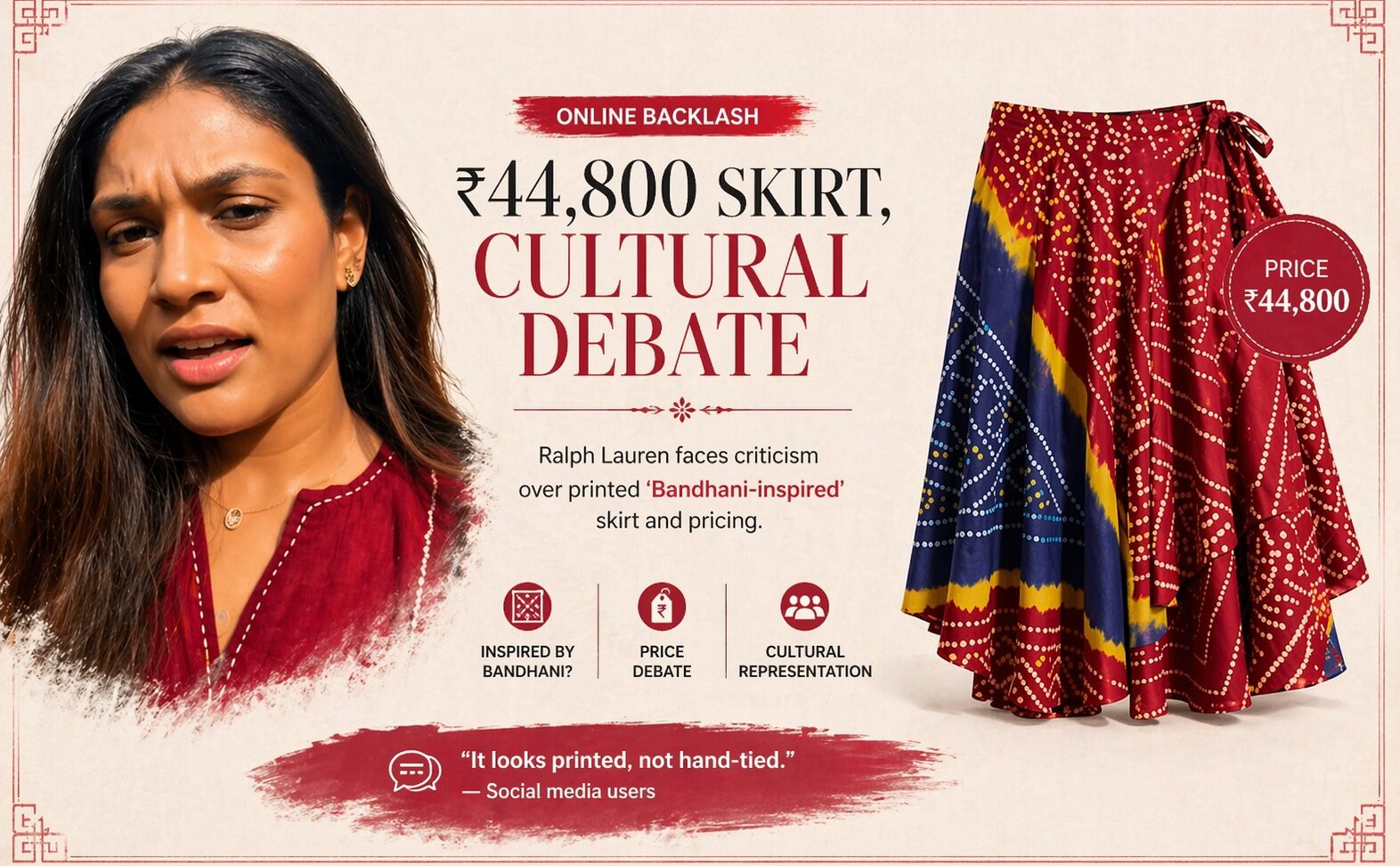
Global fashion brand Ralph Lauren has come under criticism online after a skirt priced at ₹44,800 sparked debate over cultural representation, pricing, and the use of traditional Indian textile designs. The product, a printed cotton wrap skirt described by the company as inspired by Bandhani tie-dye techniques, became the center of a wider discussion about how heritage crafts are adapted and sold by international luxury labels.
The controversy gained traction after social media users questioned both the design and the product description, arguing that the item did not properly reflect the craftsmanship associated with authentic Bandhani work.
Viral Video Ignites Online Debate
The issue gathered momentum when a video posted by X user @JIX5A criticized the skirt and compared it to handmade Bandhani textiles sold in Indian markets. The user argued that the garment appeared to feature a printed pattern rather than the hand-tied process traditionally used in Bandhani. She also questioned the premium pricing and noted that similar fabrics can be found in local markets at far lower prices.
Another major point of criticism was the absence of a direct reference to India in the product description. For many viewers, that omission became symbolic of a larger concern, where traditional designs are borrowed for commercial use without acknowledging their origins.
The post quickly spread across social media, generating strong reactions from users in India and abroad.
Also Read: Lenskart Faces Fresh Row After Trainee Alleges Religious Discrimination Over Tilak and Shikha
Why Bandhani Holds Deep Cultural Significance
Bandhani, also known as Bandhej, is one of India’s oldest textile art forms. The craft involves tying thousands of tiny knots by hand on fabric before dyeing it, creating distinctive dotted and wave-like patterns. Each design is shaped through a labor-intensive manual process that requires skill, patience, and years of experience.
The tradition is most closely associated with the states of Gujarat and Rajasthan, where it remains an important part of cultural life. Bandhani garments are commonly worn during weddings, festivals, and religious celebrations, making the textile more than just a decorative style.
Critics of the Ralph Lauren skirt say reducing such a craft to a printed motif removes the human artistry behind it and disconnects the design from the communities that have preserved it for generations.
Mixed Reactions Across Social Media
Public reaction has been sharply divided. Many users accused the brand of profiting from Indian aesthetics without supporting the artisans who keep these traditions alive. Some called for better acknowledgment of craft origins and stronger partnerships with local makers.
Others, however, defended the pricing model, arguing that luxury fashion is valued not only for raw material costs but also for branding, design identity, retail positioning, and customer experience. Supporters said premium pricing is common across the global fashion industry and should not be judged solely by fabric value.
The debate highlights a growing divide between consumer expectations and traditional luxury business practices. Shoppers today are increasingly interested in where products come from, how they are made, and whether the communities behind cultural crafts receive visibility or benefit.
Part of a Larger Pattern in Fashion
The latest backlash is not an isolated case. In recent years, several major luxury brands have faced similar criticism for using South Asian cultural elements without clear attribution.
Prada faced backlash in 2025 after showcasing sandals resembling traditional Kolhapuri chappals at luxury price points. The brand later acknowledged the inspiration following criticism.
Dior also drew attention in 2025 over an expensive coat featuring mukaish embroidery, with critics saying the product failed to mention the craft’s roots in Lucknow or the artisans associated with it.
Meanwhile, Dolce & Gabbana sparked discussion over a handbag design that some observers said resembled traditional carved decorative boxes associated with regions such as Kashmir and Saharanpur.
Rising Demand for Ethical Fashion Practices
The renewed attention around the Ralph Lauren skirt reflects a broader shift in consumer attitudes. Buyers are no longer focused only on style and status. Increasingly, they want brands to demonstrate cultural sensitivity, transparency, and fair engagement with traditional craft communities.
As global fashion continues to draw inspiration from regional traditions, many consumers believe recognition should go beyond aesthetics. For them, honoring heritage means naming origins, respecting craftsmanship, and ensuring artisans are part of the value created from their work.
Also Read: Namita Thapar Speaks Out After Trolling Over Post on Namaz, Urges ‘Respect for All Religions’