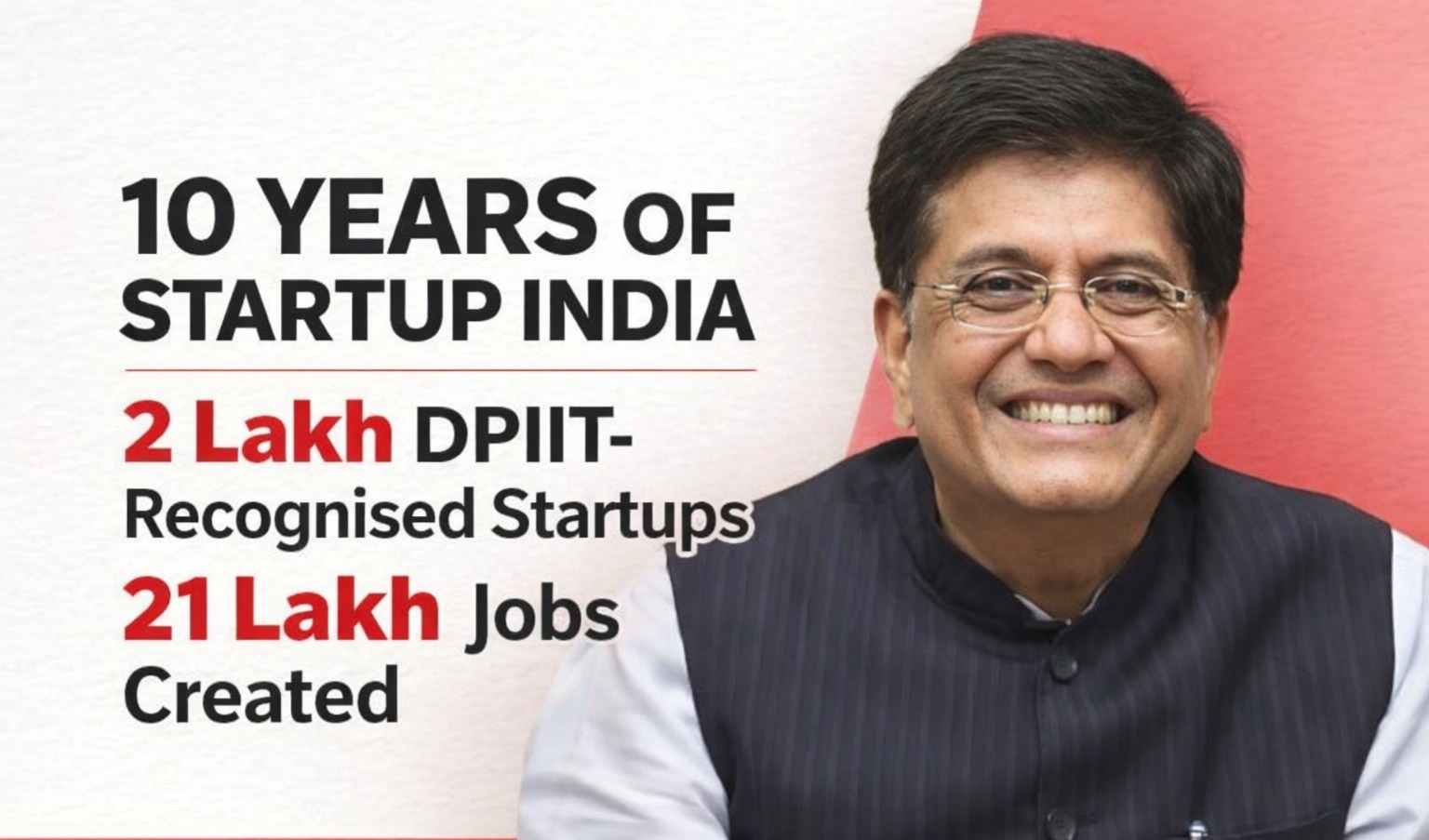
New Delhi: Union Minister of Commerce & Industry Piyush Goyal on #NationalStartupDay reflected on what he called “a decade” of the @StartupIndia “revolution,” describing it as a defining policy push that encouraged India to “DREAM BIG & ACT BIGGER!”
In a post on X, Goyal said the “proof” of the initiative’s impact lies in the scale of India’s startup base: over 2 lakh DPIIT-recognised startups, which he said have generated over 21 lakh job opportunities. He also highlighted what he described as the programme’s broader footprint beyond metros, pointing to its role in unlocking enterprise in Tier 2/3 cities and empowering youth and women.
What Piyush Goyal highlighted?
“The milestone of the 10-year completion is a moment to pause and review the progress achieved,” said the message from Goyal. “However, at the same time, it is a moment to look ahead towards the future. Reflecting on the past 10 years is a moment when it signifies consistency, inclusivity, and growth and a promise of a bright future ahead,” said the message.
Alongside the post, an infographic shared with the message lists multiple policy and ecosystem indicators tied to the Startup India decade. Among them:
- 2 lakh+ DPIIT-recognised startups today
- 21 lakh+ jobs created by startups in a decade
- 48% of India’s DPIIT-recognised startups originate from Tier 2 and Tier 3 cities
- India positioned as the 3rd largest startup ecosystem in the world
- ₹10,000 crore Fund of Funds for Startups (FFS) corpus for new-age sectors
- ₹15 lakh crore in private funding over the past decade
- 80% rebate on patent filing fees for startups
- 5-year exemption from inspections under labour and environmental laws
- 63 regulatory reforms relaxed since 2016 to ease doing business
- 90-day exit window for a startup if it decides to shut down
Why the Tier 2/3 detail stood out?
A central emphasis in Goyal’s post was the spread of startup activity beyond traditional hubs. The infographic’s claim that 48% of DPIIT-recognised startups come from Tier 2 and Tier 3 cities supports that narrative, suggesting the ecosystem is increasingly being shaped by founders outside the largest metros.
The 10-year marker
Altogether, the posting by Goyal and the decade overview present the Startup India initiative as a combination of scale development (start-up recognition and employment generation), ease of policy (reforms, exits, exemptions on inspections), and support on costs (reductions in patent fees, creation of the Fund of Funds). There is a great emphasis on inclusiveness and distribution in geography.
As the minister put it, the milestone is not just a look back at 10 years, it is also being projected as a statement of intent: a continued push toward a “bright future” for India’s startup ecosystem.
Also Read: Misochain Raises ₹18 Cr to Build Critical Aircraft Components