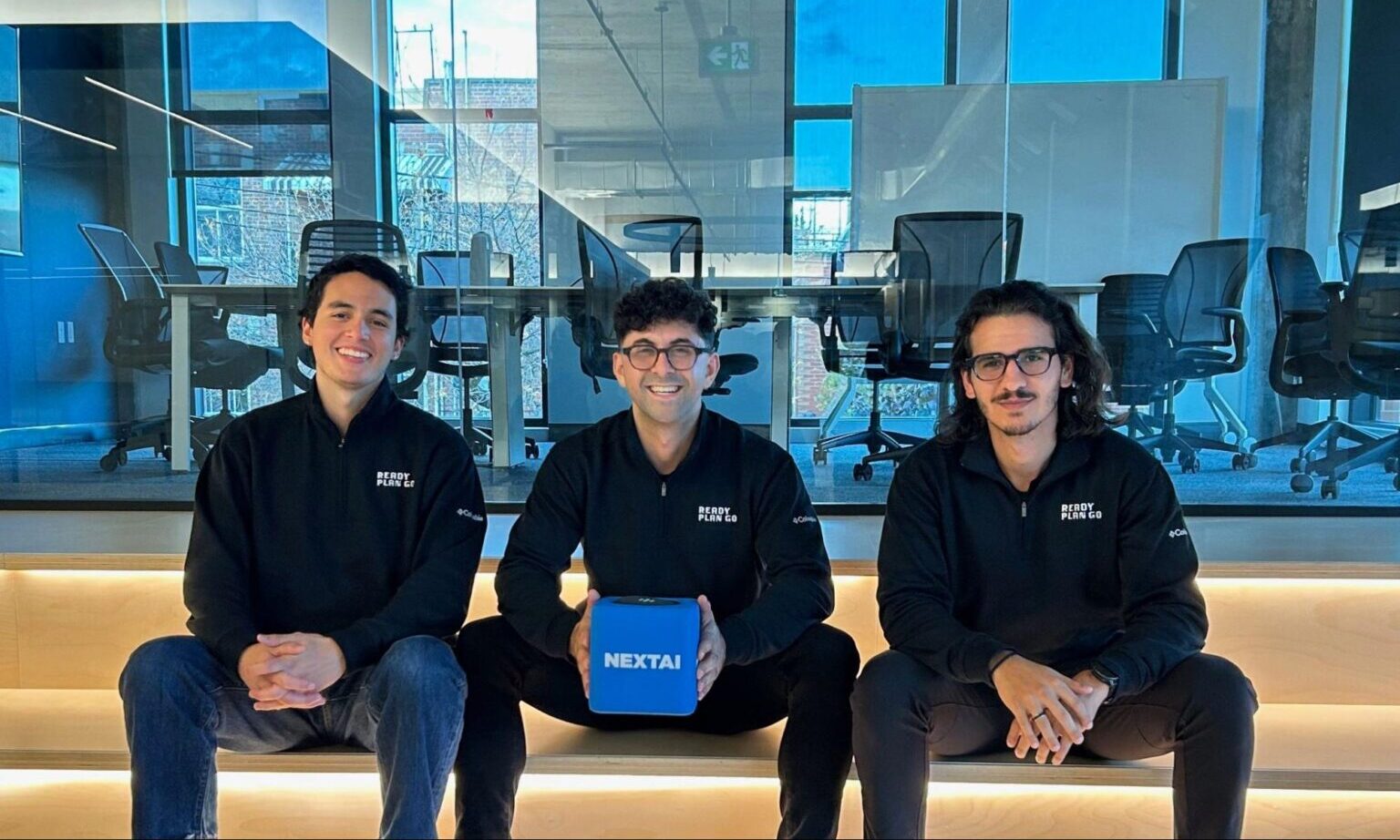
Ready Plan Go, a Montréal startup building an “AI-powered back office” for tax preparers, has raised a $750,000 pre-seed round to automate the paperwork that eats into accountants’ time and margins. The company says the goal is simple: free professionals from form-filling and document wrangling so they can spend more time advising clients.
What’s new
The financing includes a cheque from Mistral Venture Partners alongside 15 angel investors from Montreal’s startup community, among them Stay22 CEO Andrew Lockhead and Firat Gezen, former president of General Dynamics Canada.
Co-founder and CEO Nima Jalalvandi also contributed proceeds from the sale of his own house to round out the pre-seed. The four-person team currently blends two business leaders and two chartered professional accountants.
The Significance
Accountancy is under strain. Firms face an acute talent squeeze, with a large share of licensed professionals set to retire over the next decade and fewer entrants choosing the field.
Hiring managers are already reporting difficulty filling roles, and the bottleneck gets most painful during tax season. In that context, workflow automation that reliably handles intake, extraction, and data entry is no longer a nice-to-have, it’s a capacity lifeline.
The product
Ready Plan Go positions itself as the infrastructure layer for tax-prep back offices. Its platform automates three core steps:
- Document collection from clients;
- Data extraction from digital documents (with accuracy checks); and
- Form population in downstream tax software, with integrations to systems like Drake and ProSeries.
Under the hood, the company uses a mix of large language models. When multiple models fail to reach perfect agreement on extraction, the platform automatically routes files for human review. “Ninety-nine percent is not enough,” Jalalvandi said, underscoring an accuracy-first posture that aligns with the profession’s low tolerance for error. The company is also working toward SOC 2 certification, and partner firms’ end clients must consent to data use with the AI models.
Go-to-market
Ready Plan Go is initially targeting the United States, where firms tend to manage larger client lists. The startup says it recently landed its first large customer in Pennsylvania. Part of the commercial strategy involves acquiring the books of tax firms whose owners are retiring, providing both a channel for distribution and a solution for succession in a profession grappling with demographic shifts. Funds from the round will support both these acquisitions and ongoing product development.
Traction and pedigree
The team came through Station FinTech Montréal and Next AI accelerators, and won two Startupfest awards totaling $175,000, the 2SLGBTQIA+ Prize and a FinTech grant, before formalizing the $750,000 round. Those wins helped validate early demand and sharpen the company’s pitch as an operations partner to firms, rather than a replacement for professionals. “We want to increase satisfaction so accountants feel they can do meaningful work,” Jalalvandi said.
Industry context
Research into AI in accounting points to clear efficiency gains in “pre-work”: faster client intake, quicker transaction classification, and earlier monthly closes. At the same time, practitioners cite concerns over model errors and data security, issues that any vendor in this space must address head-on. Ready Plan Go’s insistence on human-in-the-loop review and formal security compliance is a direct response to those concerns.
As AI takes on more of this preparatory work, accounting professionals will also need to understand how to use these systems effectively while knowing where human judgment remains essential. AI courses for accountants can provide a useful starting point for exploring the practical skills involved in working with AI in accounting.
Jalalvandi’s own experience, being “the tax person” for family and friends every spring, shaped the company’s focus on taking the sting out of tax season. The pitch is not about replacing accountants, but about expanding their capacity in a market where labor is tight and client expectations are rising. “There will be a human there to make sure context is always there,” he said.
What to watch
- Security audits: Progress on SOC 2 will be a key trust signal for firm buyers.
- Acquisition flywheel: How efficiently the company can acquire and onboard firm books will influence growth speed and unit economics.
- Accuracy at scale: Maintaining high-confidence extraction across messy, real-world documents is the make-or-break test of any automation platform in tax.
Also Read: Europe’s most valuable startup: Revolut hits $75B