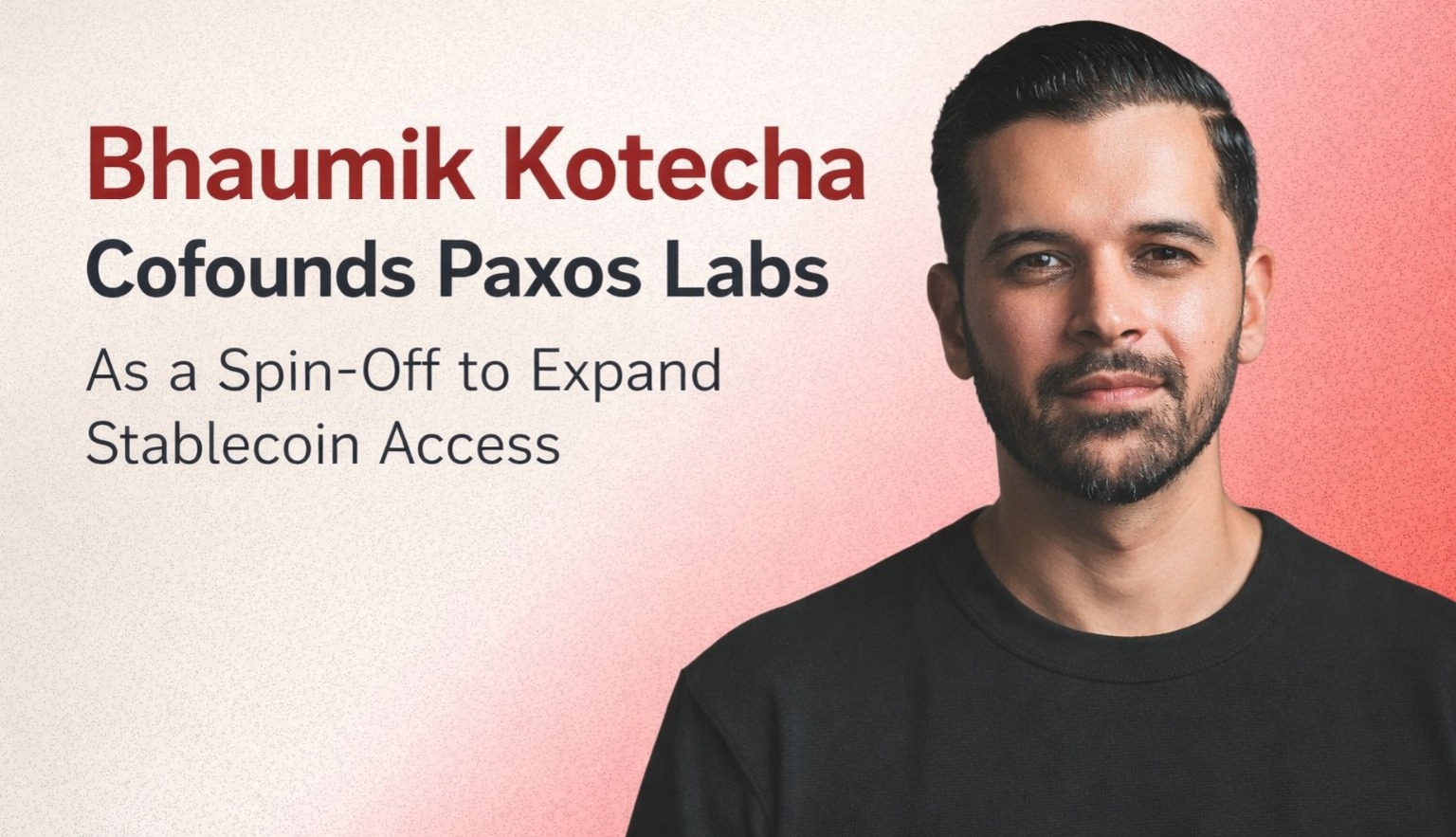
Paxos Labs, a newly spun-out venture from stablecoin and blockchain infrastructure company Paxos, has raised $12 million in a funding round led by Blockchain Capital, marking a fresh push into the fast-evolving intersection of stablecoins and decentralised finance.
The round also saw participation from Robot Ventures, Maelstrom, and Uniswap Labs, according to the report. Paxos Labs cofounder Bhaumik Kotecha did not disclose the valuation at which the company raised the capital. Charles Cascarilla, chief executive of Paxos, is also serving as CEO of Paxos Labs.
The move is notable because it signals a sharper strategic split inside the broader Paxos universe. While Paxos has built its reputation by working with large companies including PayPal and Nubank, Paxos Labs is being positioned to focus on a more specialised segment of crypto: helping companies give retail users access to stablecoins and crypto lending protocols through DeFi rails.
At the heart of Paxos Labs’ pitch is simplification. Kotecha said the company’s technology is designed to make integration easier for customers so they do not have to manage smart contract complexity on their own. He also said the company works with teams on compliance and risk expression, a crucial point in a part of crypto that continues to face regulatory uncertainty.
That is where the story becomes more interesting than a routine funding announcement. Paxos, founded in 2012, has largely operated in the world of white-label stablecoin issuance, helping large enterprises create and manage their own branded tokens. As more businesses explore stablecoins, the next question is no longer just how to issue them, but how users will actually deploy them. Paxos Labs is attempting to answer that question.
Its software suite allows developers to do more than launch branded stablecoins. According to the report, it also enables companies to let users earn interest on holdings and borrow against those tokens as collateral. In other words, Paxos Labs is trying to build the connective tissue between enterprise stablecoin issuance and consumer-facing DeFi utility.
The origins of the spin-off reflect a familiar tension in fintech and crypto: the gap between long-term opportunity and short-term corporate priorities. Kotecha, who previously worked at Block and spent more than three years at Paxos, had been developing technology aimed at simplifying access to DeFi markets such as Aave.
But he and Cascarilla concluded that while the software addressed an untapped market, it did not align with Paxos’ near-term institution-focused roadmap. Regulatory ambiguity around DeFi and the need for greater experimentation with a broader mix of crypto assets also influenced the decision to separate the project and raise outside capital.
Investors backing the company appear to be betting that this gap in the market is real. Spencer Bogart, general partner at Blockchain Capital, said that as more applications begin holding stablecoins as deposits, there is growing demand to put those assets to work. His comment captures the broader market logic behind Paxos Labs: stablecoins may begin as payment or treasury tools, but their commercial potential expands when users can deploy them inside on-chain markets.
The company says it already has customers, including neobank Hyperbeat and the developers behind privacy-focused blockchain Aleo. Kotecha also said Paxos Labs is on pace to break even by the end of the year. That claim, if realised, would give the startup an unusually quick path toward operational sustainability in a sector where many ventures spend years chasing scale before profitability enters the conversation.
The broader significance of the raise lies in timing. Stablecoins have drawn increasing attention because they promise faster payments and lower transaction costs by staying pegged to real-world assets such as the U.S. dollar. Paxos Labs is emerging at a moment when businesses are not just experimenting with issuing digital dollars, but are beginning to ask what comes next for users who hold them.
That makes this fundraise less about capital alone and more about a new direction. Paxos built its name by serving institutions. Paxos Labs is now betting that the next wave of growth will come from making stablecoins more usable, more programmable and more active inside consumer applications. Whether that bet pays off will depend not just on product demand, but also on how the still-shifting DeFi regulatory landscape develops. For now, the company has secured fresh backing and a clear mandate: turn stablecoin access into real on-chain utility.
Also Read: Perplexity Announces $1 Million Challenge to Build a Billion-Dollar AI Startup