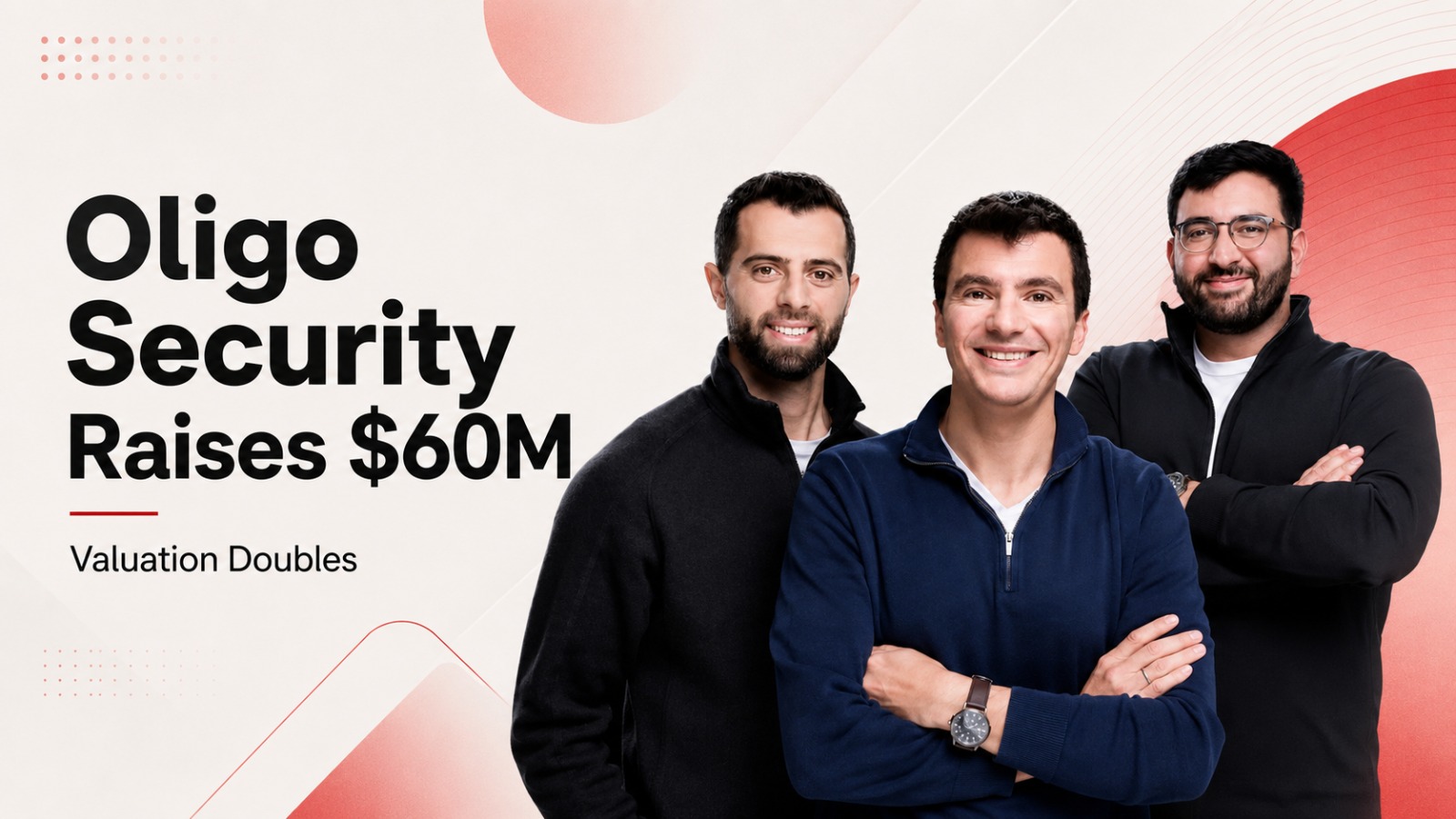
Israeli cybersecurity company Oligo Security has secured $60 million in a new funding round after reporting sharp revenue growth and a doubling of its valuation since its Series B financing.
The round was backed by Ballistic Ventures, Greenfield Partners, Red Dot Capital, Lightspeed Venture Partners and TLV Partners. Investors Yasmin Lukatz and Eyal Waldman also participated. The latest investment takes Oligo’s total funding since its launch in 2022 to approximately $140 million.
The company plans to use the capital to speed up product innovation and strengthen its presence in markets outside Israel. The fundraising follows a period in which Oligo said its annual recurring revenue increased by more than 300% year over year, alongside an expansion of its operations.
Growth built around runtime security
Oligo develops runtime security technology for applications, cloud environments and artificial intelligence systems.
Rather than relying only on static checks or vulnerability lists, its platform examines how code behaves while an application is running. This allows the system to determine whether a vulnerability can actually be exploited in a live environment.
The technology is designed to identify suspicious activity as it happens and block attempted attacks without interrupting the production systems being protected. The company is positioning this approach as a way for organisations to focus on vulnerabilities that present an immediate risk instead of treating every software weakness as equally urgent.
That focus has become more relevant as businesses deploy increasingly complex applications across cloud infrastructure, open-source software and AI systems. Oligo argues that the runtime environment offers security teams a clearer view of what attackers are doing once applications are operating in real conditions.
CEO and co-founder Nadav Czerninski said attackers using artificial intelligence can now identify and exploit weaknesses more quickly. In his view, monitoring applications while they are running gives organisations an opportunity to detect and stop those attacks in real time.
Ballistic Ventures partner Jake Seid also highlighted the importance of protecting production environments, where customers interact with applications and businesses generate revenue. He said Oligo’s platform was built to provide that protection without forcing companies to choose between security and operational continuity.
Research brings Oligo Security wider attention
Alongside its commercial expansion, Oligo has gained visibility through cybersecurity research involving AI infrastructure and widely used web browsers.
In May 2024, its researchers uncovered an attack affecting thousands of servers used to train and operate AI systems. The servers had reportedly been compromised through a vulnerability that existing security tools had failed to detect.
About two months later, the company identified another security issue affecting major browsers, including Chrome, Safari and Firefox. The weakness could allow a malicious website to bypass security protections and reach services running on a user’s computer or home network.
Those services would normally be accessible only from within the device or local network. Browser developers subsequently updated their security mechanisms and moved to block the attack method.
The discoveries helped reinforce Oligo’s argument that many serious threats become visible only when software is observed during actual use.
Founded by three childhood friends
Oligo was established in 2022 by three childhood friends: CEO Nadav Czerninski, CTO Gal Elbaz and CPO Avshalom Hilu.
The founders previously served in Israeli military cyber and technology units, including Units 81 and 8200 in Military Intelligence and Matzgov in the C4I Corps.
The company currently employs about 100 people. Around 70 work at its development centre in Israel, while the remaining employees are based at its offices in New York and San Francisco.
With new funding in place, Oligo is preparing to expand its technology and international reach while continuing to build around runtime protection. Its next stage of growth will centre on converting its recent revenue momentum and research profile into a broader position in the global application security market.
Also Read: iPhone 18 Pro Max Rumours Point to Bigger Battery, A20 Pro Chip and Major Camera Upgrade